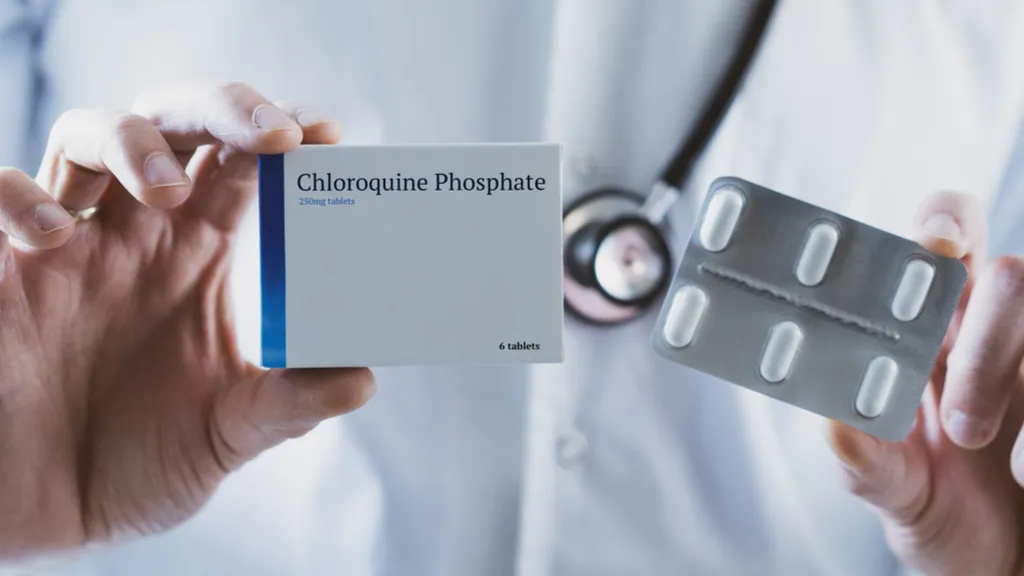
An Arizona man is dead and his wife is hospitalized after both of them self-medicated with chloroquine phosphate, a chemical used to treat fish for parasites, in an effort to ward off the novel coronavirus.
The couple, both in their 60s, listened to President Donald Trump tout chloroquine, a decades-old antimalarial drug, as a very promising treatment for COVID-19 in a recent press conference. The woman, who asked not to be named, said she was familiar with the chemical because she used it to treat her koi fish.
"I saw it sitting on the back shelf and thought, 'Hey, isn't that the stuff they're talking about on TV?'" she told NBC News on Monday (March 23). "We were afraid of getting sick," she said.
So, the couple mixed a small amount of the parasite remover with a liquid before drinking the solution. Within 20 minutes, both of them became ill. The woman started vomiting and her husband experienced severe respiratory problems, NBC News reported. They called 911, and soon after arriving at the hospital the man died from cardiac arrest. The woman was initially in critical condition but is now stable and expected to fully recover.
Where they got the idea
Chloroquine and its derivative, hydroxychloroquine, are approved by the U.S. Food and Drug Administration for the treatment of malaria, lupus and rheumatoid arthritis. Preliminary research in human and primate cells suggests the drugs are possible candidates for treating COVID-19, Live Science previously reported.
In a press conference on March 19, Trump stated that chloroquine and hydroxychloroquine have "been around for a long time, so we know that if it — if things don't go as planned, it's not going to kill anybody." And because of the encouraging research on the drugs, Trump said, "we're going to be able to make that drug [chloroquine and hydroxychloroquine] available almost immediately."
Right after that press briefing, the FDA issued a statement clarifying that although the drugs are under investigation for treating COVID-19, they should not be used for that purpose until they've been thoroughly tested in clinical trials.
"We understand and recognize the urgency with which we are all seeking prevention and treatment options for COVID-19. FDA staff are working expeditiously on that front," FDA commissioner Dr. Stephen M. Hahn said in the statement. "We also must ensure these products are effective; otherwise we risk treating patients with a product that might not work when they could have pursued other, more appropriate, treatments."
Fortunately, clinical trials are well underway. In February, there were seven clinical trials registered in the Chinese Clinical Trial Registry with the goal of testing whether COVID-19 infections could be treated with hydroxychloroquine, a derivative of chloroquine that is less toxic. In addition, the University of Minnesota is studying whether taking hydroxychloroquine can protect people living with infected COVID-19 patients from catching the virus themselves.
Both drugs are generally well tolerated at prescribed doses but can cause stomach pain, nausea, vomiting, headache and more rarely, itchiness, according to the Centers for Disease Control and Prevention (CDC) — important information that was left out of Trump's description of the drug.
When asked what she'd like the American public to learn from her experience, the woman told NBC News, "Be careful and call your doctor."
Originally published on Live Science.