

-
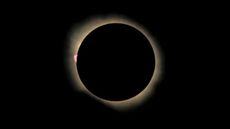 Totality! See incredible photos of the Aug. 12 total solar eclipse from across Europe
From Baily's Beads, a bright-pink prominence to awe-struck eclipse-watchers from across the European continent, check out these stunning images from yesterday's total solar eclipse.
the-sun -
 Watch now! The Aug. 12 total solar eclipse has begun (live stream)
Today (Aug. 12), a total solar eclipse will swoop across a narrow path of totality, while millions of people in North America and Europe will be treated to a partial eclipse. Watch it live right here.
the-sun -
 Perseid meteor shower 2026: What it is, where to see it, and how to watch
The 2026 Persied meteor shower could be the best one in years, thanks to a new moon that will also cause a total solar eclipse on Aug. 12.
meteoroids -
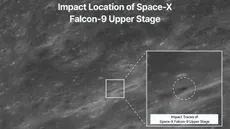 First photos of SpaceX lunar rocket crash show blackened hole torn into the moon's surface
New images from South Korea's Danuri lunar orbiter reveal where a runaway SpaceX rocket part slammed into the moon on Wednesday.
2 Commentsspace-exploration -
 Solar eclipse glasses: Where to buy a safe, certified pair before the August 12 eclipse
You MUST wear protective eyewear to view a partial solar eclipse like the one on August 12. Here's how to find a pair of certified solar eclipse glasses from an approved vendor.
the-sun -
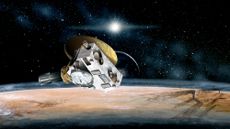 NASA awakens New Horizons spacecraft to do science billions of miles beyond Pluto
NASA's record-breaking New Horizons spacecraft has awoken from a 321-day hibernation in "good health" as it resumes unprecedented science at the solar system's edge.
3 Commentsspace-exploration -
 James Webb telescope uses trippy Einstein prediction to probe the farthest reaches of the universe
Space photo of the week The James Webb telescope peers through a warped bubble of space-time to study galaxies from the first billion years after the Big Bang.
2 CommentsSpace photo of the week -
 'The moon looked wrong': Artemis II mission controller Chris White tells the story behind NASA's historic photos
Interview Artemis II lead communications officer Chris White describes the tensest and most shocking moments of the historic moon mission, as seen from his desk at mission control in Houston.
Interview -
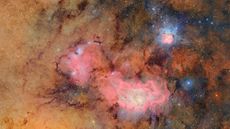 'It's more than a hope, it's a guarantee': The Vera C. Rubin Observatory's 10-year movie of the universe is about to 'blow our minds,' chief scientist says
Interview The Vera C. Rubin Observatory has begun its Legacy Survey of Space and Time, a 10-year mission to map the entire southern sky many times over. Chief Scientist Tony Tyson tells us why the survey could be remembered 100 years from now, if bright corporate satellites don't ruin the view.
Interview -
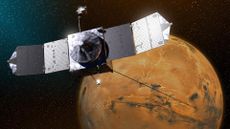 NASA confirms MAVEN spacecraft is officially dead after loss of signal behind Mars
NASA has confirmed its MAVEN spacecraft is officially dead after losing contact with the probe in December. An anomaly in the probe's rotation speed led to an unexpected loss of power, though the exact cause remains unknown.
3 Commentsspace-exploration -
 NASA confirms meteor exploded over northeastern US with force of 230 tons of TNT
NASA shared an initial analysis of a 5-foot-wide fireball meteor that exploded in the sky over the northeastern U.S. on Saturday, May 30.
meteoroids -
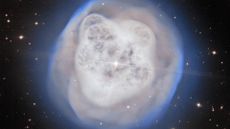 Astronomers gaze into the 'Crystal Ball Nebula' and see a vision of the sun's death
The Crystal Ball Nebula has captivated astronomers for more than 200 years, and it offers a bittersweet glimpse of a dying star system similar to our own.
space -
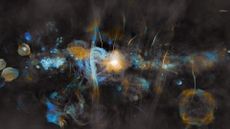 'The sun would all but disappear, and the moon would always look full': A radio astronomer shares her mind-bending view of the universe
INTERVIEW Radio astronomer Emma Chapman explains why the radio view of the universe is so crucial to space exploration, astronomy, and the search for extraterrestrial intelligence
INTERVIEW -
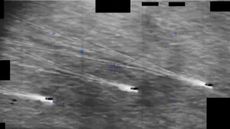 US government declassifies dozens of additional UFO files, including strange military videos
The Department of Defense has declassified another batch of images and recordings related to UFO/UAP sightings, bringing the total to roughly 220 newly released files.
9 Commentsextraterrestrial-life -
 'I have no doubt that life is out there': Why radio astronomers are convinced alien contact is only a matter of time
Book excerpt In the book "The Echoing Universe: How Radio Astronomy Helps Us See the Invisible Cosmos," astrophysicist Emma Chapman describes the hidden corners of space that only radio waves can reveal — and makes the case for contacting aliens.
9 CommentsBook excerpt -
 A SpaceX rocket is going to hit the moon
Part of a SpaceX Falcon 9 rocket is likely to crash into the moon this summer, a new report finds. It poses no danger, but it does highlight a worrying trend.
2 Commentsspace-exploration -
 Declassified Apollo 12 images show UFOs on the moon — Space photo of the week
Newly declassified images from the Apollo 12 mission highlight strange, unidentified lights spotted by astronauts on the moon.
26 Commentsextraterrestrial-life -
 48 jaw-dropping James Webb telescope photos
From black holes and baby stars to familiar solar system planets, the universe has never looked more glorious thanks to NASA's James Webb Space Telescope
8 Commentsastronomy -
 NASA shares 12,000 new Artemis II photos
NASA just uploaded more than 12,000 photos snapped by the Artemis II crew during their record-breaking flyby around the moon. Here are some of the most inspiring ones.
4 Commentsspace-exploration -
 'A measurable, enormous global impact': Astronaut Chris Hadfield on why the true power of Artemis II could take decades to hit
Interview Astronaut Chris Hadfield shares his emotional response to the Artemis II mission, and why it could change the course of people's futures.
Interview -
 'Welcome home, Integrity': Artemis II crew return to Earth after 'bullseye landing' caps historic moon mission
Live Blog The Artemis II crew have safely landed in the Pacific Ocean after a historic flight around the moon. Take a look back at our live blog's launch coverage from the hours and seconds until splashdown.
2 CommentsLive Blog -
 Artemis II moon flyby begins: How to watch and what to know
The Artemis II astronauts have reached the moon and will soon lose contact with NASA as they whip around the lunar far side. Here's how to follow along with their journey and everything you need to know about the "dark side" of the moon.
space-exploration -
 'We go for all of humanity': Artemis II rocket lifts off to the moon — look back at our live coverage
Live Blog The Artemis II crew have left Earth and are bound for the moon. Take a look back at our live blog's launch coverage from the days, hours and seconds until takeoff.
168 CommentsLive Blog -
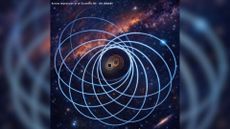 Universe-shaking collision of black hole and neutron star could upend our understanding of monster cosmic mergers
The catastrophic collision of a black hole and a neutron star sent ripples across the universe. New analysis of those ripples could upend a major theory about how these extreme pairs form.
black-holes


