













Skyscraper-size asteroid will blaze past Earth in a close approach this Sunday
Asteroid 2022 KY4 will, thankfully, miss our planet by a few million miles.

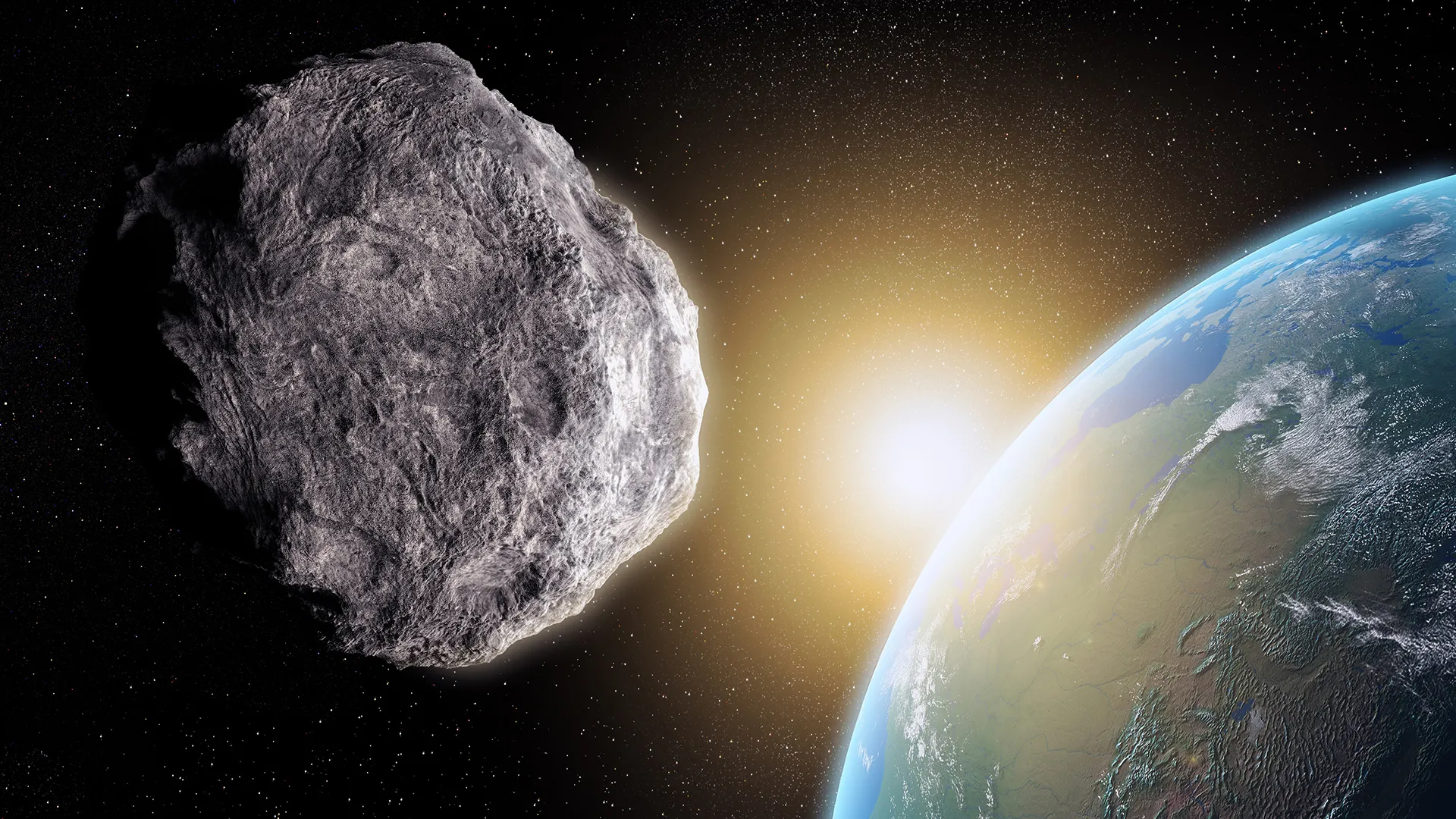
An asteroid the size of a 50-story skyscraper will zoom past Earth Sunday (July 17), making its closest approach to our planet in nearly 100 years.
The meaty space rock, dubbed 2022 KY4, will safely miss Earth by about 3.8 million miles (6.1 million kilometers), or more than 16 times the average distance between Earth and the moon, according to NASA. This is considerably farther afield than the asteroid 2022 NF, which came within 56,000 miles (90,000 km) — or about 23% the average distance between Earth and the moon — on July 7.
Asteroid 2022 KY4 is about 290 feet (88 meters) in diameter at its widest visible point and is traveling at an estimated 16,900 mph (27,000 km/h) — around eight times as fast as a speeding rifle bullet, according to NASA.
Related: Why are asteroids and comets such weird shapes?
The space rock has made several close approaches to Earth before, most recently in 1959 and 1948. The asteroid won't make another close approach to our planet until May 2048, NASA calculated.
Related stories
NASA and other space agencies closely monitor thousands of near-Earth objects like this one. Even if an asteroid's trajectory puts it millions of miles from our planet, there is an extremely slim chance that the asteroid's orbit could shift slightly after interacting with the gravity of a larger object, such as a planet; even such a tiny shift could potentially put an asteroid on a collision course with Earth on a future flyby.
As such, space agencies take planetary defense very seriously. In November 2021, NASA launched an asteroid-deflecting spacecraft called the Double Asteroid Redirection Test (DART), which will slam directly into the 525-foot-wide (160 m) asteroid Dimorphos in autumn 2022. The collision won't destroy the asteroid, but it may change the space rock's orbital path slightly, Live Science previously reported. The mission will help test the viability of asteroid deflection, should some future asteroid pose an imminent danger to our planet.
Get the world’s most fascinating discoveries delivered straight to your inbox.
Originally published on Live Science.

Brandon is the space / physics editor at Live Science. With more than 20 years of editorial experience, his writing has appeared in The Washington Post, Reader's Digest, CBS.com, the Richard Dawkins Foundation website and other outlets. He holds a bachelor's degree in creative writing from the University of Arizona, with minors in journalism and media arts. His interests include black holes, asteroids and comets, and the search for extraterrestrial life.