


-
 Scientists show that DNA can last for up to 50,000 years in Africa — much longer than previously thought
Researchers extracted DNA from long-dead animals that lived in South Africa during the last ice age, revealing that genetic material lasts longer in hot climates than was previously thought.
human-evolution -
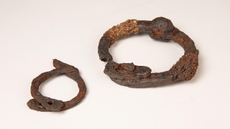 5 'extremely rare' iron shackles discovered in France highlight Celtic slave trade 2,300 years ago
Archaeologists were surprised to find evidence of shackles in a pre-Roman settlement in France.
archaeology -
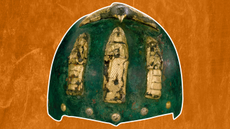 Elamite helmet with divine figures: A warrior king's 3,500-year-old bronze armor depicting a raptor and gold-plated gods
Astonishing Artifacts This bronze helmet has been decorated with ancient deities from a civilization that flourished before the Persian Empire took over the area that is now Iran.
Astonishing Artifacts -
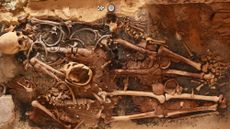 18 ancient Egyptian tombs with dozens of gold 'tongues' discovered along the Mediterranean coast
Archaeologists have found 18 tombs at an ancient Egyptian site by the Mediterranean coast of Egypt.
ancient-egyptians -
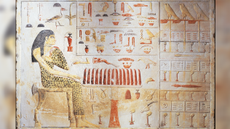 'Some people called it horrifying': 'Dinner with King Tut' author on using Egyptian mummification techniques on a modern-day human body
Interview "A lot of the book was actually me floundering around, failing to complete the projects or figuring out what I was doing wrong," author Sam Kean says about his experimental archaeology adventures.
Interview -
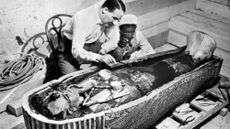 'He looked like Ramses the Great': How experimental archaeologists used ancient techniques to mummify a modern-day person
Excerpt In his new book, "Dinner with King Tut: How Rogue Archaeologists Are Re-creating the Sights, Sounds, Smells, and Tastes of Lost Civilizations," science writer Sam Kean explains the odd and intriguing world of experimental archaeologists.
Excerpt -
 Medieval babies and adults buried together in Sweden were not related, archaeologists discover — raising big questions about early Christian burial practices
In an unexpected discovery, researchers found that three medieval Swedish cemeteries held children buried with unrelated adults.
archaeology -
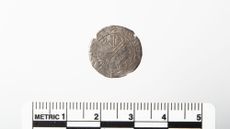 Dirty 'button' unearthed by metal detectorist turns out to be a rare 900-year-old coin from Norway's last Viking king, Magnus Barefoot
A rare coin from the reign of Magnus Barefoot — sometimes called Norway's last Viking king, was mistaken for a button before researchers realized it was the first of its kind found on Norwegian soil.
vikings -
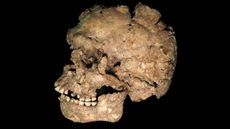 100,000 years ago, one of the earliest Homo sapiens outside Africa was stabbed in the face, analysis finds
A microscopic analysis of the skull of Qafzeh 25 revealed a cut mark likely made by a stone tool 100,000 years ago.
3 Commentshuman-evolution


