


-
 Funeral mask: A 2,000-year-old gold face covering designed to confuse the deceased's spirit so it didn't torment the living
Astonishing Artifacts This death mask is a spectacular example of goldwork from prehistoric Java, Indonesia.
Astonishing Artifacts -
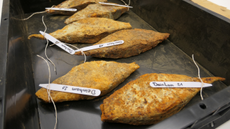 'Nothing short of a minor miracle': 'Rusty treasure' found in the Danube is full of 2,200-year-old iron bars that could equip an entire army with weapons
Archaeologists in Austria have analyzed a collection of 500 iron bars that were likely lost in a Danube shipwreck 2,200 years ago.
5 Commentsarchaeology -
 Did the Vikings really shoot fiery arrows at funeral boats?
Life's Little Mysteries The idea of Vikings using fire arrows to set funeral boats ablaze is seen frequently in popular culture. But did it really happen?
Life's Little Mysteries -
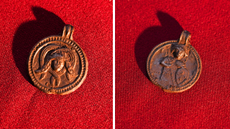 1,000-year-old 'snake amulet' featuring a Christian saint and 'Medusa' discovered in Russia
Archaeologists discovered the two-sided pendant, which features a snake-slaying saint and a snake-haired woman, during an excavation in northwestern Russia.
archaeology -
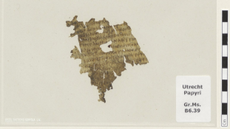 1,700-year-old fragment of the 'Odyssey' discovered in Dutch library
An expert in ancient Greek literature identified a fragment of the "Odyssey" among a collection of manuscripts in a Dutch university library.
archaeology -
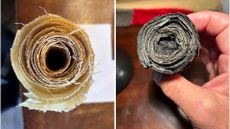 New trick could reveal text on 2,000-year-old scrolls charred by eruption of Mount Vesuvius
Using X-ray technologies and custom-made software, researchers were able to read text they wrote on a fake ancient scroll designed to mimic those destroyed at Herculaneum in A.D. 79.
romans -
 Did 'all roads lead to Rome'? New study finds other cities in the empire were better connected.
Rome was the Roman Empire's capital, but other cities in the empire were better connected by road.
romans -
 Ancestral commemorative head: A 500-year-old brass bust depicting an African king
Astonishing Artifacts A striking depiction of an African king wearing coral necklaces and braids is one of the thousands of Benin Bronzes that the British looted from Nigeria in 1897.
3 CommentsAstonishing Artifacts -
 Finland's largest Viking Age silver hoard discovered by metal detectorist — and it has thousands of coins and pieces of jewelry
The largest Viking Age silver hoard ever found in Finland was unearthed by a metal detectorist north of Helsinki.
vikings


