


-
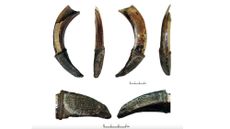 Decorated wild-boar tusk found in Russia may have been medieval warrior's good-luck charm
A 12th-century wild-boar tusk found in Russia may be a warrior's amulet.
archaeology -
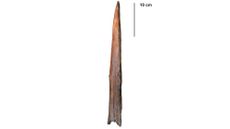 What's the oldest weapon in the world?
Life's Little Mysteries There are a few contenders for the world's oldest weapon, and one is over 400,000 years old.
2 CommentsLife's Little Mysteries -
 Not a housekeeper, but a 'vilica': The many responsibilities of Roman-era female farm managers were overlooked by historians
Opinion Women on ancient Roman farms were in charge of making wine, oil — and profits. Historians dismissed them as ‘housekeepers’
Opinion -
 Ancient Egyptian golden tongues, sugar found in space, and an ancient impact crater 'geoguessed' by amateur astronomer
Science news this week July 18, 2026: Our weekly roundup of the latest science in the news, as well as a few fascinating articles to keep you entertained over the weekend
Science news this week -
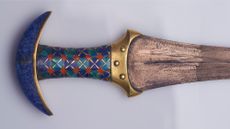 Did ancient Egyptian princesses use weapons? Controversial study claims they hunted or trained with the military, but not all experts agree.
Nearly 4,000-year-old skeletal remains show that several royal women repeatedly used their upper-body muscles. Researchers link those changes to archery and weapon training, but outside experts urge caution.
2 Commentsancient-egyptians -
 Ancient chariot emerges among remains of mysterious society that burned down its own buildings and then disappeared
An ancient bronze chariot recently discovered in Spain was used by a culture that mysteriously disappeared from the archaeological record.
archaeology -
 Thousands of liberated Africans died on a remote island after the British Navy freed them. We now know where they came from.
Thousands of enslaved Africans were liberated from slave ships and died on the island of St. Helena around 200 years ago. A new chemical analysis has revealed their tragic stories.
archaeology -
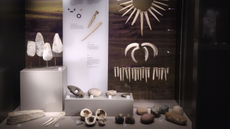 Oops! Ancient Bronze Age shaman long assumed to be a man was actually a woman, DNA reveals
A DNA analysis of a 4,000-year-old skeleton buried with an elaborate metalworking tool kit near Stonehenge has revealed that the individual, long assumed to be a male shaman, was actually a woman.
2 Commentsarchaeology -
 Scientists show that DNA can last for up to 50,000 years in Africa — much longer than previously thought
Researchers extracted DNA from long-dead animals that lived in South Africa during the last ice age, revealing that genetic material lasts longer in hot climates than was previously thought.
human-evolution


