


-
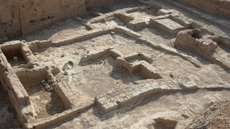 6,000-year-old broken ribs discovered in Syria may be one of the oldest known cases of child abuse in the world
Around 6,000 years ago in Mesopotamia, an infant suffered severe injuries in what might be the Middle East's earliest documented case of child abuse.
middle-east -
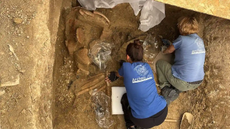 2,500-year-old tomb of a 'warrior prince' with chariot and helmet discovered on Italy's Adriatic coast
Archaeologists have excavated a royal burial ground of the Piceni, a mysterious pre-Roman civilization in Italy that is not well known historically.
archaeology -
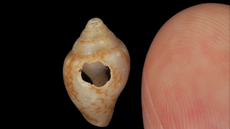 Neanderthals and modern humans may have shared culture 59,000 years ago in Turkey, study finds
Fossils, stone tools and seashells in Turkey show that Neanderthals and the Homo sapiens who moved in later had the same hunting strategies and symbolic traditions even without overlapping at the site, suggesting they may have shared information.
3 Commentsneanderthals -
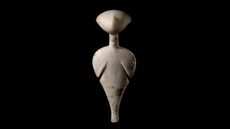 The Stargazer: A 5,000-year-old marble statuette of a Stone Age woman looking skyward
Astonishing Artifacts Only a handful of these small, sleek, marble figurines carved by enigmatic Stone Age people are known to exist.
Astonishing Artifacts -
 Has there ever been a period in human history without war?
Life's Little Mysteries Humans have fought countless wars over the millennia. Has there ever been a time when we weren't fighting?
Life's Little Mysteries -
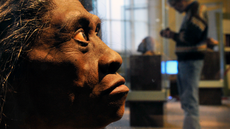 Diminutive species 'the Hobbit' did not hunt or control fire, deepening the mystery of its ancestry, dwarf elephant bones reveal
The extinct human species Homo floresiensis was a scavenger, not a hunter, an analysis of fossil animal bones reveals.
8 Commentshuman-evolution -
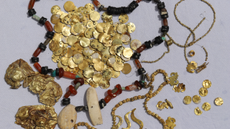 Elite families ruled nomadic Scythian society 2,500 years ago, DNA analysis reveals
Nomads of the Eurasian steppe were ruled by elite dynastic families, including women, a large-scale genetic analysis reveals.
archaeology -
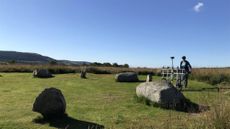 Ancient ring discovered underground in Scotland could be a Stonehenge-like monument
A hidden ring of stones or timbers detected beneath peat at Machrie Moor could represent a previously unknown Neolithic or Bronze Age monument.
archaeology -
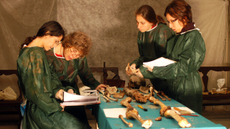 Ancient-DNA analysis solves 500-year-old mystery of what killed 2 Medici brothers
An ancient-DNA analysis of the bones of two members of the Renaissance Medici family has confirmed they had malaria when they died.
4 Commentsarchaeology


