














What 11 Billion People Mean for Earth's Animals

Editor's note: By the end of this century, Earth may be home to 11 billion people, the United Nations has estimated, earlier than previously expected. As part of a week-long series, LiveScience is exploring what reaching this population milestone might mean for our planet, from our ability to feed that many people to our impact on the other species that call Earth home to our efforts to land on other planets. Check back here each day for the next installment.
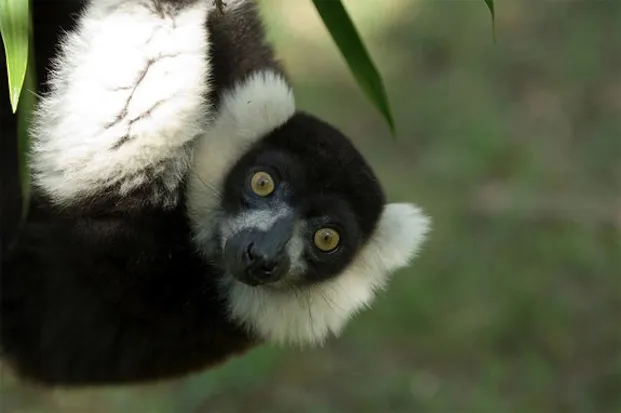
Until about 2,000 years ago, no human had set foot on Madagascar. This wonderland of wildlife east of Africa is home to all of the world's lemurs, a diverse group of primates, most of which have foxlike faces and large eyes. Lemurs descend from animals that arrived on the isolated island between 50 million and 60 million years ago.
Since humans arrived, about 15 to 20 of these lemur species have gone extinct, likely due to habitat loss and hunting, including species whose males grew nearly as large as gorillas. But these die-offs happened over the course of hundreds and thousands of years. Humans are impacting the island at a much faster pace now. As Malagasy populations rise, humans threaten the remaining species of lemurs and thousands of other species with extinction at an accelerating rate, said University of Illinois primatologist Paul Garber.
Currently, 93 lemur species are endangered, critically endangered or threatened, mostly due to the clearing of the island's forests, according to the International Union for Conservation of Nature (IUCN), a global environmental organization. That's 91 percent of all lemur species for which data is available.
Deforestation has sped up in the second half of the 20th century, and in the last 60 years, half of the island's remaining forests have been cleared, according to a 2007 study in the journal Biology Letters. During that time, the country's population has quadrupled, according to the World Bank, a global financial institution that offers loans to developing countries. But it's not just the animals' homes that are vanishing — sometimes, the animals themselves are taken. Since the breakdown of civil order following a 2009 coup in the country, species such as collared lemurs have been taken from forests to be sold in the illegal pet trade, and they have been killed by hunters to be eaten as bush meat, according to various news reports.
The plight of Madagascar's lemurs is just one example of how a rising population of humans is contributing to the sixth-largest mass extinction in the history of the planet, most biologists say. According to the IUCN, 20,000 species of animals and plants are considered at high risk for extinction, meaning there is a good chance they could die out if steps aren't taken to ensure their survival. If species continue to die out at current rates, more than 75 percent of all species currently on Earth could go extinct within a few centuries, according to a 2011 study in the journal Nature.
The extinction rate is estimated to be 100 to 1,000 times the natural "background" rate as a result of human activities, said Stacy Small-Lorenz, a conservation scientist at the Environmental Defense Fund, an environmental group whose mission is to protect the natural environment. The "background" rate is the rate extinctions would be expected to occur in a world devoid of human influence. "Human-induced climate change, on top of other anthropogenic stressors like habitat destruction, pollution and invasive species, is likely to accelerate those extinctions," Small-Lorenz told LiveScience.
Get the world’s most fascinating discoveries delivered straight to your inbox.
Some of Earth's most iconic animals, like the lemurs, are threatened with habitat loss, displaced by growing human populations and increased demand for agricultural products. This threat has become even more palpable since the United Nations issued a report this summer estimating the global population would reach 11 billion by 2100, much faster than previously estimated. Some good news is that the richest animal diversity is found in a few places, which could make conservation of these vital places easier. But it has to be made a priority, which is often not the case, scientists say. [What 11 Billion People Means for the Planet]
"Every knowledgeable scientist is worried sick," said Paul Ehrlich, a researcher and president of the Center for Conservation Biology at Stanford University.
Habitat loss
One of the main ways humans have driven species to extinction is by destroying their habitats.
Scientists are particularly concerned about habitat loss in a few key places with the highest levels of biodiversity, such as the Tropical Andes, the rainforests of Central America, the Atlantic coastal forests of Brazil, Southeast Asia and many Pacific Islands, central African rainforests and Madagascar.

The coastal forests of Brazil, for example, are almost as biologically rich as the Amazon rainforest; about 60 percent of the country's threatened animals live in these coastal forests, according to the Nature Conservancy, an international conservation group. For instance, just 1,500 golden lion tamarin, a magnificent primate covered in red fur, are left in the wild, the Smithsonian National Zoological Park reports. But this is also where the bulk of Brazil's people live, and only 12 percent of the original forests remain, much of it cut down in the past few decades, the Nature Conservancy reported.
In Borneo and Sumatra, large companies are destroying forests and replacing them with big swathes of palm tree monocultures, threatening the future existence of orangutans, said Lee Hannah, a senior fellow in climate change biology at Conservation International, a global group devoted to saving endangered animals and their habitats. There are only about 6,000 wild orangutans left, and about 1,000 are being killed each year, primarily from habitat destruction, according to the Orangutan Project, an environmental group whose mission is to save the animals.
The same is happening in Peru, where forests are being cleared to make way for palm tree plantations, said Clinton Jenkins, a conservation scientist at North Carolina State University. Such palm trees are a rich source of palm oil, which is used in food products and to make biofuels like biodiesel, a fuel with growing demand as a source of "cleaner" energy. But several scientists have pointed out that the cost of this fuel — destruction of vital rainforests in South America, Southeast Asia and the Pacific — is not counterweighed by any energy-saving benefits.
Increased demand
Demand for the products comprising wildlife habitat — such as the timber in forests, minerals in mountains or food grown on former grasslands — represents a second major threat to animals. It's not just sheer population growth that matters, but rather how much people consume, said Richard Moss, a scientist at the Joint Global Change Research Institute in College Park, Md. A good example of this is China. The Chinese population has been booming for years, but the recent increased consumption in the country has significantly ramped up the drive for resources, within China itself and around the world. From 1976 to 2003, for example, booming demand for rubber led rubber farmers to clear 20 percent of the rainforest of Xidai Prefecture, a lush region home to high levels of biodiversity in south-central China, according to a 2007 study in the journal Biodiversity and Conservation.
But in China especially, and throughout Southeast Asia, demand has also skyrocketed for the animals themselves, or at least parts of their bodies. This has driven an epidemic of poaching — especially of elephants for ivory and rhinos for rhino horns — that appears to be worsening, Hannah said. Tigers, lions and other big cats have also increasingly been poached, due to demand for various body parts like their iconic fur.
Rhino poaching, for example, has more than doubled since 2010 in South Africa, according to the country. And this year, rhinos went extinct in the adjacent country of Mozambique, according to news reports. It's hard to imagine that animals like African elephants and rhinos will survive unless countries where they live do more to protect them, Hannah said. Such measures will have to include better protection by game wardens, and perhaps more protected areas for wildlife, Jenkins said. [7 Iconic Animals Humans Are Driving to Extinction]
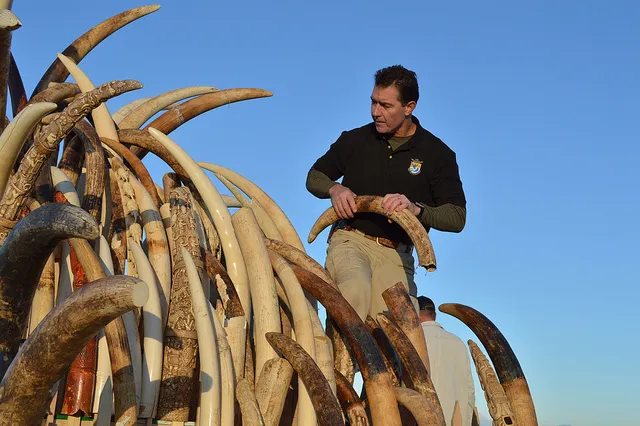
The most effective way to fight poaching would be to decrease demand, said Kenyan scientist and conservationist Richard Leakey at a conference on wildlife crime this May at Rutgers University. One way to do that would be to better educate people in China and Southeast Asia who buy these products, most of whom don't know that elephants and rhinos are being driven to the brink of extinction, said Leakey, who is the son of famed paleontologist and fossil hunters Louis and Mary Leakey. When Richard Leakey headed the Kenya Wildlife Service in 1989, he came up with the idea to burn 12 tons of elephant tusks to bring public attention to poaching, which had flared up in the late '80s. The ploy worked, cutting the value of ivory by a factor of 30 and almost single-handedly suppressing elephant poaching for nearly two decades. Perhaps a similar gambit could work again, Leakey said, although he didn't have any concrete suggestions.
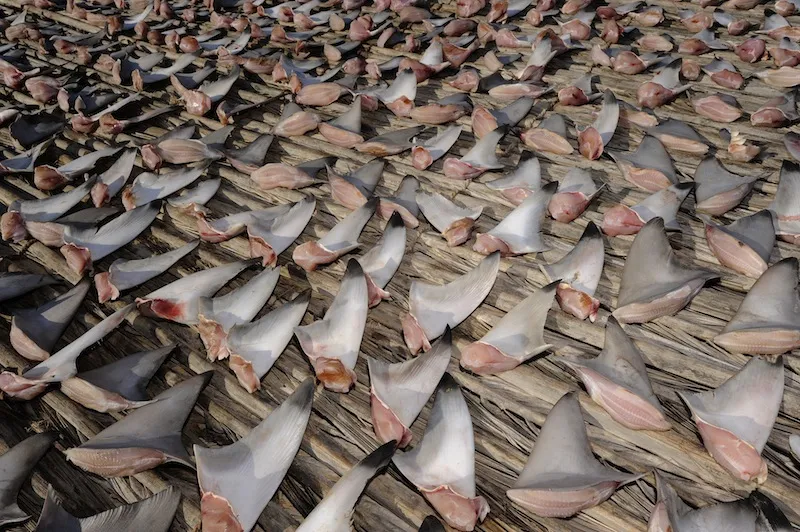
A recent example from China may offer some hope, however. Fishermen kill as many as 100 million sharks per year worldwide, spurred in part by demand for shark fin soup, a traditional Chinese delicacy. The fins are taken through a process called shark finning, in which the animals' fins are hacked off and they are thrown back into the ocean to slowly die. However, China's taste for the dish may be fading: According to the American environmental group WildAid, consumption of the soup is down 50 to 70 percent in the last two years. Just a few years ago, most Chinese didn't know that the dish came from sharks, as its name translates to "fish wing" soup, according to the Washington Post. But a series of public relations campaigns appear to have helped spread the word. In 2006, for example, WildAid enlisted the help of professional basketball player Yao Ming to educate people on the shark finning process. A government campaign against lavish banquets, where the soup was often served, has also made a difference, the Post reported.
"It is a myth that people in Asia don't care about wildlife," Peter Knights, with WildAid, told the Post. "Consumption is based on ignorance rather than malice."
Another clear-cut way to prevent poaching is to outlaw hunting, said Dereck Joubert, a National Geographic explorer-in-residence and filmmaker. Botswana, Joubert's country of residence, outlawed all hunting as of September 2013. When hunting was still allowed, gunshots didn't necessarily attract a lot of attention, since they could derive from legal hunting. But now, any shots are likely to bring attention, so poaching is much more difficult, Joubert said. Botswana is one of the few countries where populations of lions and other large animals may be relatively stable, he added.

Solutions
To prevent the expected rise in human population from wiping out animal populations, more of the biologically important areas need to be protected, most scientists agree. But there also need to be more incentives to encourage conservation. People need to "take steps to create an economic value for the lands where biodiversity is concentrated," Moss said. "We don't really value biodiversity directly now, except when we exploit it."
Ecotourism is one way to do this. Turning hunting preserves into ecotourism reserves creates more jobs while also protecting wildlife, for example, Joubert said. On several land concessions that Joubert and his wife Beverly co-own and have converted to ecotourism reserves, the number of jobs has increased fivefold, he said. These jobs also remain year-round, as opposed to only during the five-month hunting season, Joubert added.
One of the best ways to protect areas is to support local groups that have a stake in their native environment, Jenkins said. "Big groups do get a lot of attention, but you simply have to have local individuals who have a stake in the future of that region," Jenkins said. Examples include Brazil's Institute for Ecological Research, which has wisely narrowed its focus on protecting a few key areas in the country's Atlantic forests, he said. These forests are home to 21 primates not found anywhere else, such as the wooly spider monkey, according to the group. Areas the institute protects include watersheds that provide drinking water for São Paulo. Unlike some other organizations, they haven't overextended themselves, Jenkins said. The group also offers conservation training and classes to anybody who is interested in conservation topics, allowing them to reach a broad audience, he said.
How humans impact wildlife will depend largely on where future development occurs. "Not all places are created equal," Jenkins said. Some of the areas with the highest levels of diversity contain many important species that appear nowhere else, so if they are protected, some of the worse losses may be diverted, Jenkins said. But many of these areas are already increasingly threatened, even when they are not close to populated areas, he added. There are many parks that preserve an impressive number and range of wildlife, but one extreme example is Ecuador's Yasuni National Park. The sprawling reserve contains 150 amphibian and 121 reptile species, making it the most diverse or second most diverse place for each group of animals worldwide, according to a 2010 PLOS ONE study.
Another primary way to conserve animals in the face of growing populations is to simply make people aware of the decline of various species. Recent analyses have shown that 80 percent of people in China have some ivory or would like to buy some, Joubert said. But most of these people don't realize you have to kill an elephant to get its ivory, and when they find out, they are generally surprised and may no longer desire the substance, he added. Dereck and Beverly Joubert have made more than 25 films about large wildlife like lions, usually with a message about the importance of conservation. In their latest film, "Game of Lions," to debut Dec. 1 on Nat Geo Wild, they show just how hard it is for male lions to survive — only one in eight survive to adulthood — giving people a reason to not want to shoot them as trophies, Dereck said. [In Images: 100 Most Threatened Species]
Georgia Tech ecologist Marc Weissburg suggests that much of the problem arises in cities. In the 21st century, for the first time, a majority of humans live in urban areas. This could theoretically be a more efficient way for people to live; by minimizing the distance between people, you could reduce the distance goods need to travel, and by concentrating waste products, you could make them easier to treat and dispose of. But this falls apart in practice: Food is grown in the countryside and transported into cities, while waste products are mostly taken out of the city and processed elsewhere. Cities need to find ways to grow their own food, which would reduce the need for the clearing of biodiversity-rich forests, far afield from bustling metropolises, Weissburg said.
If materials such as rubber or palm oil could be manufactured in cities, for example, there would be less incentive to cut down pristine forests — like the ones in Borneo where orangutans live — for agriculture, Weissburg said.
"If the planet is going to exist in a form that is habitable for people, cities can't operate the way they operate right now," Weissburg said.
One solution would be to design cities to function more like miniature ecosystems. Examples of this would include more urban farming, producing food in the same area that is consumed, and finding a way to reuse and process waste where it is generated, Weissburg said.
Ultimately, however, saving animals will require more public awareness and action, said Mark Costello, a researcher at New Zealand's University of Auckland. "I hope that increased public knowledge of declining nature will raise society's priority to conserve biodiversity."
Email Douglas Main or follow him on Twitter or Google+. Follow us @livescience, Facebook or Google+. Article originally on LiveScience.com.
