
 Live Science Plus


1.2 Million American Non-Jews Feel 'Jew-ish'

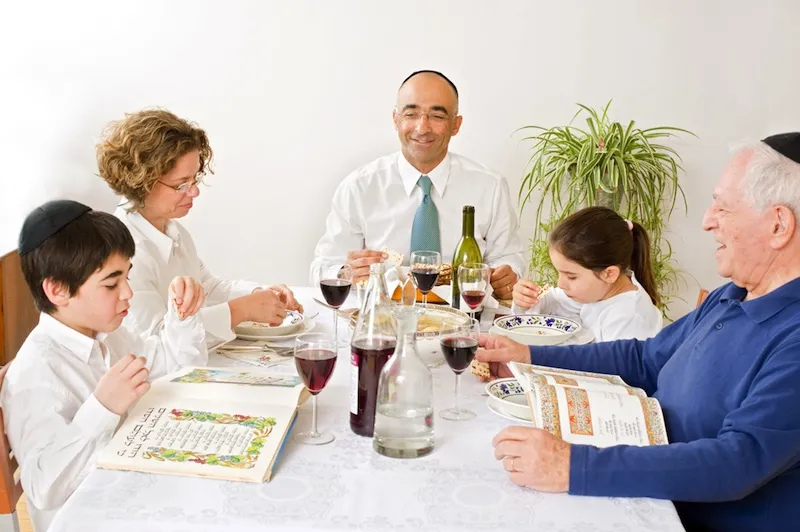
They may not be Jewish, but they certainly feel Jew-ish.
Despite having no direct familial or religious ties to Judaism, about 1.2 million Americans feel they have a "Jewish affinity," with many reporting an attachment to Israel and a strong draw to Judaism's cultural practices, according to new research.

Non-Jewish
On political matters, this cohort looks different from both secular and religious Jews. About 40 percent are politically conservative, compared with only 19 percent of Jews. Almost 42 percent of the "Jews by affinity" are Republican or Republican-leaning, compared with 41 percent Democratic or Democratic-leaning. In contrast, about 70 percent of Jews are affiliated with or lean toward the Democratic Party, with only 22 percent identifying as Republican or Republican-leaning.
This group of Jews by affinity is also strongly tied to the concept of Israel as the Jewish homeland — as strongly as those who are actually Jewish. They are also about as likely as American Jews to believe the United States doesn't support Israel enough.
Mixed group
A small minority feels connected to the culture through the practice of Jewish traditions or shared Jewish values. The largest portion, or 60 percent, said religious reasons underpinned their sentiment, with more than half saying they feel Jewish because Jesus was a Jew.
That dovetails with other Pew research showing strong support for Israel from Evangelical Christians, 82 percent of whom believe that God gave the Jewish people Israel, compared with only 40 percent of American Jews.
Only a minority, or about 25 percent of this group, has any Jewish family ties, often through a Jewish spouse or grandparent. About 7 percent feel culturally and ethnically Jewish, but not religiously so.
Their draw to Judaism, however, doesn't translate into support for actual Jewish institutions. Only 4 percent of households had family members who belonged to a synagogue, and only 7 percent belonged to any Jewish organizations. That's about the level of involvement that secular American Jews show, but much lower than that of religious Jews.
About a quarter of the Jewish-by-affinity group donated to a Jewish charity in the past year, compared with more than two-thirds of religiously observant Jews.
Follow Tia Ghose on Twitter and Google+. Follow LiveScience @livescience, Facebook & Google+. Original article on LiveScience.
