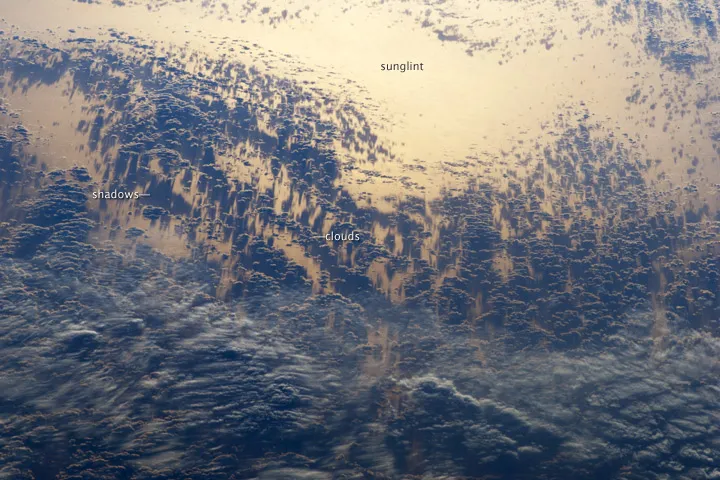
Earth as Art: Clouds Shadows & Sunglint
Get the world’s most fascinating discoveries delivered straight to your inbox.
You are now subscribed
Your newsletter sign-up was successful
Want to add more newsletters?
Delivered Daily
Daily Newsletter
Sign up for the latest discoveries, groundbreaking research and fascinating breakthroughs that impact you and the wider world direct to your inbox.
Once a week
Life's Little Mysteries
Feed your curiosity with an exclusive mystery every week, solved with science and delivered direct to your inbox before it's seen anywhere else.
Once a week
How It Works
Sign up to our free science & technology newsletter for your weekly fix of fascinating articles, quick quizzes, amazing images, and more
Delivered daily
Space.com Newsletter
Breaking space news, the latest updates on rocket launches, skywatching events and more!
Once a month
Watch This Space
Sign up to our monthly entertainment newsletter to keep up with all our coverage of the latest sci-fi and space movies, tv shows, games and books.
Once a week
Night Sky This Week
Discover this week's must-see night sky events, moon phases, and stunning astrophotos. Sign up for our skywatching newsletter and explore the universe with us!
Join the club
Get full access to premium articles, exclusive features and a growing list of member rewards.
The patterns and shadows of clouds along with the sun's rays reflecting off the Pacific Ocean produced a scene reminiscent of an abstract painting in this photo taken by an astronaut aboard the International Space Station.
The ISS was located over the Andes Mountains of central Chile, looking back towards the Pacific Ocean as the sun was setting in the west (towards the upper right), when this photo was taken on May 15.
The yellowish color at the top of the image is sunglint, a phenomenon that occurs when light from the setting sun reflects off the water surface and creates a mirror-like appearance.
The clouds in the image are relatively low-altitude cumulus clouds; their west-facing sides are illuminated by the setting sun, while the rest of them remains in shadow. The low sun angle also casts shadows of the clouds on the ocean surface.
The clouds are likely a remnant of a frontal system that moved in from the Pacific and over inland South America a day or two prior to when the image was taken, according to a NASA release.
Get the world’s most fascinating discoveries delivered straight to your inbox.