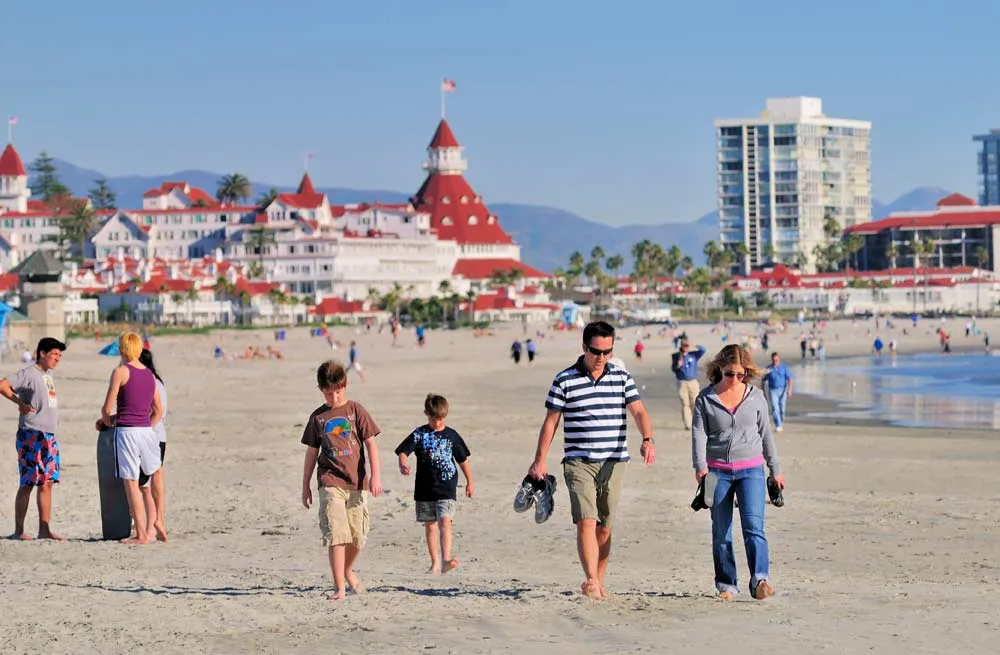
Nearly 11 million more Americans will move to the coasts by 2020, putting more of the population at risk from extreme coastal storms, according to a report released today (March 25) by the National Atmospheric and Oceanic Administration. The nation's shorelinesalready hold the most densely packed communities in the country, with 446 people per square mile versus the national average of 105 people per square mile (excluding Alaska), found the NOAA National Coastal Population Report. The population density is six times greater at the coast than inland. (One square mile is about 2.5 square kilometers.)
"The coast is substantially more crowded than the U.S. as a whole," report editor Kristen Crossett, of NOAA's National Ocean Service said in a statement. "And the projected growth in coastal areas will increase population density at a faster rate than the country as a whole."
The coastal population also grew older between 1970 and 2010. During that time, there was an 89 percent increase in people older than 65 and a 4 percent drop in people younger than 18 years old, the report found. [Infographic: US Coastal Population]
Shoreline communities include those next to oceans, major estuaries and the Great Lakes. As the planet warms, these cities, towns and villages face a double threat of rising sea levels and more severe storms. The oceans are expected to rise up to 6.6 feet (2 meters) by 2100 due to thermal expansion (water expands as it warms) and glacier melt, according to the most recent report from the Intergovernmental Panel on Climate Change (IPCC), the international body charged with assessing the future impact of climate change.
Global warming could also result in more extreme coastal storms, such as Hurricanes Sandy and Isaac, which caused severe damage last year, though the number of storms may not change, according to the IPCC and climate scientists.
The population pressures may affect coastal areas, Holly Bamford, assistant NOAA administrator for the National Ocean Service, said in a statement.
Sign up for the Live Science daily newsletter now
Get the world’s most fascinating discoveries delivered straight to your inbox.
"As more people move to the coast, county managers will see a dual challenge: protecting a growing population from coastal hazards, as well as protecting coastal ecosystems from a growing population," Bamford said.
Population density is increasing at the coast.
(Image credit: NOAA)
In 2010, 123.3 million people — 39 percent of the U.S. population — lived in shoreline counties, according to the report, which is based on data from the U.S. Census and NOAA. Since 1970, the shoreline population grew by 39 percent.
The number of people living near the nation's watersheds is even larger, NOAA found. A watershed county is an area in which water, sediments and dissolved material drain to a common coastal outlet, like a bay or the ocean.
From 1970 to 2010, the U.S. coastal watershed population increased by 45 percent. In 2010, 52 percent of the U.S. population lived in coastal watershed counties, although these regions account for less than 20 percent of the country's total land area (excluding Alaska).
Becky Oskin covers Earth science, climate change and space, as well as general science topics. Becky was a science reporter at Live Science and The Pasadena Star-News; she has freelanced for New Scientist and the American Institute of Physics. She earned a master's degree in geology from Caltech, a bachelor's degree from Washington State University, and a graduate certificate in science writing from the University of California, Santa Cruz.