













Scent of Sex and Death Attracts Young Female Beetles

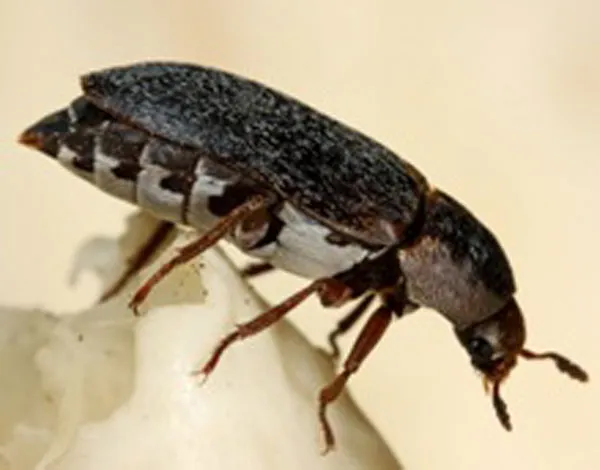
Hide beetles eat carrion. But the scent of decomposing flesh on its own isn't enough to attract young, virgin females of this species. The perfume must have another ingredient to get their attention: Male-beetle sex pheromones.
Hide beetles, known scientifically as Dermestes maculates, are part of the parade of insects that arrive to feast on a corpse. They also breed and lay their eggs in this graveyard of sorts. Different species have preferences for different states of decomposition. Because corpse-eating insects arrive predictably, forensic scientists can look to them for clues, such as when the corpse in question died.
Blow flies are among the first on the scene, for example. Hide beetles arrive later and feed on skin and ligaments, before breeding and leaving their larvae to feed.
The researchers led by Christian von Hoermann from Ulm University, Germany, wanted to know what attracted young emerged female beetles to a new corpse.
They tested 2- to 3-week-old female beetles' reactions to scents collected from piglet cadavers at various stages of decay, as well as a pheromone gland extract collected from male hide beetles, synthetic pheromones and a control scent. (Pheromones are chemical signals some organisms use to communicate.) Only one combination really caught the female beetles' attention: The odor of a piglet in an advanced, dry remains stage of decay and the male pheromone.
"Although cadaver odor alone is not sufficient to attract 2 to 3 week-old virgin female hide beetles, it is enough to attract newly emerged males," von Hoermann said in statement.
Males appear to arrive at the cadaver first, and their pheromones signal it is a good spot for feeding and breeding. This system maximizes reproductive odds by making sure females only respond when both food and mates are present, the researchers write in a study published today (Aug. 13) the journal Frontiers in Zoology.
Get the world’s most fascinating discoveries delivered straight to your inbox.
Follow LiveScience on@livescience. We're also on Facebook & Google+.
