













Tiny Snail, Thought Extinct, Rediscovered by Grad Student

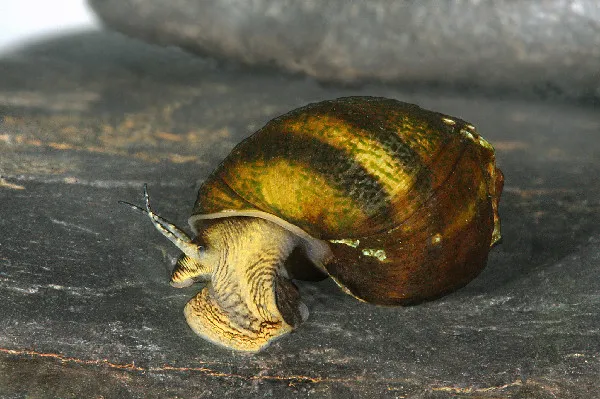
In 2000, the oblong rocksnail — about the size of a nickel with a yellow body and a banded shell — was declared extinct in its home, Alabama’s Cahaba River Basin.
But a graduate student has rediscovered these snails on a short stretch within the Cahaba River, where it crosses the Bibb and Shelby county lines.
"To be able to find a species that was thought to be extinct is always encouraging," said the graduate student, Nathan Whelan of the University of Alabama, Tuscaloosa, in a statement, "especially considering biodiversity and conservation stories are not typically positive these days."
It's not clear why the snail, scientifically known as Leptoxis compacta declined, but it is likely a combination of the species' small natural range, and pollution from local mines and the Birmingham metropolitan area, Whelan and colleagues write in a study published today (Aug. 8) in the journal PLoS ONE.
Whelan found the oblong rocksnail at only one section within its original, 50-mile (80-kilometer) range along the river. However, at other sites along its historic range, similar snails turned up. This gives rise to another mystery: Why did the oblong rocksnail suffer such a dramatic loss of range when other snails in the same environment did not, he and colleagues write.
The oblong rocksnail's range is so restricted now that the remaining snails could easily be wiped out, so Whelan and colleagues argue that it should be considered for protection under the U.S. Endangered Species Act. Researchers also hope to establish a second population of the snails elsewhere within their previous range.
Follow LiveScience writer Wynne Parry on Twitter @Wynne_Parry or LiveScience @livescience. We're also on Facebook & Google+.
Get the world’s most fascinating discoveries delivered straight to your inbox.
