















Disgust Makes Us Truly Sick
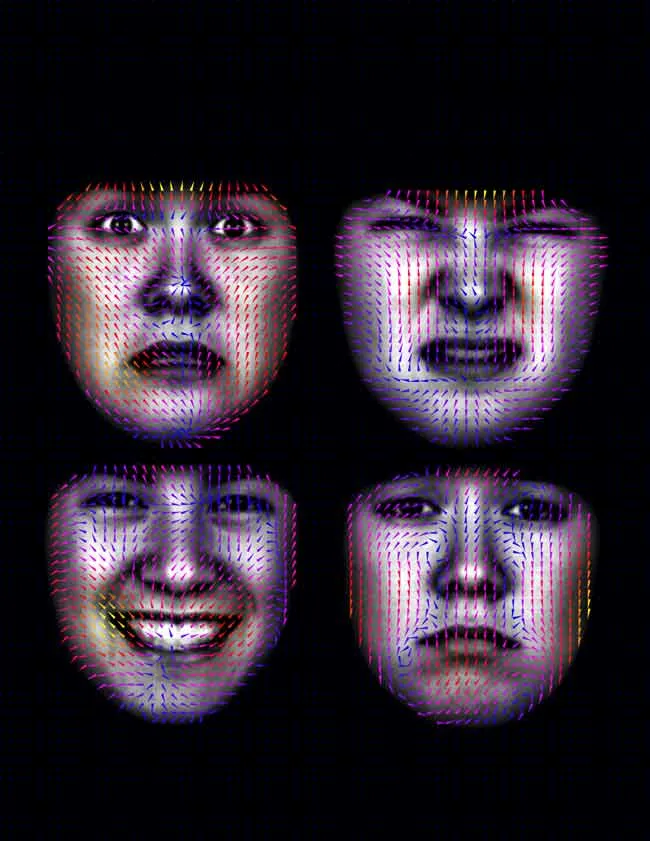
"He makes me sick" is not usually a statement about the flu. It's a judgment about someone's behavior, a sentence delivered with complete disgust about one of our fellow human beings who doesn't know how to behave properly. It's interesting that this metaphor for disapproval can also be very real. When we see bad behavior, we often do feel sick. The hand goes to the mouth, the nausea sets in, and we turn up our noses as if something foul just walked by. Researchers at the University of Toronto have also just discovered that people react to repulsive photographs, unpleasant liquids, and moral disgust with similar facial movements — the curled upper lip and wrinkled nose. In other words, the moral code must be biologically based because we react the same to rotten milk, pictures of putrid feet, and the guy down the street who cheated on his wife. The idea that morality has a deep, evolutionary basis has been around for a while. In 1996, primatologist Frans de Waal wrote in his book "Good Natured" (Harvard University Press) that humans were not the only species to feel moral outrage and the need for social justice; chimpanzees, too, are moral animals with a social code that keeps the group in line. If chimps had the rudiments of morality, then it must have been part of our nature for eons. At the time, de Waal's evolutionary perspective on morality went against the very foundations of Western civilization. Philosophers, cultural anthropologists and historians held that moral rules were a recent addition to human societies, something that separated us from the apes. But clearly, it has deep roots. Morality is, after all, universal among us, which suggests that it is part of human nature. But just because we wrinkle our noses as bad behavior and just because chimpanzees are moral philosophers does not mean that the contents of the moral code itself is all hard-wired. In some cultures infidelity is unacceptable and in others it's overlooked. Children in some cultures are spanked regularly, while in other places, corporal punishment is completely wrong. The moral code also shifts with time. Smoking is considered morally wrong in U.S. social situations these days but not so long ago was accepted in every house and every office. We need these mutually agreed-upon social rights and wrongs because without some structure we'd be a bunch of headless chickens running around unable to function as a group. It's therefore a good thing evolution has given us the capacity to make some moral rules and be disgusted by those who break them. For once, it seems, the nature and nurture people are both right. Our capacity to have a moral code is surely part of our fundamental social nature, a necessary part of group living. But at the same time, we get to decide what is right and wrong, and that makes morality a collective thought process that works for the group, not just the individual. It also apparently allows us to judge when the milk has gone sour and that there are some things we'd just as soon not look at.
Meredith F. Small is an anthropologist at Cornell University. She is also the author of "Our Babies, Ourselves; How Biology and Culture Shape the Way We Parent" (link) and "The Culture of Our Discontent; Beyond the Medical Model of Mental Illness" (link).
Get the world’s most fascinating discoveries delivered straight to your inbox.