













Computer Understands Barking Dogs

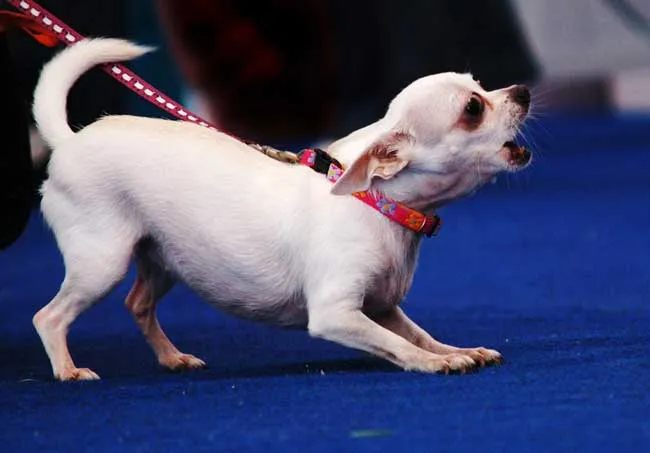
Artificially intelligent Dr. Doolittles can understand dog barks as good or better than humans do.
These findings suggest computers might significantly help people comprehend animal communication.
Scientists tested artificially intelligent software on more than 6,000 barks from 14 Hungarian sheepdogs. Six different kinds of barks were taped:
- Barks for strangers were recorded when a researcher approached a dog's owner's home when the owner was away.
- Barks during fights were recorded at dog training schools, when a trainer encouraged dogs to bite the glove on the trainer's arms and bark aggressively.
- Barks for walks were recorded when owners behaved as if they were preparing to go for a walk with their dogs.
- Barks for balls were recorded when owners held balls in front of dogs.
- Barks during playtime were recorded when owners played tug-of-war or similar games with dogs.
- Barks made when alone were recorded when owners tied dogs to trees in a park and then walked out of sight.
After analyzing digital versions of the barks, overall the computer program correctly identified the kinds of barks the dogs made 43 percent of the time — about the same as humans' 40 percent, said researcher Csaba Molnár, an ethologist at Eötvös Loránd University in Hungary. The software identified 'walk' and 'ball' barks better than people, although people identified 'play' and 'alone' barks better than the software.
The program also could identify which dog made each bark 52 percent of the time. Molnár and his colleagues had previously found that people can not reliably distinguish between individual Hungarian sheepdogs by their barks at all.
"I'm pretty sure this could work with any animal vocal signals," Molnár told LiveScience.
Molnár thinks dogs are ideal for study because humans and canines have spent thousands of years living together. "At least you know what the humans intend in any communication between them and dogs," he explained. "When you have communication just between animals, it's much harder to study what they mean."
Get the world’s most fascinating discoveries delivered straight to your inbox.
In future experiments, the researchers will compare barks from different breeds. Since these dogs were bred for different jobs, this could result in differences in their barks, Molnár said.
Molnár and his colleagues detailed their findings on January 15 in the journal Animal Cognition.
- Vote for Your Favorite Pet
- Constant Barking Drives Dogs Nuts, Too
- Study Reveals Why Some Dogs Are So Small
