













Neil deGrasse Tyson Warns Science Denial Could 'Dismantle' Democracy

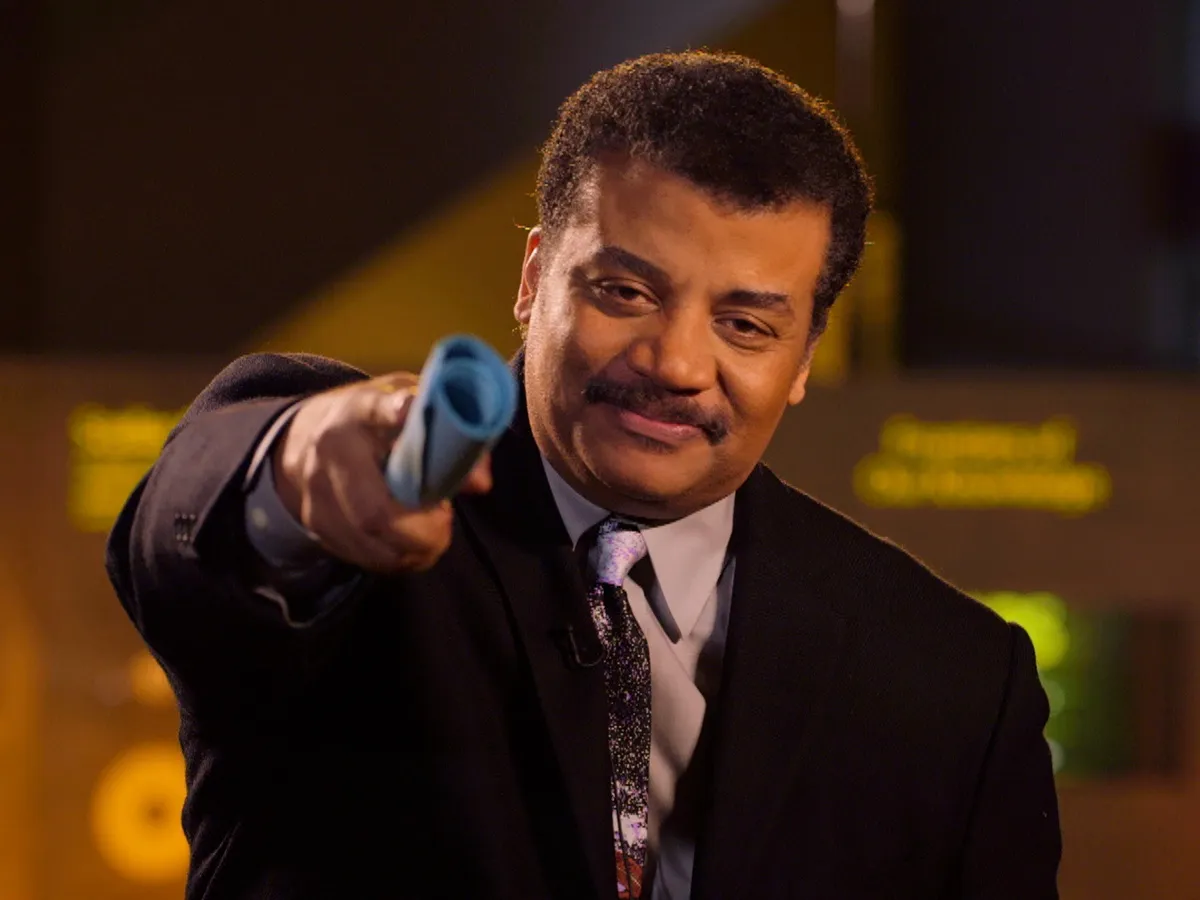
Renowned astrophysicist Neil deGrasse Tyson urges Americans to become more scientifically literate in a short video he posted yesterday (April 19) on his Facebook page.
In the video he titled "Science in America," Tyson comments on 21st-century attitudes toward science, explaining the importance of the scientific method and making the case that science denial could erode democracy.
"Dear Facebook Universe," he wrote. "I offer this four-minute video on 'Science in America' containing what may be the most important words I have ever spoken. As always, but especially these days, keep looking up." [2017 March for Science: What You Need to Know]
Tyson, who is the director of the Hayden Planetarium in New York City, the author of several books and a star of TV and radio, has been speaking for years against the troubling decline of basic science knowledge in America.
The video begins with a reminder that the United States rose up from a "backwoods country," as Tyson calls it, to "one of the greatest nations the world has ever known," thanks to science. It was the United States that put humans on the moon and whose big thinkers created the personal computer and the internet.
"We pioneered industries," Tyson said. "Science is a fundamental part of the country that we are."
But in the 21st century, a disturbing trend took hold: "People have lost the ability to judge what is true and what is not," he said.
Get the world’s most fascinating discoveries delivered straight to your inbox.
In a voice full of passion, Tyson said, "This is science," as images flash across the screen showing the world's great scientists from Albert Einstein to Jane Goodall, and scientific accomplishments, from ultrasound images of a fetus and robotic surgery to animations of solar flares and pictures of a swirling hurricane.
"It's not something to say 'I choose not to believe E = mc^2.' You don't have that option."
Tyson points to scientific issues that have become highly controversial: vaccinations, human-caused climate change, genetically modified foods, even evolution. One clip shows Vice President Mike Pence, then a congressman, saying, "Let us demand that educators around America teach evolution not as fact, but as theory." (Evolution is a scientific fact; so much so that the evidence supporting its occurrence is undeniable, according to the National Academy of Sciences.)
Tyson suggests that those who understand science the least are the people who are rising to power and denying it the loudest.
"That is a recipe for the complete dismantling of our informed democracy," he said.
In about 30 seconds, Tyson explains how hypothesis and experimentation, fundamental ingredients of the scientific method, lead to emergent truths. "The scientific method does it better than anything else we have ever done as human beings," he said.
Emergent scientific truths are true whether or not a person believes them, he said. "And the sooner you understand that, the faster we can get on with the political conversations about how to solve the problems that face us."
Every minute a person is in denial only delays the political solution, he said. Tyson wants voters and citizens to learn what science is and how it works to make more informed decisions.
"It's in our hands," he said.
Original article on Live Science.
