













Is Secondhand Marijuana Smoke Bad for You?
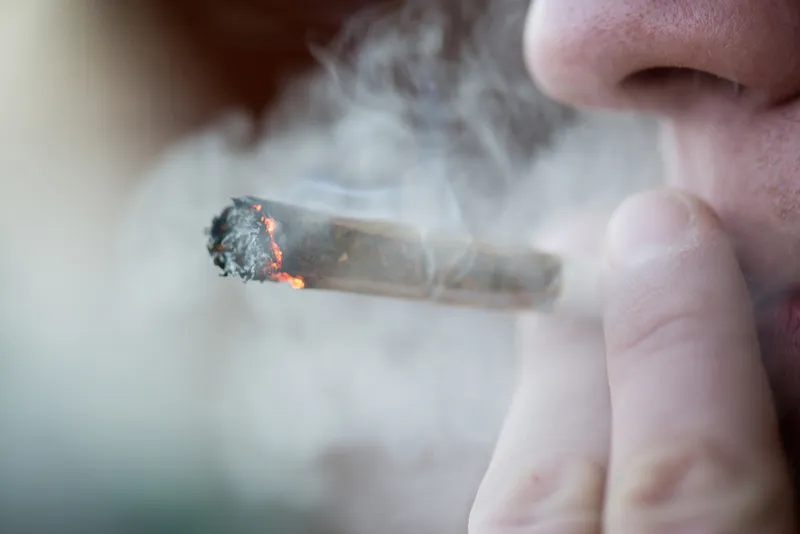
Inhaling secondhand marijuana smoke even for just 1 minute may temporarily affect how blood vessels function, according to a new study done in rats.
After the rats had inhaled secondhand marijuana smoke for 1 minute, their blood vessels took at least three times longer to return to their normal function, compared with the time it took the same rats' blood vessels to recover after they had inhaled secondhand tobacco smoke.
Because the study was done in rats, the researchers don't know for sure whether inhaling secondhand marijuana smoke would cause the exact same effects in humans, said Matthew Springer, a professor of medicine at the University of California, San Francisco and the senior author of the study. [11 Odd Facts About Marijuana]
However, "the blood vessel function itself is similar in rats and humans," and therefore, it's reasonable to expect that human blood vessels would respond to marijuana smoke similarly, Springer told Live Science.
In the study, published July 27 in the Journal of the American Heart Association, the researchers looked at how well blood vessels carried blood in a group of eight rats before and after the rats were exposed to secondhand cigarette smoke for 1 minute. The smoke was produced using a special ventilator that simulates a human puffing on a cigarette. They found that the rats' blood vessels carried blood less efficiently for 30 minutes following their exposure to the smoke.
Then, the researchers repeated the experiment with secondhand marijuana smoke. This time around, they found that the rats' blood vessels carried blood less efficiently for 90 minutes — three times longer than after they had been exposed to cigarette smoke.
It seems that the actual burning of the marijuana plant material — as opposed to the chemicals in the plant, such as tetrahydrocannabinol (THC), the main psychoactive ingredient in marijuana — is responsible for the harmful effects of marijuana smoke on blood vessels, the researchers said.
Get the world’s most fascinating discoveries delivered straight to your inbox.
It's not clear, however, why marijuana smoke seems to affect blood vessels for even longer than cigarette smoke does, Springer said. [11 Surprising Facts About the Circulatory System]
Previous research suggested that thousands of potentially harmful compounds are released when either tobacco or marijuana is smoked, Springer said.
But tobacco smoke and marijuana smoke release different amounts of these compounds, and these differences might explain why the marijuana smoke seemed to have a longer-lasting effect on blood vessels than tobacco smoke did, at least in rats, he said.
More research is needed to determine if similar health effects could be seen in humans. But researchers know that when a person's blood function is impaired as a result of exposure to secondhand smoke, that person's risk of heart attack or stroke might increase temporarily, Springer said. (When blood vessel function is impaired, a person is at risk for blood clots, which can lead to heart attack or stroke.)
Therefore, people should avoid exposure to secondhand marijuana smoke just as they should avoid exposure to secondhand cigarette smoke or smoke from any other sources, he said.
Originally published on Live Science.