













Secondhand Pot Smoke Can Make You Fail a Drug Test
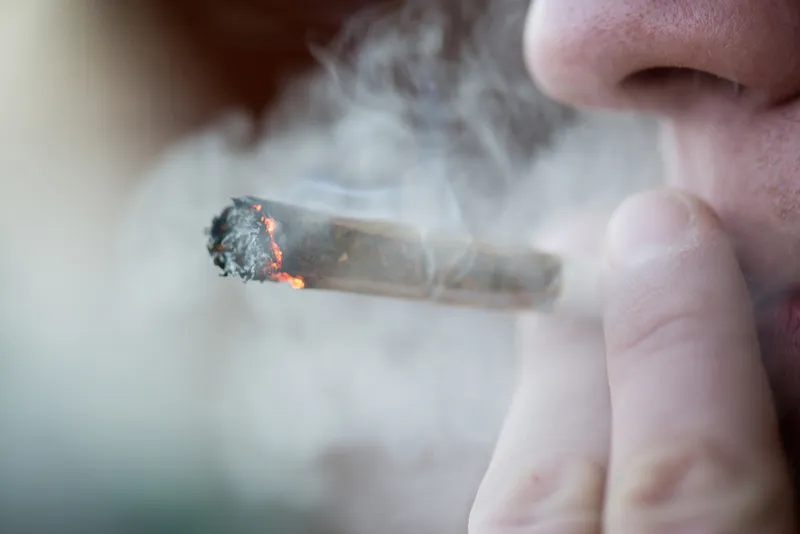
People who are exposed to secondhand marijuana smoke may feel a bit of the "high" that comes with using the drug, a new study finds. They may also feel unable to think clearly, and they may even have detectable levels of the drug in their urine or blood. But all of this happens only if they are exposed to marijuana smoke under severely unventilated conditions, the study found.
"If you're going to breathe in enough passive cannabis smoke to feel high and potentially be slightly impaired, you could fail a drug test," said Evan S. Herrmann, the study's lead author and postdoctoral fellow in psychiatry and behavioral sciences at Johns Hopkins School of Medicine. "But this only happens under a very extreme situation."
Cannabis is the world's most commonly used illicit drug. It is often smoked in small, enclosed spaces with poor ventilation, according to the study.
Studies in the 1980s showed that such "social exposure" to pot smoke could trigger positive drug tests for cannabis' main psychoactive ingredient, tetrahydrocannabinol (THC). But such studies had several limitations. They used marijuana that had much lower potency than the pot available today and they failed to account for normal levels of ventilation in rooms. They also did not examine how people may feel or behave after such exposures.
"This new study probes a question people have been wondering forever," said Ziva Cooper, an assistant professor of clinical neurobiology at Columbia University, who was not involved in this research. "Do people actually get high from these 'hot box' effects? And if so, does it change your capabilities or cause you to fail a drug test?"
In the first study of its kind, Herrmann's team recruited about 20 healthy people between the ages of 18 and 45, including some who smoked marijuana and some who didn't use the drug. The researchers tested the participants' blood, saliva, urine and hair samples for cannabis biomarkers, and then asked six smokers and six nonsmokers to relax in a Plexiglas and aluminum smoke chamber about the size of a dorm room. Participants underwent two separate sessions, each an hour long.
The researchers gave each of the six smokers 10 marijuana cigarettes, each containing 1 gram of high-potency weed, and instructed them to smoke at their leisure for the hour while the six non-smokers sat by their side in the chamber.
Get the world’s most fascinating discoveries delivered straight to your inbox.
During one test session, the room's ventilation system was switched on, allowing air to flow in and out at a standard office-building rate. In the other session, the researchers restricted the airflow in the chamber. After the 60 minutes, each participant completed a series of biological, cognitive and subjective surveys and tasks at regular intervals for up to 34 hours after exposure. [11 Odd Facts About Marijuana]
"Our results are pretty consistent with what we expected," Herrmann said. The new findings confirm "it's really hard to get a positive [drug test result] from passive smoke unless you're in an extreme scenario," he said.
Under the unventilated, "hot box" condition, the nonsmokers showed slight impairments on cognitive tests, reported feeling high, and had detectable levels of THC in their blood and urine for up to 22 hours post-exposure. Those in the ventilated condition had much lower levels of THC in their blood, did not feel impaired or high, and did not test positive for THC in their urine.
But the unventilated room is not representative of most real-life situations, the researchers said. "We modeled the worst-case scenario," Herrmann said. "You are in an enclosed room for an hour with 15 grams of cannabis being smoked."
Ideally, the study would have had a placebo group, in which nonsmokers were exposed to smoke without THC. This would have helped the researchers determine whether the feeling of being high was due to the marijuana or simply a placebo effect, from being exposed to smoke.
Still, "this study is really important because it adds to our limited knowledge of the direct effects of cannabis smoking and the potential dangers of second-hand smoke," Cooper said.
Follow Live Science @livescience, Facebook & Google+. Originally published on Live Science.