 Live Science Plus





You are now subscribed
Your newsletter sign-up was successful
Want to add more newsletters?

Delivered Daily
Daily Newsletter
Sign up for the latest discoveries, groundbreaking research and fascinating breakthroughs that impact you and the wider world direct to your inbox.

Once a week
Life's Little Mysteries
Feed your curiosity with an exclusive mystery every week, solved with science and delivered direct to your inbox before it's seen anywhere else.

Once a week
How It Works
Sign up to our free science & technology newsletter for your weekly fix of fascinating articles, quick quizzes, amazing images, and more

Delivered daily
Space.com Newsletter
Breaking space news, the latest updates on rocket launches, skywatching events and more!

Once a month
Watch This Space
Sign up to our monthly entertainment newsletter to keep up with all our coverage of the latest sci-fi and space movies, tv shows, games and books.

Once a week
Night Sky This Week
Discover this week's must-see night sky events, moon phases, and stunning astrophotos. Sign up for our skywatching newsletter and explore the universe with us!
Join the club
Get full access to premium articles, exclusive features and a growing list of member rewards.
Mongooses are long, furry creatures with a pointed face and a bushy tail. Despite popular belief, mongooses are not rodents. They are members of the Herpestidae family, which also includes civets and meerkats.
Size
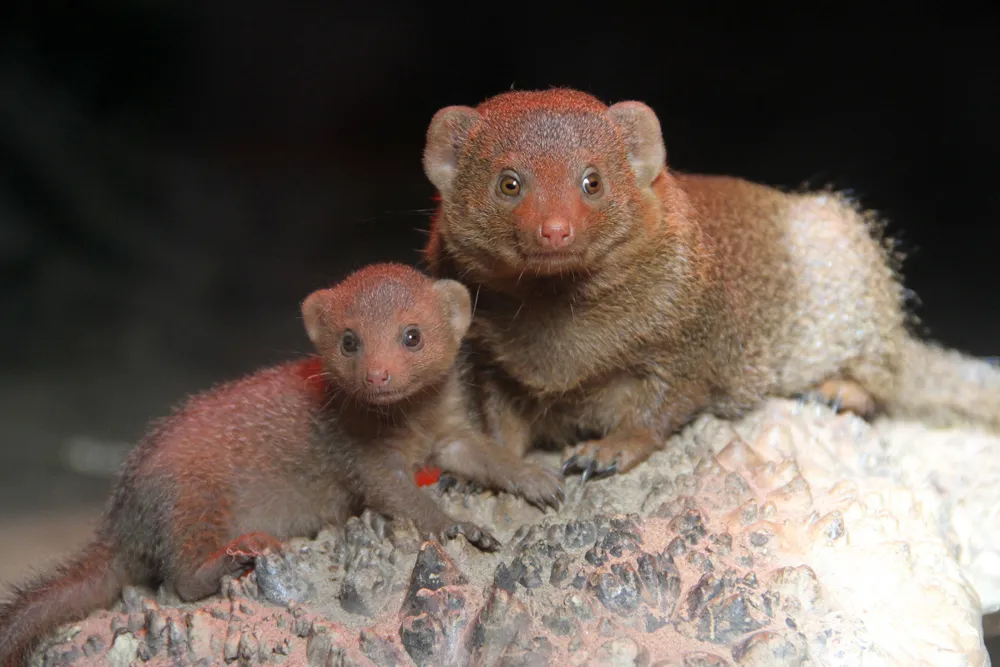
There are 34 species of mongoose in 20 genera, according to the University of Michigan's Animal Diversity Web (ADW). With so many different types of mongoose, sizes vary greatly. Their bodies range from the dwarf mongoose at 7 inches (18 centimeters) long to the Egyptian mongoose, which is 2 feet (60 cm) long, according to National Geographic.
Habitat
Most species of mongoose are found in Africa, but some also live in southern Asia and the Iberian Peninsula, according to National Geographic. Some species of mongoose have been introduced into other areas of the world, such as Caribbean and Hawaiian islands.
Mongooses live in burrows made of a complex system of tunnels or in trees in many different types of landscapes, including deserts and tropical forests. The bushy-tailed mongoose, for example, lives in lowland forests near rivers. The Gambian mongoose lives in areas with grasslands, coastal scrub and forests.
Habits
Some species of mongoose are very social and live in large groups called colonies. Colonies can have as many as 50 members, according to ADW. Other species of mongoose like to live alone.
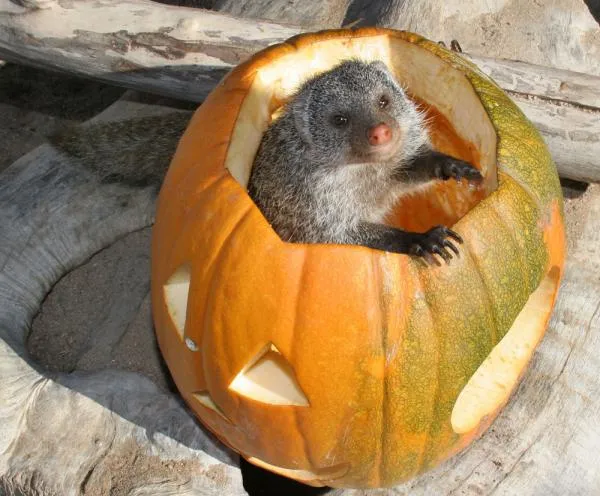
Banded mongoose colonies live, travel and fight together as a team. They stay in one area for around a week, then move in a wave to another location, much like a flock of birds when they migrate, according to Animal Planet.
Mongooses are active during the day and sleep at night. Throughout the day, they chatter incessantly to each other, and combine discrete units of sound somewhat like human speech, using vowel and syllable combinations to possibly coordinate group movements, foraging information and other important messages.
Diet
Mongooses are omnivores, which means they eat both meat and vegetation. Typically, they prefer to eat small animals such as birds, reptiles, fish, snakes, crabs, rodents, frogs, insects and worms. They will also supplement their diet with eggs, nuts, fruits, roots, berries and seeds. To get into eggs, mongooses are known to crack the eggs against hard objects, according to National Geographic.
Offspring
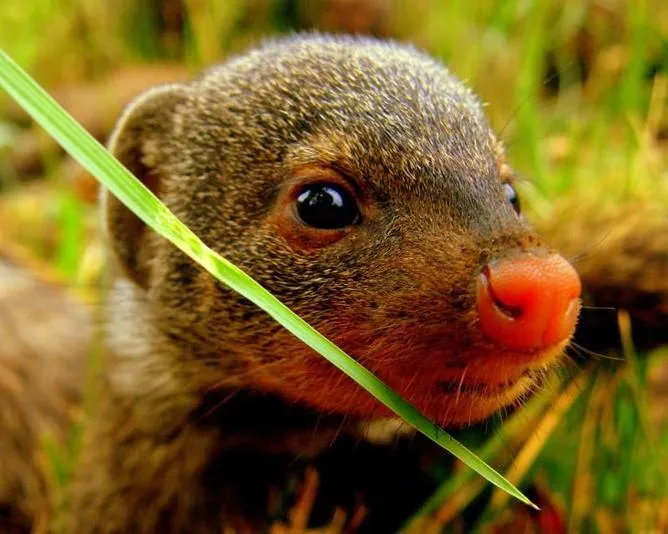
There hasn’t been much study on the reproduction habits of the mongoose. It is believed that mongooses breed during March to May and October to December, according to ADW. Mongooses have gestation periods of 42 to 105 days and give birth to one to four offspring at a time.
Baby mongooses are called pups and a group of offspring is called a litter. It is believed that mongooses become fully mature between 9 months to 2 years of age and live from 6 to 10 years in the wild.
Classification/taxonomy
Here is the taxonomy of the mongoose, according to the Integrated Taxonomic Information System (ITIS):
Kingdom: Animalia Subkingdom: Bilateria Infrakingdom: Deuterostomia Phylum: Chordata Subphylum: Vertebrata Infraphylum: Gnathostomata Superclass: Tetrapoda Class: Mammalia Subclass: Theria Infraclass: Eutheria Order: Carnivora Suborder: Feliformia Family: Herpestidae Genera & species: There are 20 genera and 34 species, including:
- Atilax paludinosus (marsh mongoose)
- Bdeogale crassicauda (bushy-tailed mongoose)
- Cynictis penicillata (yellow mongoose)
- Dologale dybowskii (Pousargues's mongoose)
- Galerella pulverulenta (Cape gray mongoose)
- Helogale parvula (dwarf mongoose)
- Herpestes ichneumon (Egyptian mongoose)
- Herpestes javanicus (Indian mongoose)
- Ichneumia albicauda (white-tailed mongoose)
- Liberiictis kuhni (Liberian mongoose)
- Mungos mungo (banded mongoose)
Conservation status
According to the International Union for Conservation of Nature (IUCN), most mongoose species are listed as threatened, but not extinct.
Ironically, in the 1800s mongooses were introduced to Hawaii and the West Indies to control rodent populations at sugarcane plantations. This introduction in turn caused many species of birds and other animals to almost become extinct. In fact, the small Asian mongoose is listed as one of the world's 100 worst invasive alien species.
Other facts
Some mongooses are legendary snake fighters. The Indian gray mongoose is particuarlly known for its fondness of fighting and eating poisonous snakes, such as cobras. "Rikki-tikki-tavi" is a short story by Rudyard Kipling about a young mongoose that fights a cobra.
Mongooses can live for up to 20 years in captivity, according to National Geographic.
Many mongoose species have a very strong, unpleasant smell due to secretions from its anal glands.
Indian mongooses groom each other.
Additional resources

