













Why Extraterrestrial Life May Need Alien Oceans

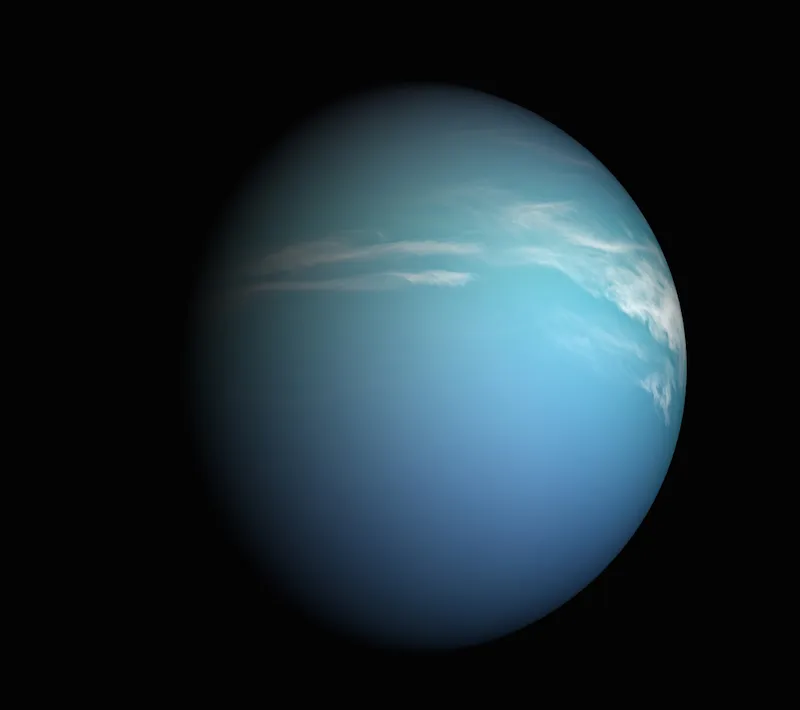
Scientists searching for planets where E.T. may live have homed in on places where liquid water could exist. But a livable world may require not just water, but oceans, a new study suggests.
A team of scientists created a computer simulation of ocean circulation on a hypothetical Earth-like planet. The findings show that oceans play a vital role in establishing a habitable and stable climate, according to the study published Sunday (July 20) in the journal Astrobiology.
"The number of planets being discovered outside our solar system is rapidly increasing," David Stevens, an applied mathematician at the University of East Anglia in England, said in a statement. "This research will help answer whether or not these planets could sustain alien life." [7 Huge Misconceptions About Aliens]
The number of known, potentially habitable exoplanets in the Milky Way galaxy has mushroomed in recent years, largely thanks to NASA's Kepler telescope, which detects the tiny dips in brightness of stars as planets cross in front of, or transit, them.
Scientists calculate that as many as one in five sunlike stars may harbor an Earth-like planet in the so-called "Goldilocks" zone — a region around a star thought to be just right for liquid water to exist. Researchers are now taking that a step further, looking for water and other signs of alien life in a planet's atmosphere.
As a result, most simulations of Earth-like planets with habitable climates focus on their atmospheres. But now, Stevens and his colleagues have created a simulation with an ocean-covered planet. With their model, the researchers investigated how changing the planet's rotation speed affected the transportation of heat when oceans were present.
The massive bodies of water played a major role in moderating climate on the hypothetical planet, the researchers found.Oceans "are beneficial because they cause the surface temperature to respond very slowly to seasonal changes in solar heating," Stevens said, adding that "they help ensure that temperature swings across a planet are kept to tolerable levels."
Get the world’s most fascinating discoveries delivered straight to your inbox.
The oceans transported heat across the planet, which could make more of the planet's surface habitable, the researchers said.
Many planets lie in the so-called habitable zone of their stars, but without oceans, the surface temperatures fluctuate wildly, the researchers said. Mars is a good example, because the planet orbits within the sun's habitable zone, but has temperatures that vary by 180 degrees Fahrenheit (82 degrees Celsius) over the course of a Martian day.
Including oceans in climate models of potentially habitable alien planets could prove essential to understanding whether any Earth-like worlds out there could develop and sustain life, the researchers said.
Follow Tanya Lewis on Twitter and Google+. Follow us @livescience, Facebook & Google+. Original article on Live Science.
