 Live Science Plus





You are now subscribed
Your newsletter sign-up was successful
Want to add more newsletters?

Delivered Daily
Daily Newsletter
Sign up for the latest discoveries, groundbreaking research and fascinating breakthroughs that impact you and the wider world direct to your inbox.

Once a week
Life's Little Mysteries
Feed your curiosity with an exclusive mystery every week, solved with science and delivered direct to your inbox before it's seen anywhere else.

Once a week
How It Works
Sign up to our free science & technology newsletter for your weekly fix of fascinating articles, quick quizzes, amazing images, and more

Delivered daily
Space.com Newsletter
Breaking space news, the latest updates on rocket launches, skywatching events and more!

Once a month
Watch This Space
Sign up to our monthly entertainment newsletter to keep up with all our coverage of the latest sci-fi and space movies, tv shows, games and books.

Once a week
Night Sky This Week
Discover this week's must-see night sky events, moon phases, and stunning astrophotos. Sign up for our skywatching newsletter and explore the universe with us!
Join the club
Get full access to premium articles, exclusive features and a growing list of member rewards.
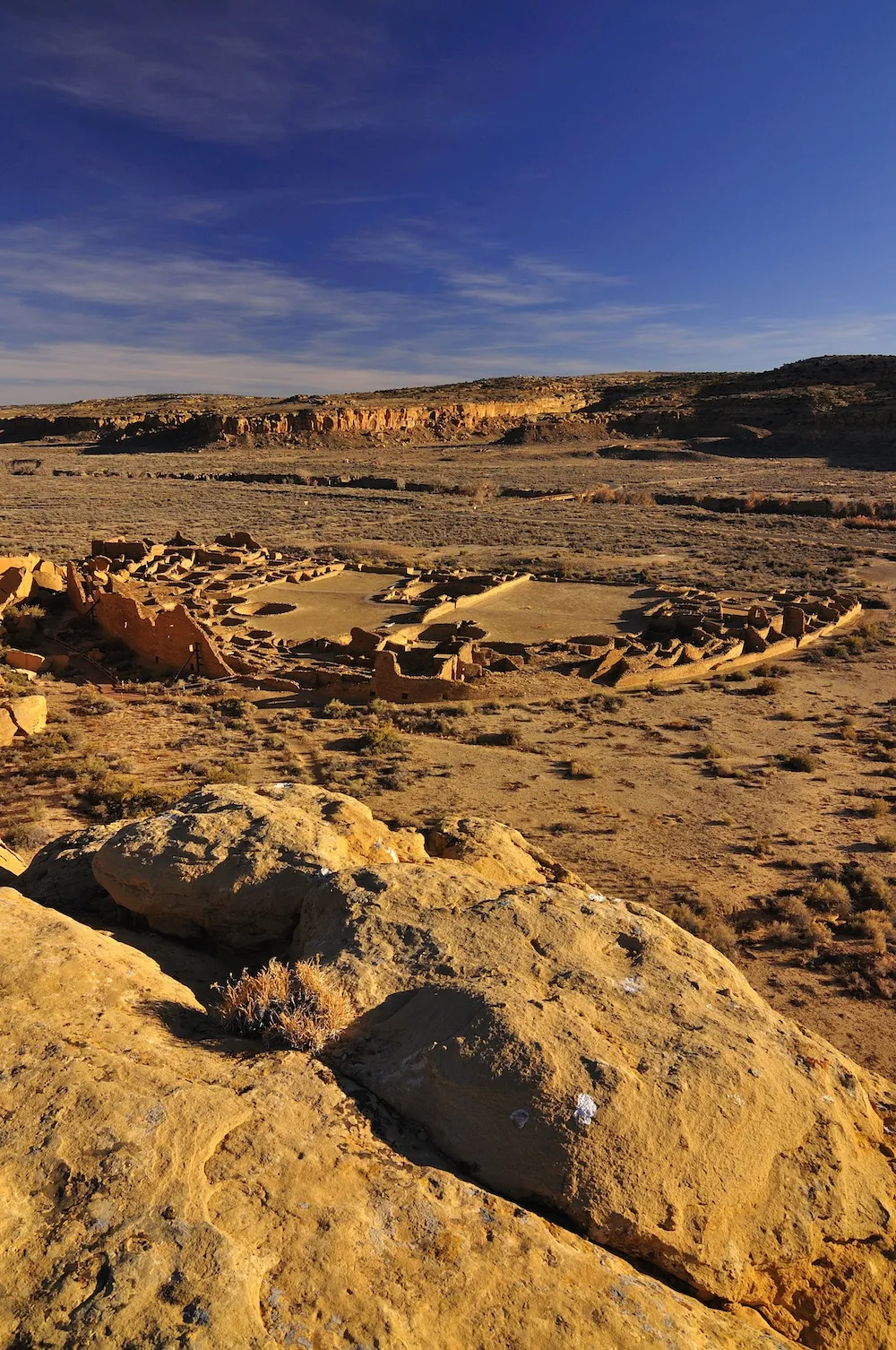
For hundreds of years, Native Americans in the southwestern United States had a prolonged baby boom — which would average out to each woman giving birth to more than six children, a new study finds. That baby streak, however, ended a little before the Spanish colonized the Americas.
"Birthrates were as high, or even higher, than anything we know in the world today," said study co-author Tim Kohler, an archaeologist and anthropologist at Washington State University.
Skeletal analysis
The researchers analyzed thousands of skeletal remains from hundreds of sites across the Four Corners region of the Southwest (the area that now makes up Utah, Arizona, New Mexico and Colorado) dating from 900 B.C. until the beginning of the colonial period in the early 1500s. (Most sites were excavated decades ago, and most of the remains have been returned to their tribes, Kohler said.)
By estimating the fraction of the population between ages 5 and 19 (young children's remains are too poorly preserved to include in the calculation), the researchers could get a rough estimate of the birthrate, or the number of babies born per year for every 1,000 people.
The birthrate slowly increased until about A.D. 500, and then rose more quickly and stayed high until A.D. 1300. The birthrate, about 0.049 in a year, was akin to that in modern-day Niger, where every woman has, on average, 6.89 children.
The rise in birthrate coincided with shifts in agricultural production. Though maize was first cultivated around Mexico City nearly 8,000 years ago and reached the Southwest by about 2000 B.C., most Native Americans in the region were nomadic, so they weren't farming it.
Then, in A.D. 500, selective breeding led to plumper maize seeds, and the crop also became more productive. This shift also coincided with a transition to a more settled way of life.
"We begin to see much more substantial dwellings, indicating that people are spending a much longer period of time in specific places," with shifts from wood to stone structures, Kohler told Live Science.
The number of dwellings also increased around this time period.
"We go from small hamlets to large villages in space of time from A.D. 600 to A.D. 800," Kohler said.
Birthrates leveled off around A.D. 1100 and declined precipitously after A.D. 1300. It's not clear exactly why that happened, but a severe drought in the 1100s may have fueled more conflict, eventually leading to a sudden collapse in the population, the researchers noted.
Nomad vs. agriculturalist
The shift to agriculture could have spurred a baby boom in multiple ways.
A nomadic lifestyle could mean picking up camp and trekking long distances every month — no easy feat for a woman if she had more than one child to carry. At the same time, hunter-gatherers tend to breastfeed their children longer because they have few appropriate "weaning foods." The high-caloric demand of the lifestyle, combined with prolonged breastfeeding, may have suppressed ovulation in women, leading to fewer children, Kohler said.
In contrast, a woman who had to walk only a small distance to tend the fields could take care of multiple dependent children, and could also wean her children sooner by feeding them a maize porridge, Kohler said.
The findings were published today (June 30) in the journal Proceedings of the National Academy of Sciences.
Follow Tia Ghose on Twitter and Google+. Follow Live Science @livescience, Facebook & Google+. Original article on Live Science.

