 Live Science Plus





You are now subscribed
Your newsletter sign-up was successful
Want to add more newsletters?

Delivered Daily
Daily Newsletter
Sign up for the latest discoveries, groundbreaking research and fascinating breakthroughs that impact you and the wider world direct to your inbox.
Once a week
Life's Little Mysteries
Feed your curiosity with an exclusive mystery every week, solved with science and delivered direct to your inbox before it's seen anywhere else.
Once a week
How It Works
Sign up to our free science & technology newsletter for your weekly fix of fascinating articles, quick quizzes, amazing images, and more

Delivered daily
Space.com Newsletter
Breaking space news, the latest updates on rocket launches, skywatching events and more!

Once a month
Watch This Space
Sign up to our monthly entertainment newsletter to keep up with all our coverage of the latest sci-fi and space movies, tv shows, games and books.

Once a week
Night Sky This Week
Discover this week's must-see night sky events, moon phases, and stunning astrophotos. Sign up for our skywatching newsletter and explore the universe with us!
Join the club
Get full access to premium articles, exclusive features and a growing list of member rewards.
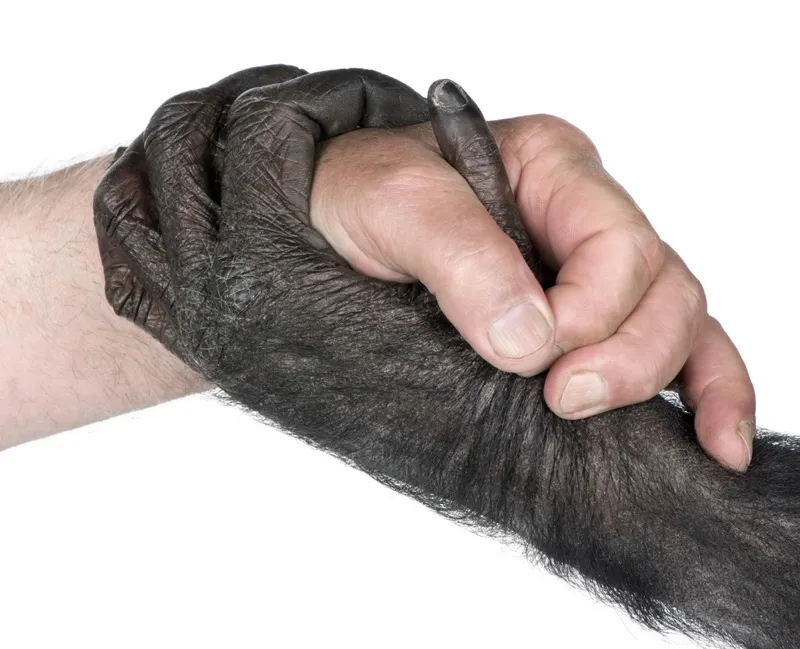
Ever heard of a conscientious chimp? An extroverted ape? New research suggests that chimpanzees, man's closest living relatives, have personality traits quite similar to their human cousins.
The study, conducted by researchers at Georgia State University, found that chimpanzees not only possess many of the same personality traits as humans — from agreeableness to extroversion — these traits are structured almost identically in both humans and chimps.
"Our work demonstrates the promise of using chimpanzee models to investigate the neurobiology of personality processes," said Robert Latzman, assistant professor of psychology at Georgia State University, who led the research team. "We know that these processes are associated with a variety of emotional health outcomes. We're excited to continue investigating the links."
To analyze chimp personalities, researchers used a common tool called the Chimpanzee Personality Questionnaire. Think of it as a Myers-Briggs test for chimps. Caregivers are asked to rate chimps in 43 categories based on their observations of each animal's daily behavior. Is the chimp excitable? Does it demonstrate impulsive tendencies? Is it playful or timid? [8 Humanlike Behaviors of Primates]
Researchers analyzed 174 of these completed questionnaires from chimp caregivers at the Yerkes National Primate Center at Emory University. The researchers wanted to find out which traits tend to go together in chimps to form more fundamental, overarching traits, called meta-traits.
These meta-traits were found to be the most fundamental personality traits for chimpanzees. Unlike humans, who are typically categorized into five main personality types, chimps generally fall into one of two categories: they're either dominant "Alpha" types or more playful and sociable "Beta" types.
However, the researchers found that being an Alpha or a Beta usually implies that a chimp possesses certain additional personality traits. In their study, the researchers broke down the meta-traits into smaller traits. And it's those smaller traits, they found that closely resemble the five main personality traits of humans: openness, conscientiousness, extraversion, agreeableness and neuroticism. Chimps also tend to exhibit a similar mix of traits — dominance, conscientiousness, extroversion, agreeableness and intellect.
So what accounts for this striking parallel between humans and chimps? Researchers believe it has to do with the species' similar neurobiology, or the prevalence of certain hormones in the brain.
The researchers found that chimpanzee personality traits correlate with the function of a hormone called vasopressin. In humans, vasopressin is known to be involved in regulating both feelings of aggression and feelings of love and generosity.
In chimps, vasopressin was found to contribute to the prevalence of certain personality traits. Male chimps born with a common variant in the genes that control vasopressin were found to be more dominant and disinhibited, while females with this genetic variation tended to be less dominate and more inhibited.
The new research is detailed online on April 21 in the journal PLOS ONE.
Follow Elizabeth Palermo on Twitter @techEpalermo, Facebook or Google+. Follow Live Science @livescience. We're also on Facebook & Google+. Originally published on Live Science.
