Live Science Plus





You are now subscribed
Your newsletter sign-up was successful
Want to add more newsletters?

Delivered Daily
Daily Newsletter
Sign up for the latest discoveries, groundbreaking research and fascinating breakthroughs that impact you and the wider world direct to your inbox.

Once a week
Life's Little Mysteries
Feed your curiosity with an exclusive mystery every week, solved with science and delivered direct to your inbox before it's seen anywhere else.

Once a week
How It Works
Sign up to our free science & technology newsletter for your weekly fix of fascinating articles, quick quizzes, amazing images, and more
Delivered daily
Space.com Newsletter
Breaking space news, the latest updates on rocket launches, skywatching events and more!

Once a month
Watch This Space
Sign up to our monthly entertainment newsletter to keep up with all our coverage of the latest sci-fi and space movies, tv shows, games and books.

Once a week
Night Sky This Week
Discover this week's must-see night sky events, moon phases, and stunning astrophotos. Sign up for our skywatching newsletter and explore the universe with us!
Join the club
Get full access to premium articles, exclusive features and a growing list of member rewards.
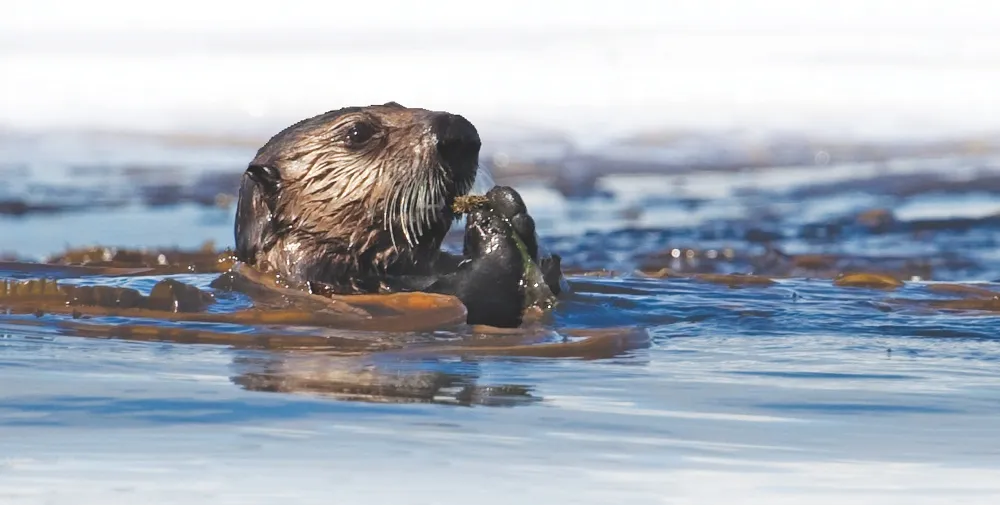
Nearly a quarter of a century after the Exxon Valdez disaster dumped 11 million gallons (40 million liters) of oil into Alaska's Prince William Sound, sea otter numbers have rebounded to levels seen before the spill, the U.S. Geological Survey announced Friday (Feb. 28) with a new study.
Sea otters (Enhydra lutris), found along the Pacific coasts of North America and Northeast Asia, are one of more than 20 types of animals that make their home near the shore affected by the March 1989 oil spill. The disaster occurred in prime sea otter habitat, according to the USGS study. The oil "drastically reduces" the ability of the otters' fur to provide insulation, the report said.
"Although recovery timelines varied widely among species, our work shows that recovery of species vulnerable to long-term effects of oil spills can take decades," said lead author of the study, Brenda Ballachey, a USGS research biologist.
Researchers used a variety of methods to gauge how sea otters are fairing today. The scientists conducted aerial surveys that counted the animals' numbers, examined causes of sea otter deaths and looked at gene expression in sea otters to check for influence from oil exposure. All of these measures pointed to shifts back to pre-spill levels.
The aerial surveys found numbers of sea otters comparable to those seen before the tanker Exxon Valdez ran aground on Bligh Reef, and the gene expression data suggested a reduction in oil exposure since 2008. However, another recent study involving USGS scientists found protected pockets of oil that had been virtually unchanged since the spill.
Examinations of sea otter carcasses showed that most deaths now occur in very old and very young sea otters, as was the pattern before the spill. By contrast, most deaths occurred among middle-aged sea otters in the spill's aftermath.
Follow Andrea Thompson @AndreaTOAP, Pinterest and Google+. Follow us @livescience, Facebook & Google+. Original article on Live Science.