 Live Science Plus





You are now subscribed
Your newsletter sign-up was successful
Want to add more newsletters?
Delivered Daily
Daily Newsletter
Sign up for the latest discoveries, groundbreaking research and fascinating breakthroughs that impact you and the wider world direct to your inbox.
Once a week
Life's Little Mysteries
Feed your curiosity with an exclusive mystery every week, solved with science and delivered direct to your inbox before it's seen anywhere else.
Once a week
How It Works
Sign up to our free science & technology newsletter for your weekly fix of fascinating articles, quick quizzes, amazing images, and more
Delivered daily
Space.com Newsletter
Breaking space news, the latest updates on rocket launches, skywatching events and more!
Once a month
Watch This Space
Sign up to our monthly entertainment newsletter to keep up with all our coverage of the latest sci-fi and space movies, tv shows, games and books.
Once a week
Night Sky This Week
Discover this week's must-see night sky events, moon phases, and stunning astrophotos. Sign up for our skywatching newsletter and explore the universe with us!
Join the club
Get full access to premium articles, exclusive features and a growing list of member rewards.
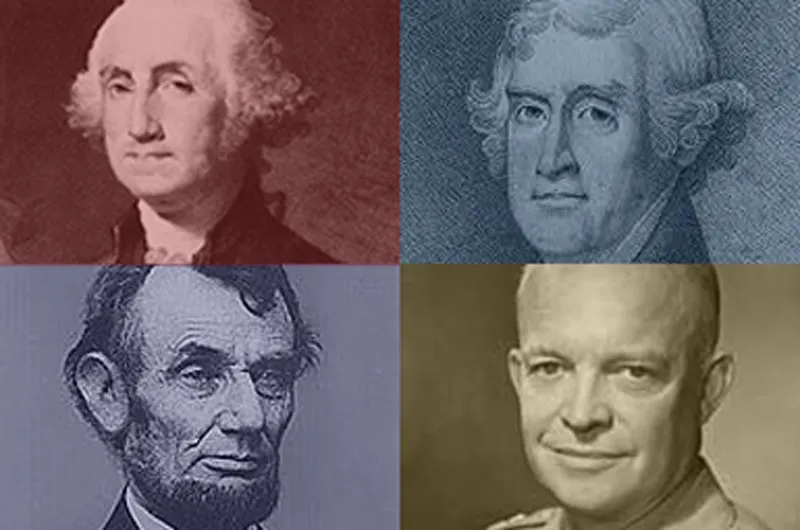
Which U.S. president was most science-friendly? A new contest by the Union of Concerned Scientists (UCS) pits Lincoln against Eisenhower and Kennedy against Nixon in a match-up just in time for President's Day (Feb. 17).
The goal of the contest is to highlight science in the presidents' careers, "whether it’s Jefferson commissioning the Lewis and Clark expedition, Theodore Roosevelt pushing for the Pure Food and Drug Act, or George H.W. Bush launching new Earth observation programs," said Aaron Huertas, a spokesman for the UCS, a nonprofit organization that promotes science in the public sphere.
The public can see the presidents' accomplishments and vote for their favorites at the website of the UCS Center for Science and Democracy. [6 Politicians Who Got the Science Wrong]
In the first round of competition, Abraham Lincoln goes head-to-head with Dwight Eisenhower. Lincoln's scientific accomplishments include being an inventor (he held a patent for a device to lift boats over shoals) and creating the National Academy of Sciences. Eisenhower, on the other hand, launched NASA.
Meanwhile, Jimmy Carter, who created the Department of Energy and expanded nuclear safety inspections, goes head-to-head with education-loving Thomas Jefferson, who founded the University of Virginia and commissioned the Lewis and Clark expedition to map and survey the West.
George H.W. Bush goes up against Theodore Roosevelt. The former made moves against chlorofluorocarbons (CFCs), which damage the ozone layer, and acid rain. The latter was a staunch conservationist, who created five national parks and personality mapped The Rio Roosevelt (previously known as the Rio da Dúvida, or River of Doubt) in Brazil.
Finally, just as John F. Kennedy and Richard Nixon went mano-a-mano in the nation's first televised presidential campaign debate in 1960, they're up against each other again, this time for their science prowess. Kennedy, of course, initiated Project Apollo, which would send mankind to the moon. Nixon instituted environmental protections in the form of a new Endangered Species Act, among other laws, and founded the National Oceanic and Atmospheric Administration (NOAA) and the Environmental Protection Agency (EPA).
The winners of Round 1 will face off in Round 2 over President's weekend.
Follow Stephanie Pappas on Twitter and Google+. Follow us @livescience, Facebook & Google+. Original article on Live Science.

