













What Are the World's Fastest Trains?

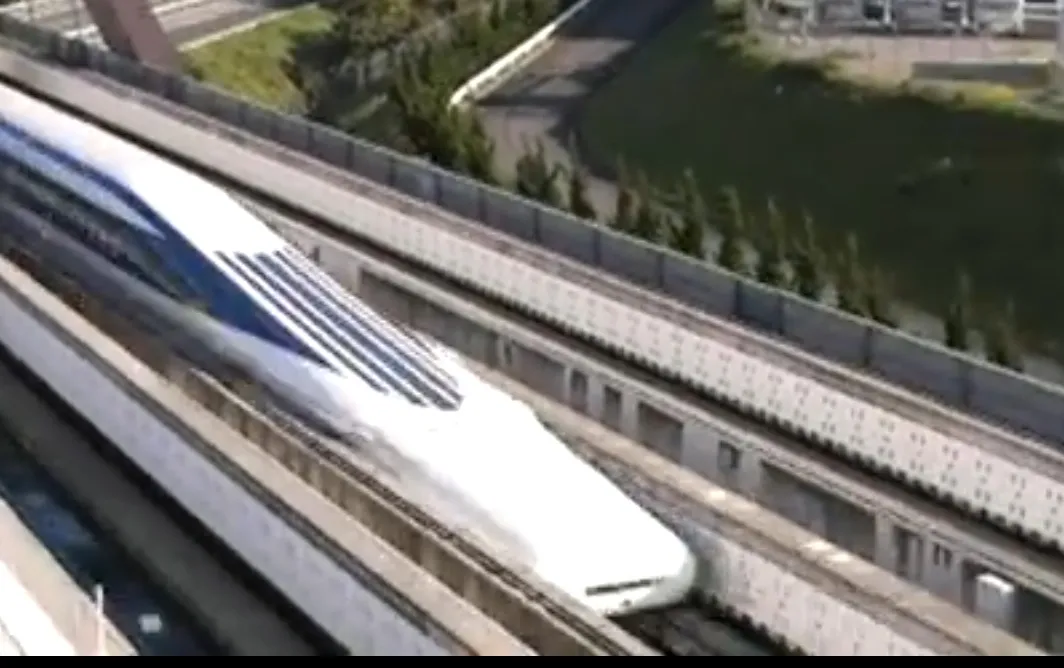
In 2027, Japan's L0 trains will be ready to take passengers between Tokyo and Nagoya at the blistering speed of 310 mph (499 km/h) in everyday operation.
The trains, which use magnetic-levitation (maglev) technology, will be the fastest commuter trains in the world when they're up and running. For now, however, that title technically belongs to another maglev train, China's Shanghai Maglev Train.
The Shanghai Maglev Train is capable of hitting 311 mph (501 km/h) and has a top operational speed of 268 mph (431 km/h) as it zips to and from the Shanghai Pudong International Airport.
By contrast, China's CRH380A train — the world's second-fastest train in regular commuter service — reached 302 mph (486 km/h) in a 2010 test run, and an top operational speed of 236 mph (380 km/h).
During everyday operation, the CRH380A — an electric, high-speed train — cruises at 217 mph (349 km/h) as it travels along the Hangzhou High-Speed Railway and the Shanghai-Nanjing High-Speed Railway, according to CSR, the train's manufacturer.
The absolute fastest train speed ever recorded, as reported by Guinness World Records, was Japanese prototype JR-Maglev MLX01, which was clocked at 361 mph (581 km/h) during a test run in 2003. In 2007, a specially tuned model of the French TGV (Train à Grande Vitesse) reached 357 mph (575 km/h), earning it the world record for the fastest conventional train.
Follow Joseph Castro on Twitter. Follow us @livescience, Facebook & Google+.
Get the world’s most fascinating discoveries delivered straight to your inbox.
