













Mammoth unearthed
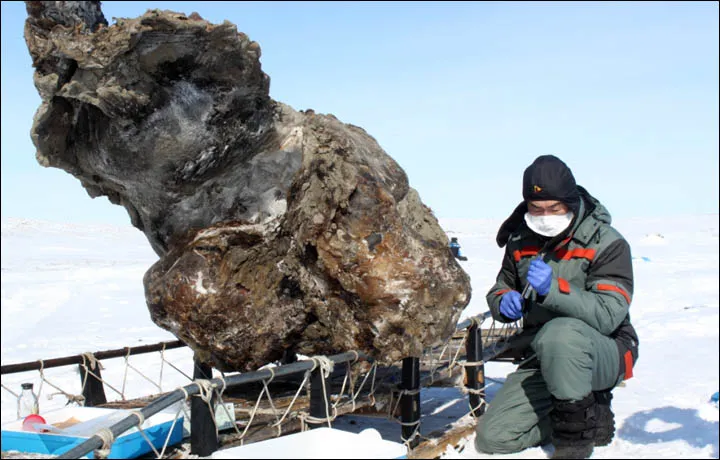
In May 2013, researchers Semyon Grigoriev and colleagues at North-Eastern Federal University in Yakutsk recently unearthed an astonishingly well-preserved mammoth carcass on an island off the coast of Siberia.
Fresh blood

The researchers said the carcass, which had been partially buried in the ice, was so well preserved that it contained flowing blood.
Oozing blood

When the team struck at it with a pick, blood flowed from the carcass.
Pristine condition

The blood found suggests that the mammoth was possibly the best preserved mammoth found.
Tissue find

But though the blood is a promising sign, there's no telling whether the cells inside the mammoth are in good enough condition to yield usable DNA. The ultimate goal is to clone a woolly mammoth.
Partially eaten

The team estimates that the mammoth lived about 10,000 years ago. The upper torso and legs were gnawed on by predators.
Carrying back

After the discovery, the researchers carried the mammoth across the frozen terrain on a sled.
Get the world’s most fascinating discoveries delivered straight to your inbox.
Research hopes

If the team finds intact white blood cells or tissue cells, they may be able to extract relatively long segments of DNA. Still, it's incredibly unlikely that the material will be in good enough condition to make cloning a mammoth a reality.
Cloned creature
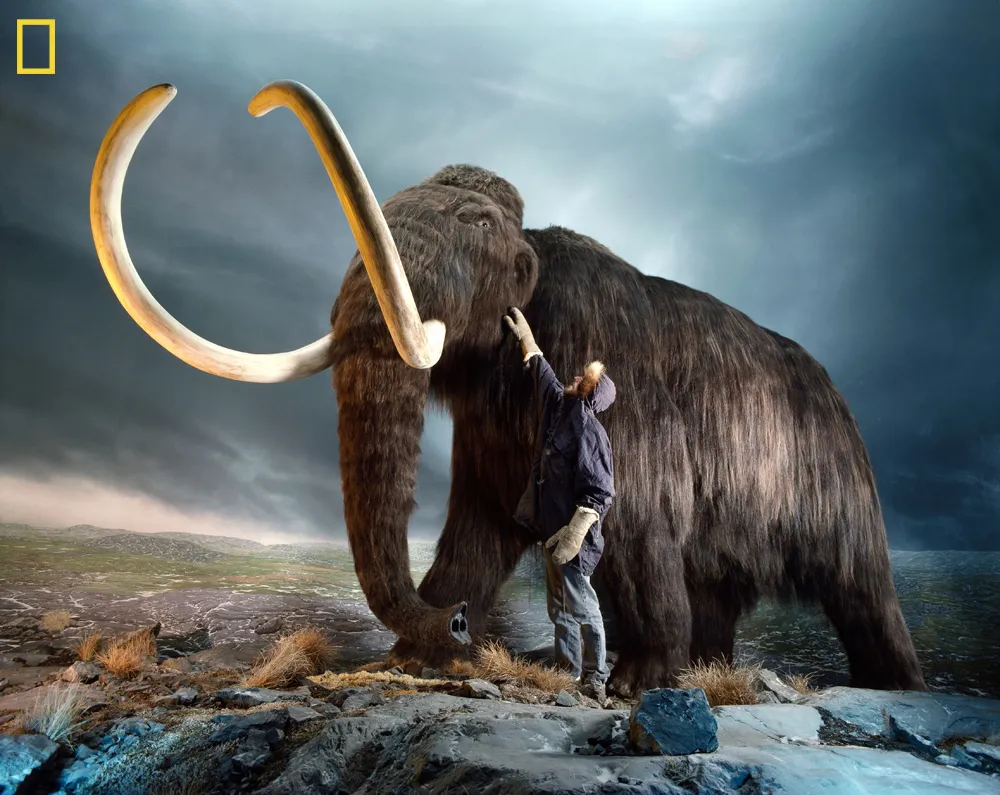
South Korean, Japanese and Russian teams are working to clone a mammoth by piecing together snippets of DNA found in mammoth fossils using the elephant genome as a template. Afterwards, they would inject mammoth DNA into the egg of an elephant and have an elephant gestate the extinct creature for 22 months.

Tia is the editor-in-chief (premium) and was formerly managing editor and senior writer for Live Science. Her work has appeared in Scientific American, Wired.com, Science News and other outlets. She holds a master's degree in bioengineering from the University of Washington, a graduate certificate in science writing from UC Santa Cruz and a bachelor's degree in mechanical engineering from the University of Texas at Austin. Tia was part of a team at the Milwaukee Journal Sentinel that published the Empty Cradles series on preterm births, which won multiple awards, including the 2012 Casey Medal for Meritorious Journalism.