
 Live Science Plus



Earthquake Weather? Hurricane Irene May Have Triggered Tiny Temblors

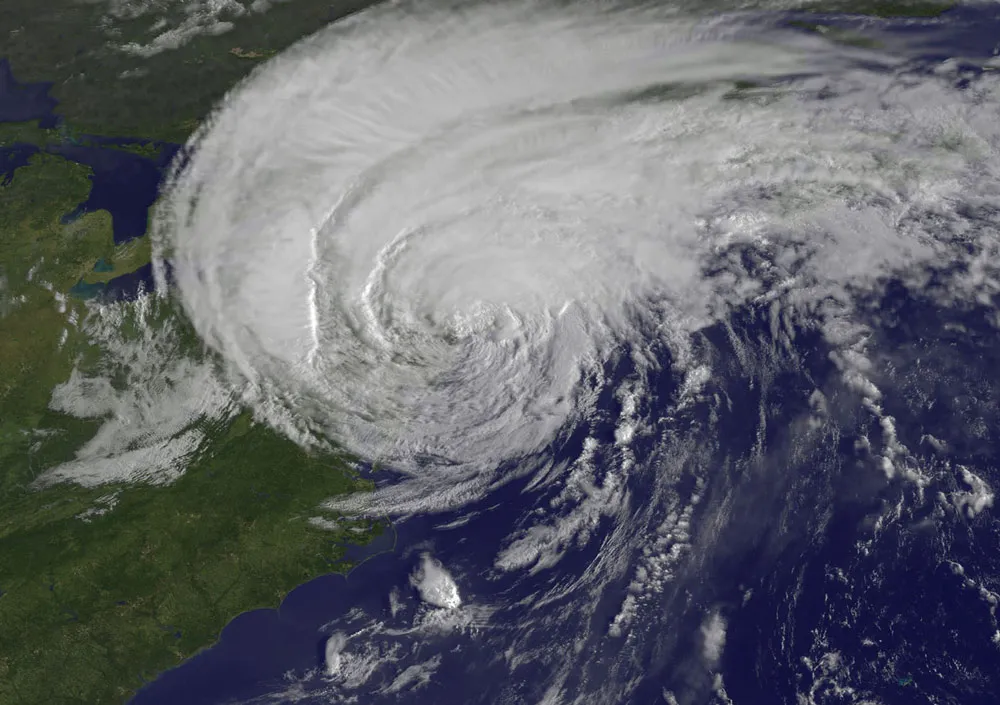
Hot or cold, rain or snow, geoscientists say there's no evidence for earthquake weather. But the biggest storms are starting to prove them wrong.
The latest evidence for the link between earthquakes and major storms comes from Virginia, a state pummeled by Hurricane Irene in 2011. The storm hit just five days after the magnitude-5.8 Virginia earthquake, so hundreds of aftershocks were still rattling the state.
Seismologists saw a spike in aftershocks a few hours after the storm roared through, said Xiaofeng Meng, a graduate student at Georgia Tech and lead author of a study examining the aftershocks. The results of the research were presented Friday (April 19) at the Seismological Society of America's annual meeting in Salt Lake City.

The one-two punch was a unique natural experiment. An unusually dense network of earthquake monitors was already in place to watch the Virginia earthquake's residual rumblings. And the sheer number of aftershocks meant scientists had enough temblors to see the storm's possible effects.

Meng said the drop in air pressure as the hurricane passed over the region could have changed forces on faults stressed by the earthquake, sparking aftershocks. Perhaps the lower pressure unlocked the faults, letting them slip and thus causing earthquakes. The pressure drop from Hurricane Irene was within the range that can trigger earthquakes, Meng told OurAmazingPlanet.
In a similar vein, a 2009 study published in the journal Nature suggested pressure changes from typhoons in Taiwan are linked to slow-slip earthquakes, the gentle events that last for hours or days and are never felt at Earth's surface. Another way hurricanes and typhoons (same storms, different names) may start earthquakes is through heavy rains, which spawn landslides. As with atmospheric pressure changes, the landslide could shift the forces on underground faults, leading to earthquakes, according to research presented at the 2011 American Geophysical Union annual meeting.
The Georgia Tech team is not yet convinced the sharp increase in aftershocks after Hurricane Irene is truly linked to the hurricane — it could just be a coincidence, Meng said. For example, there were unexplained small spikes before the hurricane arrived in Virginia.
"This is a debated topic," Meng said. "We hope to find solid evidence to prove or disprove the case."
Email Becky Oskin or follow her @beckyoskin. Follow us @OAPlanet, Facebook & Google+. Original article on LiveScience's OurAmazingPlanet.
