
















Images: Black Bears Are Back in Nevada

The Black Bear Is Back
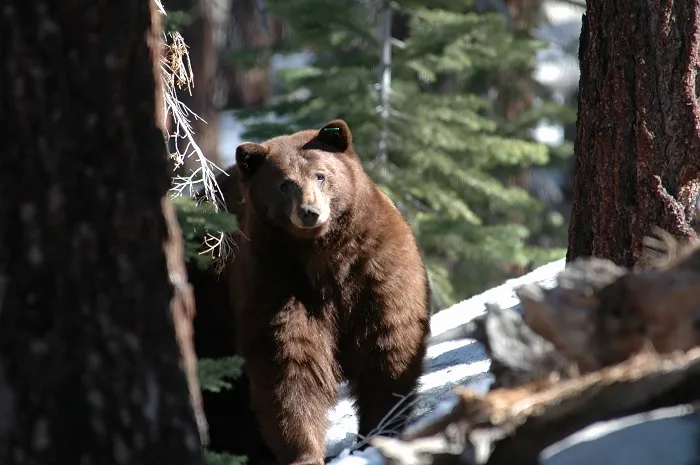
After an 80-year hiatus, black bears are returning to their historic habitat in Nevada.
Population Rising

The black bear in this image was caught by the Nevada Department of Wildlife in 2005. A 15-year study showed that the species' population in the state is growing and expanding eastward.
Cute Cubs

This photo shows two cubs from the study area in Nevada, where bears are moving back into their former habitat. Though the bears' comeback might be a conservation success, the animals' return presents a host of management questions for humans in the region who had been long accustomed to a life without bears.

Dumpster Divers

Access to trash is one of the main reasons why bears flock to urban areas from outlying wild habitats. These cubs got into a dumpster in Zephyr Cove, Nev., a town along Lake Tahoe. Their garbage-picking is more than just a problem for humans. Bears that are habituated to people and urban areas tend to gain more weight, get pregnant at a younger age and die young, violent deaths, compared to their wild counterparts, research has shown.
Burly Burglar

A tranquilizer dart is aimed at an urban bear that broke into a residential garage in Nevada.
A Messy Break-In

Two bears broke into this home in Incline Village, Nev., on the north shore of Lake Tahoe, causing thousands of dollars in damage.
Leaving Their Mark

Bears are more likely to break into a home during the summer and when drought conditions make it harder to find food in the wild.
Get the world’s most fascinating discoveries delivered straight to your inbox.
Photobomb

This image shows a field assistant and his Karelian bear dog in 2007 responding to an urban bear in Minden, Nev.
Dog Chases Bear

Karelian bear dogs, historically used in bear hunts, are often deployed in the aversive conditioning of urban bears. When captured bears are being released back into the wild, the dogs chase and bark at them to help teach the bears to avoid humans and their boundaries.
Studying Bears

A 400-pound (181-kilogram) tranquilized male research bear lies on the ground next to two volunteers and one happy Karelian bear dog. During their study, researchers collected data on more than 400 bears in Nevada.
Captured Cub

Researcher Carl Lackey, a biologist with the Nevada Department of Wildlife, weighs a six-week old black bear cub.
