 Live Science Plus






Google Goes Diving on The Great Barrier Reef
You are now subscribed
Your newsletter sign-up was successful
Want to add more newsletters?

Delivered Daily
Daily Newsletter
Sign up for the latest discoveries, groundbreaking research and fascinating breakthroughs that impact you and the wider world direct to your inbox.

Once a week
Life's Little Mysteries
Feed your curiosity with an exclusive mystery every week, solved with science and delivered direct to your inbox before it's seen anywhere else.

Once a week
How It Works
Sign up to our free science & technology newsletter for your weekly fix of fascinating articles, quick quizzes, amazing images, and more

Delivered daily
Space.com Newsletter
Breaking space news, the latest updates on rocket launches, skywatching events and more!

Once a month
Watch This Space
Sign up to our monthly entertainment newsletter to keep up with all our coverage of the latest sci-fi and space movies, tv shows, games and books.

Once a week
Night Sky This Week
Discover this week's must-see night sky events, moon phases, and stunning astrophotos. Sign up for our skywatching newsletter and explore the universe with us!
Join the club
Get full access to premium articles, exclusive features and a growing list of member rewards.
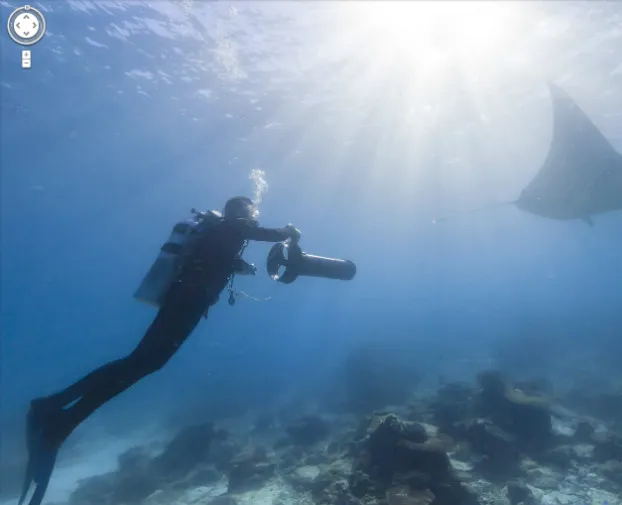
Anyone who wanted to see the Great Barrier Reef up close but got hindered by factors like finances or asthma has a new chance. Google just unveiled underwater views of the reef. Just in time, too, as environmentalists fight a mine proposal that they say could destroy it all.
PHOTOS: The Unexpected Beauty of Coral Crustaceans
In addition to carbon pollution and warming, environmentalists have a new worry about the Great Barrier Reef's future. Nine coal mines, dubbed "mega-mines," have been proposed for the Galilee Basin in Queensland, Australia. The Guardian, calling the plans part of a "new Australian coal export rush," reported that the mines would produce 330 million tons of coal annually.
Greenpeace called the Australian mega-mine proposition "reckless" and potentially "catastrophic" in a report released last week. The organization predicts the coal basin will become the world's seventh-largest emitter of carbon dioxide pollution from fossil fuels. The CO2 emissions, the new port terminals, the seafloor dredging, and increased ship traffic through whale habitats would all put the Great Barrier Reef World Heritage Area in danger.
The Australian coal industry dismissed Greenpeace's numbers as "mythical" and accused the organization of scaremongering.
Recently the UN weighed in on the proposal. Its World Heritage Committee urged Australia not to permit any new port development or associated infrastructure beyond existing and long-established major port areas. Still, at least one part of the mega-mines proposal is moving ahead. In August, the $7.1 billion Alpha mine got state and federal approval.
PHOTOS: Ocean Artists Convey Horror and Magic
Pollution and politics aside, the Great Barrier Reef can be a dangerous place to visit in person. Last week a Chinese tourist drowned during a tour. For me, at least, a virtual visit seems like the safest way to see it. That said, if all the mega-mines get built, Google's underwater views might be all that remains.
This story was provided by Discovery News.
