Ancestor of All Life on Earth?
Get the world’s most fascinating discoveries delivered straight to your inbox.
You are now subscribed
Your newsletter sign-up was successful
Want to add more newsletters?
Delivered Daily
Daily Newsletter
Sign up for the latest discoveries, groundbreaking research and fascinating breakthroughs that impact you and the wider world direct to your inbox.
Once a week
Life's Little Mysteries
Feed your curiosity with an exclusive mystery every week, solved with science and delivered direct to your inbox before it's seen anywhere else.
Once a week
How It Works
Sign up to our free science & technology newsletter for your weekly fix of fascinating articles, quick quizzes, amazing images, and more
Delivered daily
Space.com Newsletter
Breaking space news, the latest updates on rocket launches, skywatching events and more!
Once a month
Watch This Space
Sign up to our monthly entertainment newsletter to keep up with all our coverage of the latest sci-fi and space movies, tv shows, games and books.
Once a week
Night Sky This Week
Discover this week's must-see night sky events, moon phases, and stunning astrophotos. Sign up for our skywatching newsletter and explore the universe with us!
Join the club
Get full access to premium articles, exclusive features and a growing list of member rewards.
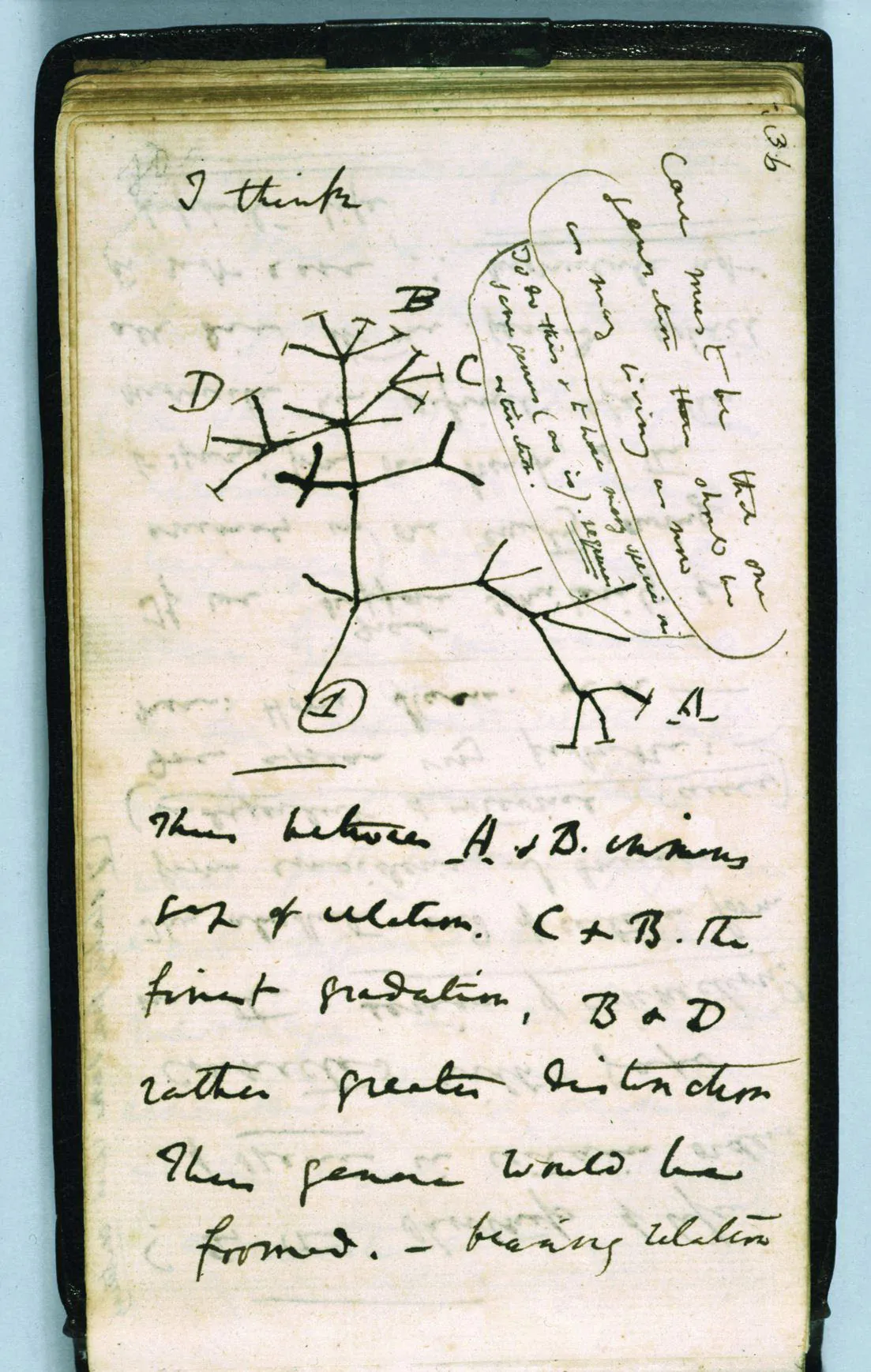
A newly drawn-up evolutionary tree suggests a group of bacteria may be the last common ancestor for all life on Earth.
Researchers established the tree by scouring gene banks to compare shared proteins across the kingdoms of life, and they identified Actinobacteria, the group that has given rise to most human antibiotics, as the base.
William Duax, a physical chemist at SUNY Buffalo, and his team analyzed genetic sequences, looking for copies of proteins found in ribosomes.
Ribosomal proteins are good candidates for tracing the evolution of all species because they are easy to accurately identify and they are only transferred to individuals through reproduction, according to the American Institute of Physics. Structurally aligning the proteins allowed the researchers to pick out subtle differences that indicate which organisms belong on different branches of the evolutionary tree, they explained in a statement.
“Today the gene banks are enormous. They contain more than 600,000 genes from the genomes of more than 6,000 species,” Duax said in a statement. “We are applying a systematic approach to make sense of a sometimes messy gene bank.”
Duax and his team analyzed two different ribosomal protein families, called S19 and S13, which both point to Actinobacteria as the common ancestor.
The researchers will present their findings at the upcoming annual meeting of the American Crystallographic Association.
Get the world’s most fascinating discoveries delivered straight to your inbox.