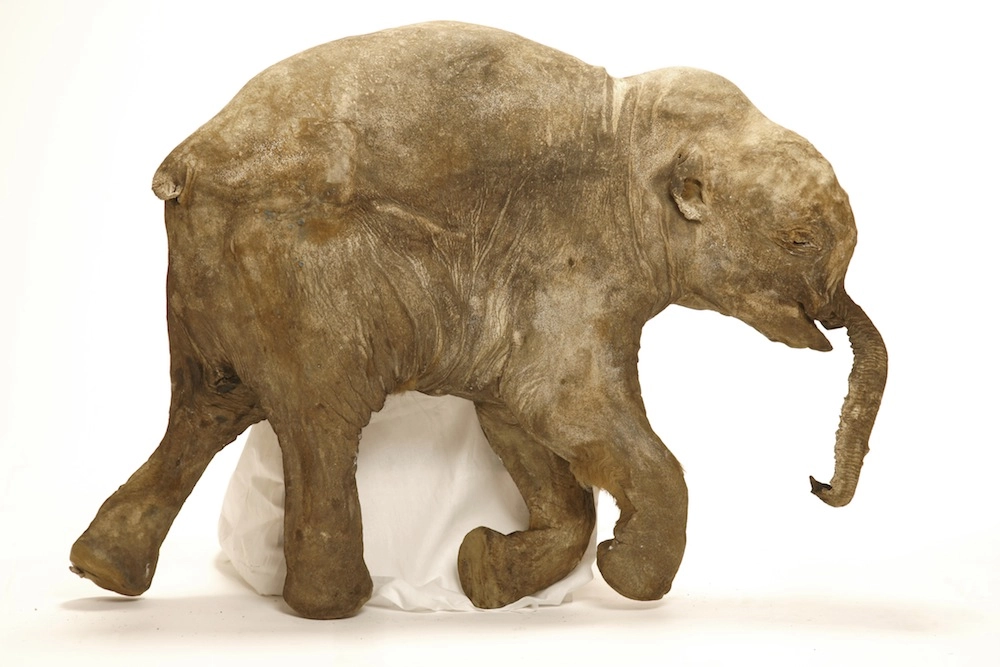
Earth has experienced monumental changes since it was formed 4.5 billion years ago. It has undergone alternating phases of cooling and warming, which dramatically changes the ecosystem, bringing about mass extinctions and the chance for new species to evolve. The animals that ceased to exist left impressions, from partial footprints to intact fossilized skeletons. And in some instances, entire carcasses remained frozen in time — literally — in ice, peat bogs or tar pits.
Humans have learned so much from these pockets of prehistory. We have pieced together the events of evolution and have a better understanding of how we reached today. Chunks are missing, but areas that have preserved the past are helping us fill in the blanks. Here are a few ways nature has managed to preserve prehistoric creatures.
One excellent method of animal preservation is freezing. Cold weather grinds the speed of organic decomposition to a halt by preventing the growth of bacteria that would otherwise feed on the decaying flesh. Although Earth is about 11 degrees Fahrenheit (6 degrees Celsius) warmer than it was during the last ice age, which ended around 20,000 years ago, several ancient creatures have been found in the frozen areas of Russia, Asia and North America, with their bodies intact. The presence of food in the stomachs of these ice age animals indicates that their bodies were frozen rapidly, preventing decay.
A mummified frozen cat, baby mammoths, an ancient bison and a young foal — all many thousands of years old — are also among the many creatures found frozen in the icy ground of Siberia.
In the absence of ice, nature has other ways to preserve body tissue. An extremely important factor in preventing decomposition is separation from oxygen. Europe's peat bogs have a magical combination of a lack of oxygen, low temperature and acidic water, which works to "pickle" the remains of any animal that meets its end in the mud. Over time, layers of moss form on the bog's surface and release chemicals that halt bacterial growth.
Sign up for the Live Science daily newsletter now
Get the world’s most fascinating discoveries delivered straight to your inbox.
Some of the most famous remnants of the past uncovered in these bogs include preserved human remains along with a plethora of ancient artifacts. Huge hunks of an edible waxy substance made of dairy or meat are sometimes found with these peat-bog men. This "bog butter" may have been a treasured food product to slather on Bronze Age bread. It's possible that people of the past stored their butter in bogs to keep it cool and fresh, long before the days of refrigeration. It worked so well that this ancient spread is thought to still be edible — so long as the diner can ignore the smell, Smithsonian magazine reported.
How It Works is the action-packed magazine that's bursting with exciting information about the latest advances in science and technology, featuring everything you need to know about how the world around you — and the universe — works.
In 1950, a man was discovered in a bog near the Danish town of Tollund in such good condition that he was initially believed to be a recent murder victim, and the police were called to inspect the scene. However, the body had been lying in rest for 2,300 years, still dressed in Iron Age clothing. He did appear to have been murdered, but the culprits themselves were long dead, according to Museum Silkeborg in Denmark, which now houses Tollund man.
Peat bogs may have been ancient grounds of burial or even ritual sacrifice. Tollund Man was found with a braided leather cord wrapped tightly around his neck, and it's unclear whether he was hanged or strangled. The absence of trees across stretches of bog may have made people feel a connection to the heavens and therefore made it a place of religious significance, according to Smithsonian magazine.
Tollund man is so well preserved, even his last facial expression is clear.
(Image credit: Getty Images)
Stuck in tar pits
Creatures may also become locked in a time capsule if they get stuck in a tar pit. In some parts of the world, springs of natural asphalt seep up to the ground as thick crude oil. It accumulates and eventually forms a pool, the surface of which reacts with air to become thicker and stickier. Prehistoric animals would get trapped in the thick goo and struggle to free themselves. The resulting commotion would then attract predators, some of which would be lost in the tar themselves. Thousands of years later, the solidified tar began to be mined as asphalt, and the treasures within came to light.
Carcasses trapped in tar pits attracted carnivores, who also got stuck in the sticky substance.
(Image credit: Wikimedia Commons)
La Brea is a world-renowned tar pit in Los Angeles, California. It trapped creatures for over 50,000 years and new discoveries are still being made to this day, according to La Brea Tar Pits and Museum. The site has been under excavation since 1913, and over 3.5 million specimens have been found so far.
More than 600 species of animals and plants have been identified from these remains, but most discoveries have been bones of large animals, the majority being carnivores such as lions and dire wolves. Four thousand dire wolves have been retrieved from the tar, and 400 of their skulls are on display at the George C. Page Museum that stands on the excavation site.
This article was adapted from a previous version published in How It Works magazine, a Future Ltd. publication. To learn more about the wonders of the natural world, subscribe to How It Works magazine.
Amy Grisdale is a freelance writer and wildlife guide based on the south coast of the U.K., who has written for publications such as World of Animals, How It Works, History of War and Gadget magazine. Amy has an enormous breadth of experience on animal conservation projects. She has a degree in Marine Biology and Animal Behaviour from Anglia Ruskin University and specialises in writing about environmental topics.