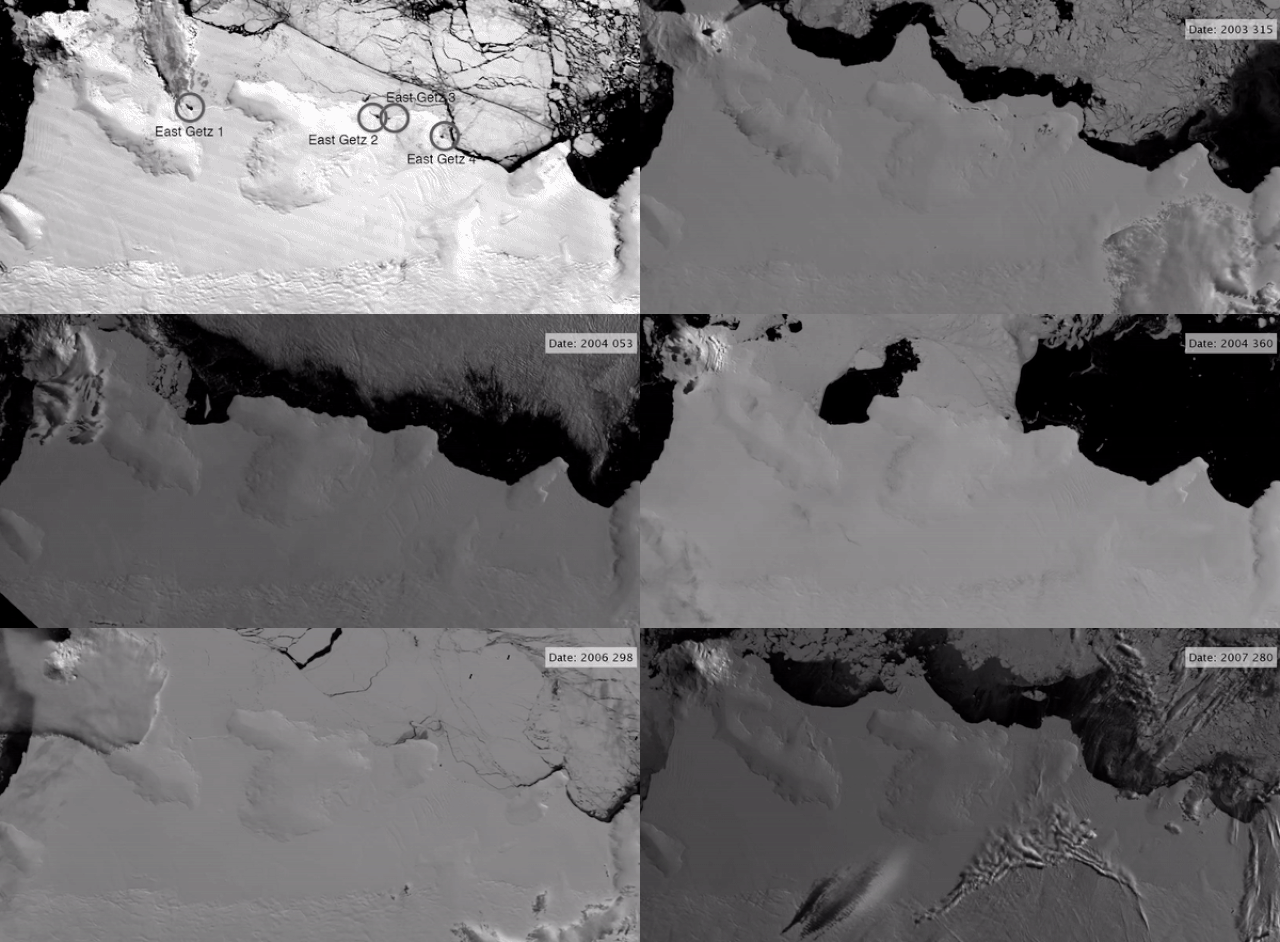
On Antarctica's East Getz Ice Shelf, monstrous fractures seem to form in the same places year after year. A new study suggests this reliable breakage may be the effect of underwater "rivers" of hot, buoyant water attacking the ice shelf's most vulnerable points.
(Image credit: Karen Alley/The College of Wooster and NASA MODIS/MODIS Antarctic Ice Shelf Image Archive at the National Snow and Ice Data Center, CU Boulder.)
Earth's frozen places are losing ground fast. In Antarctica, melted ice spills into the ocean at rate of about 155 billion tons (140 billion metric tons) per year — an amount so confoundingly huge that it's easier just to call it "chilling" and "unprecedented," as a recent U.N. report did. Those numbers will only increase as humans continue polluting the air with record amounts of heat-trapping greenhouse gases.
On the frontlines of this warm-weather siege are the world's ice shelves. Perched all around the edges of Antarctica and Greenland, ice shelves help stem the tide of melting glaciers by growing outward over the ocean like thick balconies of frost. Nearly 600,000 square miles (1.5 million square kilometers) of ice shelves surround Antarctica alone, through which 80% of the continent's melting ice passes. However, a new study suggests, those dams of ice may have a fatal flaw in the face of Earth's increasingly warming oceans.
In a study published yesterday (Oct. 9) in the journal Science Advances, researchers used satellite imagery to look at Antarctica's shear margins — fragile areas near the edges of ice shelves where huge cracks tend to spread — and found a troubling pattern. Certain cracks seemed to emerge in the same spots year after year, often stretching clear across the tips of their ice shelves and carving huge chunks into the sea. These cracks were often accompanied by long, sagging troughs and large holes in the ice — suggesting that some natural force under the shelves is causing the same regions to buckle and break every year.
According to Karen Alley, lead author of the new study, it appears that vast currents of warm, buoyant water are carving "upside-down rivers" into the bottoms of the ice shelves, nibbling away at their already weak edges.
"Warm water circulation is attacking the undersides of these ice shelves at their most vulnerable points," Alley, an assistant professor at the College of Wooster in Ohio and a former researcher at the National Snow and Ice Data Center, said in a statement.
While the effects of this previously unknown force are no doubt contributing to ice loss from the shelves of Antarctica and Greenland, Alley said, further study is required to understand precisely how much.
Sign up for the Live Science daily newsletter now
Get the world’s most fascinating discoveries delivered straight to your inbox.
This time-lapse footage shows the growth and retreat of Antarctica's East Getz Ice Shelf from 2003 to 2018. Holes and fractures in the ice seem to form in the same locations year after year, suggesting some underwater mechanism is attacking the shelf at its most vulnerable points.
(Image credit: Karen Alley/The College of Wooster and NASA MODIS/MODIS Antarctic Ice Shelf Image Archive at the National Snow and Ice Data Center, CU Boulder.)
Chilling developments
In the new study, the researchers used satellite imagery to scour the edges of the Antarctica’s ice shelves for water-filled holes known as polynyas. To qualify as a polynya, a hole had to appear in the same approximate spot on the ice shelf over several different years, suggesting that these breaks in the ice were no mere accident, but the result of some underwater grating process.
Indeed, the team found that polynyas tended to appear next to the shear margins where cracks in the ice invariably formed. Near these sections, the ice showed clear signs of sagging, suggesting that something was eating away at its underside.
According to the authors, these observations are evidence that Antarctica's ice shelves are being slowly carved up by underwater currents at their most vulnerable points. The team determined that the currents can grow miles wide and tens of miles long, impacting huge sections of the ice shelves at once. Time-lapse images of these melting shelves show that it doesn't take long for the sagging troughs and spreading cracks to result in collapse.
"Like scoring a plate of glass, the [warm water] renders the shelf weak," study co-author Ted Scambos, a senior scientist at the University of Colorado Boulder, said in the statement. "And, in a few decades, it's gone, freeing the ice sheet to ride out faster into the ocean."
Because ice shelves can serve as natural dams that prevent melting continental ice from gushing into the ocean en masse, the speed of their decay has a direct impact on sea-level rise. How much of an effect is still unclear; because these hidden forces besieging ice shelves are relatively newly discovered, current climate models do not account for them. Further study of the vulnerable edges of ice-shelves — not just in Antarctica, but in Greenland, as well — are required to further estimate the extent of the damage.
"These effects matter," Alley said. "But exactly how much, we don't yet know. We need to."
Brandon is the space / physics editor at Live Science. With more than 20 years of editorial experience, his writing has appeared in The Washington Post, Reader's Digest, CBS.com, the Richard Dawkins Foundation website and other outlets. He holds a bachelor's degree in creative writing from the University of Arizona, with minors in journalism and media arts. His interests include black holes, asteroids and comets, and the search for extraterrestrial life.