













New Test Analyzes Sewer for Drugs

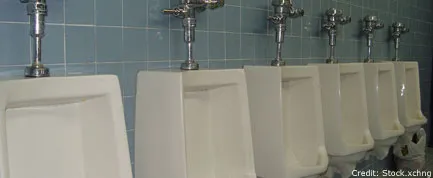
Clues to illicit drug use can be found in the pee and poop of sewer pipes, according to a new screening test that analyzes what is flushed down the toilet.
The test, which identifies drugs such as methamphetamine, morphine and cocaine, could help public health officials identify high-risk communities and develop preventive drug-use measures. This assessment method could also eliminate reliance on surveys and personal information such as medical and criminal records.
“This approach provides information at the community level and not at the individual level in order to obtain useful information that does not raise concerns about individual privacy,” said lead researcher Jennifer Field, an environmental chemist at Oregon State University.
Field and her colleagues take samples at the point where wastewater enters a treatment plant, also known as the influent. Influent of treatment plants is flow-normalized—meaning flow variation is controlled by holding wastewater in a tank before it enters the plant. This helps achieve a nearly constant flow rate at all times.
“[This] enables us to capture the concentrations of illicit drugs over a 24-hour period for the community or portion of a municipality served by wastewater treatment plants,” Field told LiveScience.
Once the information is gathered, the sampling data will be entered into a geographic information system (GIS) database that also includes spatial statistics on drug poisoning incidents and fatalities.
“These spatial data will be analyzed to determine whether there is a spatial correlation between wastewater measurements and incidents relating to methamphetamine throughout the state,” Field said. “In addition, parallel analyses will be conducted for other substances.”
Get the world’s most fascinating discoveries delivered straight to your inbox.
“These data may also be useful in assessing the effectiveness of interventions, through prospective monitoring and the assessment of temporal clusters over time,” she added.
Field and her team have conducted preliminary tests in 10 cities around the nation and are currently working in the lab to refine the technique for extremely low concentrations, on the order of billionths of a gram per liter.
Study team member Aurea Chiaia, a graduate student at Oregon State University, described the details of this test today at a meeting of the American Chemical Society.
- VIDEO: Addiction: It's in Your Genes
- 10 Easy Paths to Self-Destruction
- Researchers Develop Portable Cocaine-A-Lyzer
