













A Scientist Edited Babies' Genes In Utero. It Could Make Them More Likely to Die Early.

UPDATE: On Oct. 8, the journal Nature Medicine retracted the paper described in the article below due to crucial errors in the analysis. The errors invalidate the conclusion that the first gene-edited babies could have shorter life spans. Live Science published the original article (below) on June 3.
When a Chinese scientist announced last year that he had used CRISPR technology to edit the genomes of twin babies in an attempt to make them resistant to HIV infection, the move was decried as both unethical and potentially harmful to the babies.
Now, a new study underscores some of these concerns: The results suggest that the genetic mutation that was attempted in the CRISPR babies is tied to an increased risk of early death.
Specifically, the study found that this mutation — which is known as CCR5-delta 32 and which occurs naturally in a small percentage of people — is tied to a 20% increase in the risk of death before age 76. [9 Absolutely Evil Medical Experiments]
"Beyond the many ethical issues involved with the CRISPR babies … it is still very dangerous to try to introduce mutations without knowing the full effect of what those mutations do," study senior author Rasmus Nielsen, a professor of integrative biology at the University of California, Berkeley, said in a statement. In the case of the CCR5-delta 32 mutation, "it is probably not a mutation that most people would want to have. You are actually, on average, worse off having it."
Shorter lives
CCR5 is a protein that sits on the surface of some immune cells. It just so happens that HIV uses this protein as a port to get inside those cells. But about 10% of people of European descent have a mutation in the CCR5 gene that alters this protein and protects against HIV infection.
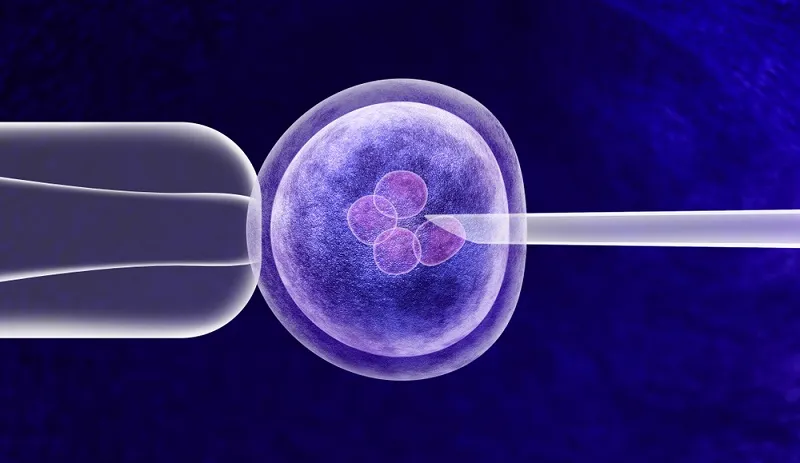
Chinese scientist He Jiankui wanted to introduce this mutation into the genomes of the twin babies using the gene-editing technology CRISPR-Cas9. The available evidence suggests that He wasn't able to exactly replicate the natural mutation, but the scientist introduced a similar mutation that effectively would have the same result: an inactivated CCR5 protein.
Get the world’s most fascinating discoveries delivered straight to your inbox.
Some previous studies have suggested that although the CCR5 mutation protects against HIV, it could have additional, harmful effects, such as an increased susceptibility to death from the flu.
In the new study, the researchers analyzed information from more than 400,000 people ages 41 to 78 in the United Kingdom whose health records and genomic data are part of a database known as the UK Biobank. The researchers looked for people who were "homozygous" for the CCR5 mutation, meaning that both of the person's copies of the CCR5 gene were mutated. (A person has two copies of every gene.)
People with two mutated copies of CCR5 were 20% less likely to reach the age of 76 compared with those who had one mutated copy or no mutated copies of this gene. In addition, the researchers found that fewer people than expected who had this mutation were enrolled in the database, suggesting that these individuals had died younger at a higher rate than the general population, the researchers said.
The new finding "underscores the idea that introduction of new or derived mutations in humans using CRISPR technology, or other methods for genetic engineering, comes with considerable risk, even if the mutations provide a perceived advantage," the researchers wrote in their paper, published today (June 3) in the journal Nature Medicine.
"In this case, the cost of resistance to HIV may be increased susceptibility to other, and perhaps more common, diseases," the researchers concluded.
- 10 Amazing Things Scientists Just Did with CRISPR
- Unraveling the Human Genome: 6 Molecular Milestones
- Bionic Humans: Top 10 Technologies
Originally published on Live Science.

Rachael is a Live Science contributor, and was a former channel editor and senior writer for Live Science between 2010 and 2022. She has a master's degree in journalism from New York University's Science, Health and Environmental Reporting Program. She also holds a B.S. in molecular biology and an M.S. in biology from the University of California, San Diego. Her work has appeared in Scienceline, The Washington Post and Scientific American.