














12 Children with Autism Were Conceived from One Donor's Sperm. Is There an 'Autism Gene'?
The extraordinary case prompted one woman to sue her sperm bank.

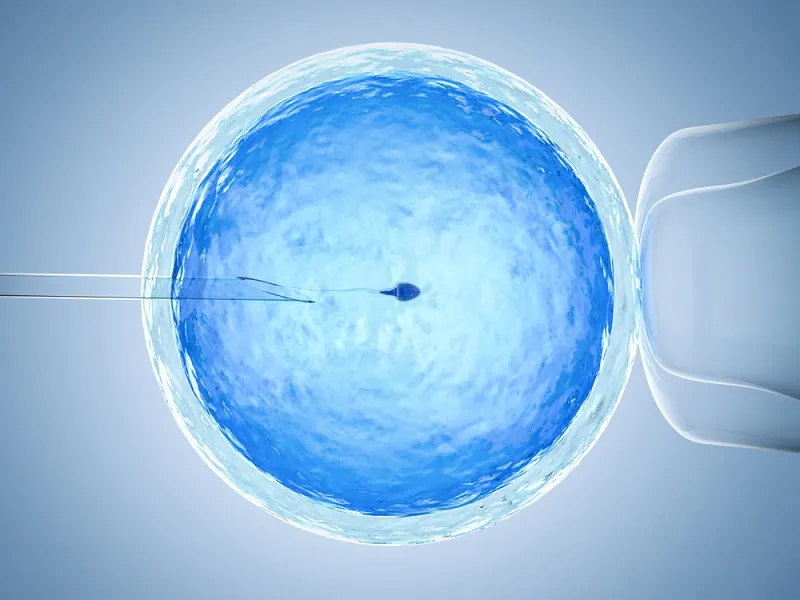
A single sperm donor is the biological father of at least 12 children who all developed autism — an extraordinary case that prompted one woman to sue her sperm bank, according to news reports.
The case came to light when the woman, Danielle Rizzo of Illinois, was researching treatments for her two sons, who both have autism, according to The Washington Post. Both sons were conceived with sperm from the same donor, and Rizzo was shocked to discover that other mothers who used the same donor also had sons with autism, the Post reported.
Rizzo was told that the likelihood of all these related children having autism by chance was like all the mothers "opening up a dictionary and pointing to the same letter of the same word on the same page at the same time," she told the Post.
That means a mutation in the donor's sperm was likely responsible. But is there a single "autism gene?"
In short, no: There are hundreds of genetic variations tied to autism spectrum disorder, according to the National Institutes of Health (NIH). In most cases, these mutations increase a person's risk of autism, but they don't destine someone to develop the condition. In other words, genes typically play only a partial role in the risk of developing autism, with environmental factors, such as the parents' ages and birth complications, contributing as well.
But in rare cases, genetic mutations are thought to be the main cause of autism. Only about 2% to 4% of people with autism have these mutations, according to the NIH.
"We call autism one thing, but it's different in every person. In some, it's all about the genes. Some it's a combination of genes and the environment. Some people, it's unknown," Dr. Wendy Chung, a professor of pediatric medicine at Columbia University, told the Post.
Get the world’s most fascinating discoveries delivered straight to your inbox.
Studies of Rizzo's children found that they had two mutations tied to autism in genes called MBD1 and SHANK1.
Most reproductive clinics test for several hundred genetic conditions, but there is no test for autism, The Post reported.
In Rizzo's lawsuit, she alleged that the donor's profile had false information. For example, she said that the donor did not have a college degree, as the profile listed, and that he had been diagnosed with ADHD, which was omitted from the profile, the Post reported. She settled the lawsuit in March for $250,000.
Read more about the case at The Washington Post.
- Beyond Vaccines: 5 Things that Might Really Cause Autism
- Sexy Swimmers: 7 Facts About Sperm
- 5 Myths About Fertility Treatments
Originally published on Live Science.

Rachael is a Live Science contributor, and was a former channel editor and senior writer for Live Science between 2010 and 2022. She has a master's degree in journalism from New York University's Science, Health and Environmental Reporting Program. She also holds a B.S. in molecular biology and an M.S. in biology from the University of California, San Diego. Her work has appeared in Scienceline, The Washington Post and Scientific American.