













Is Sleeping with a Fan On Actually Bad for Your Health?

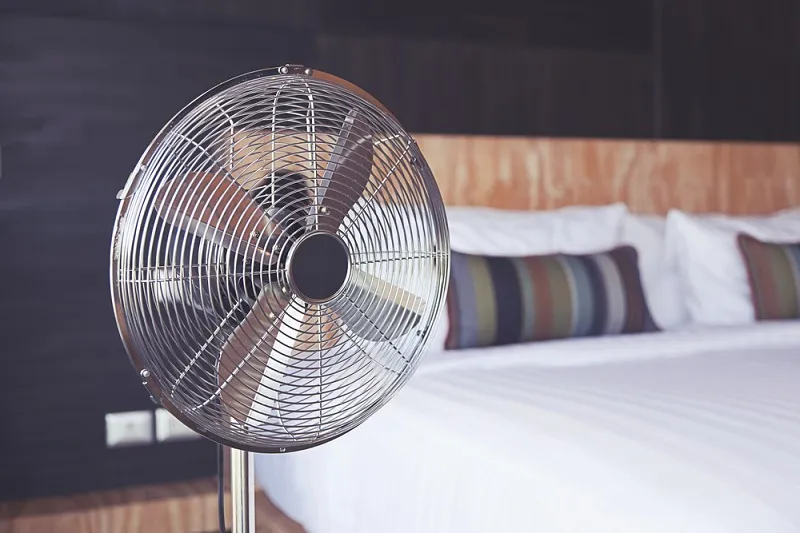
Scorching summer days can be tough without air conditioning, and you might find yourself searching for ways to stay cool, including using a fan at night. But is it healthy to sleep with a fan on?
Some recent headlines have made sleeping with a fan on sound downright dangerous. "Why Sleeping with Your Fan on Could Be Seriously Damaging Your Health," read one recent headline from the Mirror. "Sleeping with a Bedside Fan Could Pose Health Risks," read another, from LifeZette.
But experts say the reality is not that dire.
"There's nothing about a fan that's toxic," said Dr. Len Horovitz, a pulmonologist at Lenox Hill Hospital in New York City. "There's nothing wrong with circulating air." [7 Common Summer Health Concerns]
Indeed, sleep is very important, and you don't want to be sweating all night, Horovitz told Live Science.
But anything that causes rapid air movement, including a fan, can evaporate moisture from your mouth and nasal passages, drying them out, he said. Fans may also circulate dust, which could bother people, particularly if they have allergies.
If you do sleep with a fan on, Horovitz said it's a good idea to keep it at a safe distance from your bed and not have it blowing right on you. To guard against dust and other allergens, Horovitz recommended keeping an air filter in the bedroom. He also recommended performing daily sinus irrigation with saline, which can help with dry nasal passages, congestion and other nasal problems.
Get the world’s most fascinating discoveries delivered straight to your inbox.
Cold air can also cause muscle contractions, and so exposure to this air at night may lead to a stiff neck in the morning. But Horovitz said this is more of a problem with air conditioning that's left on at night than it is with fans. If you do sleep with air conditioning on at night, Horovitz said the air shouldn't be blowing directly on you and the setting shouldn't be lower than 68 degrees Fahrenheit (20 degrees Celsius).
Original article on Live Science.

Rachael is a Live Science contributor, and was a former channel editor and senior writer for Live Science between 2010 and 2022. She has a master's degree in journalism from New York University's Science, Health and Environmental Reporting Program. She also holds a B.S. in molecular biology and an M.S. in biology from the University of California, San Diego. Her work has appeared in Scienceline, The Washington Post and Scientific American.