













I Used Solar Eclipse Glasses, So Why Do My Eyes Feel Funny?

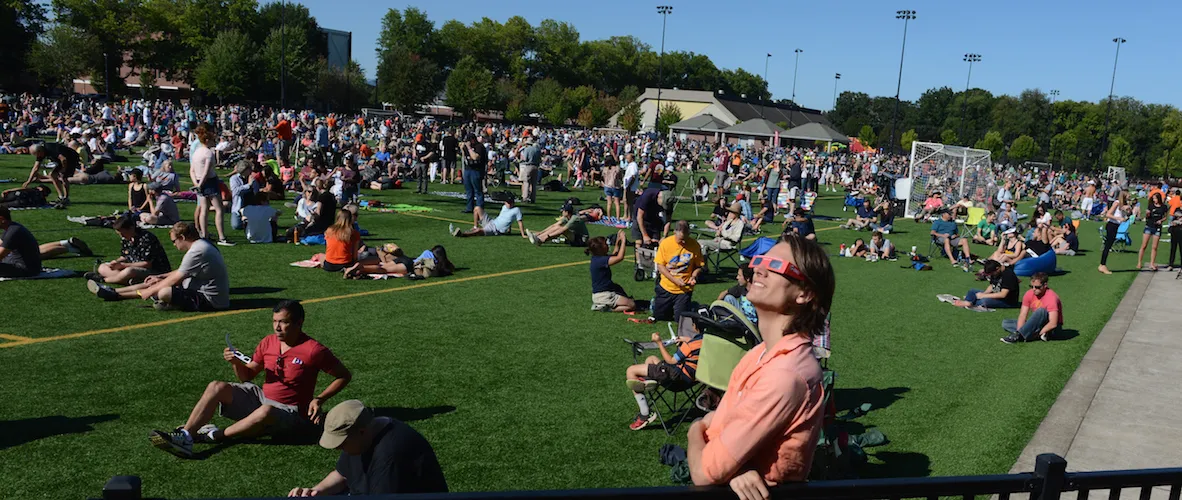
After viewing the historic solar eclipse yesterday (Aug. 21), some watchers reported that their eyes felt funny, even though they wore certified eclipse glasses. But what might have caused this, and should you be concerned if it happened to you?
Experts say that if your eyes felt a little strange after the eclipse, it's not necessarily a reason to worry. That's because this funny feeling is not a sign of "solar retinopathy," or damage to the eye's retina that can occur from looking at the sun.
"The retina has no sensory nerve fibers," so you can't feel damage to this part of your eye, said Dr. Vincent Jerome Giovinazzo, the director of ophthalmology at Staten Island University Hospital in New York City. "If your eyes feel funny, it's going to be [a feeling] on the surface." [Photos: 2017 Great American Solar Eclipse]
Dr. Nathan Podoll, a spokesperson for the American Academy of Ophthalmology, agreed that eye damage after observing an eclipse would not typically show up as pain or discomfort in your eyes. Instead, people with solar retinopathy have visual symptoms. These symptoms include blurriness or blind spots in your vision, or a dark or dim spot in your central vision, Podoll said. People may notice these symptoms within 4 to 6 hours of the viewing event, Podoll said, or the symptoms could appear the next day.
Looking at the sun without proper eye protection — even for a few seconds — is dangerous and can cause solar retinopathy. But if you used authentic, certified eclipse glasses to view yesterday's eclipse, and the glasses' filters were intact, then you won't have damage to your eyes, Giovinazzo said.
Still, "if you have any concern about the health of your eyes," you should see an eye doctor, Podoll said.
Original article on Live Science.
Get the world’s most fascinating discoveries delivered straight to your inbox.

Rachael is a Live Science contributor, and was a former channel editor and senior writer for Live Science between 2010 and 2022. She has a master's degree in journalism from New York University's Science, Health and Environmental Reporting Program. She also holds a B.S. in molecular biology and an M.S. in biology from the University of California, San Diego. Her work has appeared in Scienceline, The Washington Post and Scientific American.