













New Ebola Protective Gear Added to CDC Stockpile

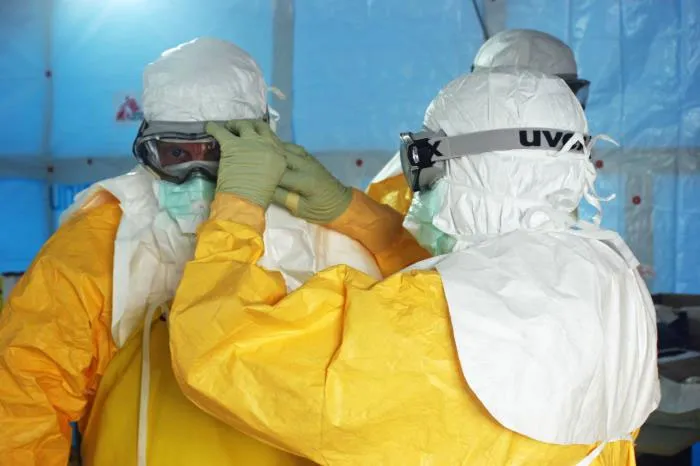
The Centers for Disease Control and Prevention (CDC) has bought more personal protective equipment for health care workers to wear while treating Ebola patients, the agency said today (Nov. 7).
The equipment cost $2.7 million, and will be added to the CDC's Strategic National Stockpile, which keeps large quantities of medical supplies for public health emergencies such as terrorist attacks, disease outbreaks or natural disasters that may cause injuries or other health problems.
Now, the equipment — which includes coveralls, aprons, boot covers, face shields, hoods and respirators — is being put into 50 kits that could be rapidly delivered to hospitals if they were to receive a patient with Ebola and need additional protective equipment. [2014 Ebola Outbreak: Full Coverage of the Viral Epidemic]
"We are making certain to not disrupt the orders submitted by states and hospitals, but we are building our stocks so that we can assist when needed," said Greg Burel, director of the CDC's Strategic National Stockpile. "Some of these products are not normally used by hospitals for regular patient care."
Each kit will provide the protective suits needed by a medical team to care for one Ebola patient for up to five days.
Although the number of kits is limited, they will help address short-term needs, the CDC said.
CDC's guidelines for health care workers who treat Ebola patients recommend the use of personal protective equipment, including fluid-resistant gloves and gowns, and face masks. They also provide information about how to properly put on and remove the protective suits and lower the risk of contamination. The guidelines also discuss alternatives that can be used in the event that certain products are unavailable.
Get the world’s most fascinating discoveries delivered straight to your inbox.
The current Ebola outbreak has been the worst in history. More than 4,800 people have died of Ebola in the hardest-hit countries — Guinea, Sierra Leone and Liberia.
In the United States, four people have been diagnosed with Ebola. However, several U.S. health care workers who contracted Ebola when caring for patients in affected countries were also treated in the United States.
Email Bahar Gholipour. Follow Live Science @livescience, Facebook & Google+. Originally published on Live Science.
