













Beyond Bulletproof: New 'X-Vehicles' Take Stealth to the Extreme
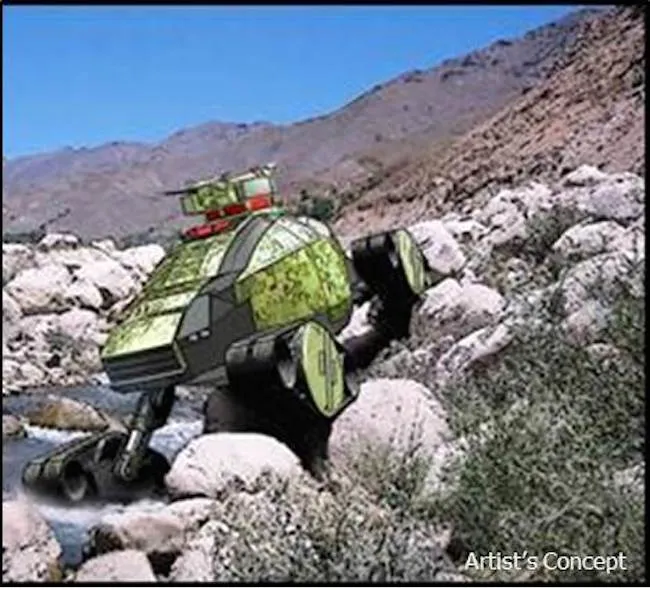
Imagine an armored truck that can drive itself, is invisible to enemies and can travel at extreme speeds. That's the type of truck the Pentagon is hoping to develop through its new ground X-vehicle (GXV-T) program.
Ever since the U.S. military started using armored ground vehicles over a century ago, the process for making these transports safer for soldiers has remained more or less unchanged, according to the Defense Advanced Research Projects Agency (DARPA), the branch of the Pentagon tasked with developing new technologies for the military.
The basic formula for building better bulletproof trucks, it seems, is simply adding more armor. But DARPA researchers say this decades-old approach isn't cutting it anymore. Piling on armor makes vehicles heavier and more expensive, and offers little extra protection for soldiers, the agency said. [See what these stealthy armored trucks could look like]
To make ground vehicles both safer and better suited for the battlefield, these machines need to take advantage of other technologies, such as those that can help troops avoid detectionby enemy forces, DARPA said.
"GXV-T's goal is not just to improve or replace one particular vehicle — it's about breaking the 'more armor' paradigm and revolutionizing protection for all armored fighting vehicles," Kevin Massey, a program manager for DARPA, said in a statement.
Massey said that the ground X-vehicle program was inspired in part by the success of DARPA's X-plane programs, which he said have improved the U.S military's aircraft capabilities significantly over the past 60 years.
Based on the same principles of experimental design inherent in the new X-vehicle program, the agency's X-plane programs have given rise to an array of cutting-edge aircraft over the years. DARPA's most recent X-plane program awarded contracts to private companies to build an unmanned vertical takeoff and landing (VTOL) aircraft. Another recent program is aimed at developing a next generation space plane for both military and civilian use.
Get the world’s most fascinating discoveries delivered straight to your inbox.
"We plan to pursue groundbreaking, fundamental research and development to make future armored fighting vehicles significantly more mobile, effective, safe and affordable," Massey said.
Successful proposals for the armored vehicle of the future must achieve the following goals, as outlined by DARPA:
- Reduce vehicle size and weight by 50 percent
- Reduce onboard crew needed to operate the vehicle by 50 percent
- Increase vehicle speed by 100 percent
- Access 95 percent of terrain
- Reduce "signatures" (like noise and infrared) that enable enemies to detect and engage vehicles
DARPA also outlined four areas in which the X-vehicle program presents an opportunity for the development of new technologies. These areas include:
- Better mobility: DARPA defines this as the ability of the armored vehicle to handle diverse off-road terrains, including slopes and different elevations. This ability would require advanced suspensions and different track or wheel configurations.
- Greater agility: Rather than adding more armor to the outside of the vehicle, DARPA wants designers to build a vehicle capable of avoiding threats altogether. The agency is looking for agile machines that can dodge bullets and reposition armor as needed during an attack.
- Crew assistance: The army truck of the future needs sensors and other equipment that keeps track of the vehicle's surroundings keeping people inside the vehicle aware of what's going on outside the vehicle. DARPA is also looking for semi-autonomous control systems that allow the vehicle to drive itself at least part of the time.
- Evading radar: By avoiding enemy detection altogether, future vehicles can get safer without adding armor. The X-vehicle aims to reduce the visible, infrared, acoustic and electromagnetic footprint of these trucks so they can evade enemy radar.
DARPA said it plans to award the first contracts for the X-vehicle program before April 2015. A proposers' day is scheduled for Sept. 5, 2014, at DARPA's offices in Arlington, Virginia.
Follow Elizabeth Palermo @techEpalermo. Follow Live Science @livescience, Facebook & Google+. Original article on Live Science.