Radioactive Fish Give Off Bad Vibes

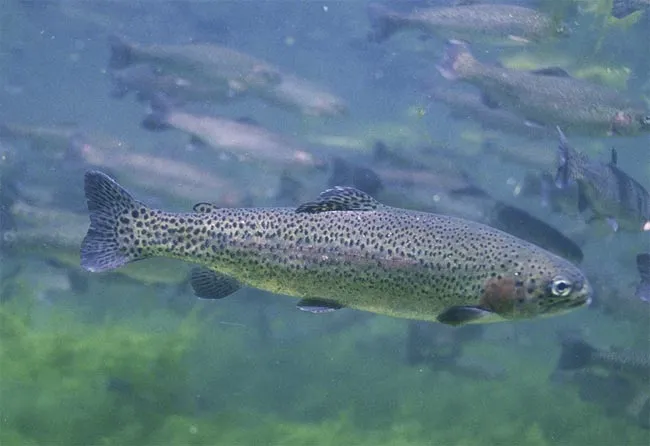
Fish exposed to dangerous radiation send out chemical signals to alert their pals so they can then turn up their defenses, scientists in Canada report.
These results might help regulators identify radiation leaks from nuclear power plants.
Since 1921, scientists have known that cells and animals exposed to radiation emit chemical signals to other cells and animals, respectively. Sometimes, these signals appear to trigger defense, repair or restorative functions, and at other times they seem to lead to genetic mutations and chromosome damage, much like radiation sickness.
Understanding how the messenger chemicals alert “bystanders” has been tricky. "We are dealing with very small molecules that act like pheromones," lead researcher Carmel Mothersill, a radiation biologist at McMaster University in Canada, told LiveScience.
To examine the transfer of bystander chemicals, the researchers placed rainbow trout in tanks in front of an X-ray machine and gave the fish non-lethal doses of radiation. They paired the irradiated fish in tanks with unexposed trout for two hours.
The unexposed fish showed increased death rates in cells from their gills, fins, skin, spleens and kidneys — features that are expected if the fish were exposed to radiation directly.
The researchers suspect these chemical signals help warn fish "to induce appropriate defenses," Mothersill said. The “helpful” alarm comes at a cost for the rainbow trout: damaged and wiped out cells. But the death of a few damaged cells "may protect an organ from cancer, or loss of a few weak individuals in a group may benefit the group as a whole," Mothersill explained.
Get the world’s most fascinating discoveries delivered straight to your inbox.
The research team is now trying to identify the compounds responsible for the bystander effects. Detecting these bystander signals in fish could help regulators prove a nuclear plant is leaking radiation, Mothersill added.
The scientists reported their findings in the Nov. 1 issue of the journal Environmental Science & Technology.
- All About Fish
- Images: Freaky Fish
- Top 10 Secret Weapons
- Vote Now: The Ugliest Animals