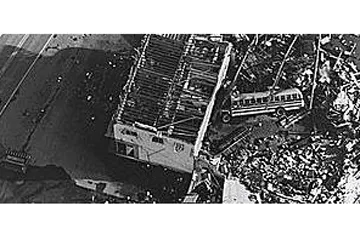
The most violent tornado outbreak in U.S. history based on the number of EF-4 and EF-5 tornadoes occurred on April 3-4, 1974. There were 148 confirmed tornadoes during the outbreak. When it was over, 315 people were dead and 6,100 others were injured. Damages from the tornadoes were estimated to be a half billion dollars.
While forecasters knew severe weather was coming, the science of weather forecasting was not yet accurate enough to determine exactly where the storms would hit. The alerts put out by NOAA focused too far west, and the tornadoes wreaked havoc from the Deep South all the way to the Great Lakes.
Since the devastation of those tornadoes, storm prediction has improved greatly. "Back in that era, radar was a patchwork of WRS-57 and WWII radars. There were many places in the U.S. that had no radar coverage at all," said AccuWeather Senior Expert Meteorologist Mike Smith.
"The radar that was available was in black and white. Because of this, the tornado that hit Xenia, Ohio did not show up well," Smith said. "A thunderstorm that was detected on radar would only appear on the black and white screen for less than one second." It would be two more years before color radar was invented."
"Only the weather stations who owned radar equipment were able to view the radar. This severely limited the availability of information that could be used to forecast severe weather outbreaks. "The TV stations that had radar were few and far between," said Smith.
Sign up for the Live Science daily newsletter now
Get the world’s most fascinating discoveries delivered straight to your inbox.
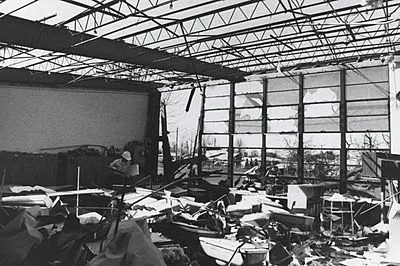
This photograph shows the damage to the Audubon Elementary School caused by the 1974 Super Tornado Outbreak.
(Image credit: NOAA.)
Another problem during the 1974 tornado outbreak was an issue with the wire service provided by the NWS. The problems prevented some warnings from going out to the places at risk, according to Smith.
Today, we have color radar, Doppler radar and dual polarization radar. Color radar enables the meteorologists to detect the signature hook that may indicate tornado activity. Doppler radar senses wind and the dual polarization radar is able to detect debris fields produced by tornadoes.
Smith said, "The most important advancement to radar since the Super Outbreak is the fact that radar can now be viewed from anywhere."
The weather is getting stranger, right? Well, for the most part no, scientists say, but humans often think so when a strange event does occur. So here’s your chance to prove how much you known about weather oddities.