













Junk Food More Tempting When You're Sleepy

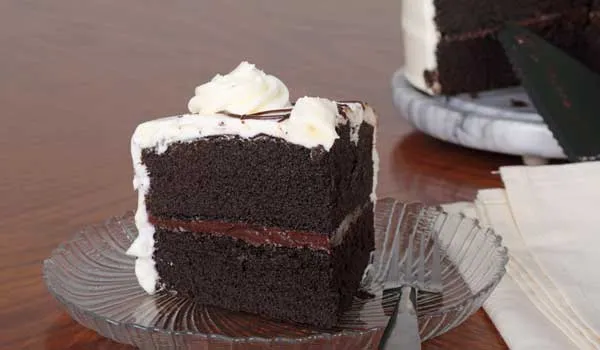
Resisting that tempting piece of chocolate cake might be a little harder if you're sleepy, a new study says.
The results show sleepiness is associated with reduced activity in a brain region responsible for controlling behavior, or "putting the brakes" on your actions, said study researcher William Killgore, an assistant professor of psychology at Harvard Medical School.
When looking at pictures of high-calorie foods, sleepier study participants had lower levels of activity in this region, Killgore said.
"A sleepier person has a rusty brake system, in a sense," Killgore said. "Less [brain] activation in this area means you can't engage your braking system as effectively," he said.
The findings suggest people may be less able to stop themselves from eating more than they should when they don't get enough sleep, the researchers said. The results are important in light of the current obesity epidemic in America: two-thirds of the population is either overweight or obese.
However, the study did not look at whether sleepy people actually ate more. Future research should investigate this, the researchers said.
Tempting foods
Get the world’s most fascinating discoveries delivered straight to your inbox.
Killgore and his colleagues scanned the brains of 12 healthy men and women between the ages of 19 and 45 using functional magnetic resonance imaging (fMRI). The participants viewed images of high-calorie foods, such as ice cream cones and cheeseburgers, low-calorie foods, such as salads and fruit, and control images of plants and rocks.
The participants also completed a questionnaire to gauge how sleepy they were during the day.
The researchers saw an association between sleepiness scores and reduced brain activity in a region called the prefrontal cortex when participants were viewing the high-calorie foods.
"When you're sleepy, your brain is not functioning as effectively," and you're more likely to eat things you shouldn’t, Killgore said.
Those with high sleepiness scores also rated themselves as hungrier, and found high-calorie foods more attractive than those with lower scores, Killgore said.
Weight gain and the brain
The work is "really interesting" and is in line with previous findings examining brain activity and weight control, said Kathryn Demos, a researcher at Brown Medical School and the Weight Control & Diabetes Research Center of The Miriam Hospital in Providence, R.I.
People who have maintained weight loss have increased activity in their prefrontal cortex compared with obese individuals, Demos said. This suggests the region is important for self-control, she said.
However, more research is needed to solidify the link between sleep and obesity, she said.
The study was presented today (June 13) a joint meeting of the American Academy of Sleep Medicine and the Sleep Research Society in Minneapolis. The study was funded by the U.S. Army's Military Operational Medicine Research Program.
Pass it on: If you're sleepy, you're brain may be less able to stop you gorging on junk food.
This story was provided by MyHealthNewsDaily, sister site to LiveScience. Follow MyHealthNewsDaily staff writer Rachael Rettner on Twitter @RachaelRettner.

Rachael is a Live Science contributor, and was a former channel editor and senior writer for Live Science between 2010 and 2022. She has a master's degree in journalism from New York University's Science, Health and Environmental Reporting Program. She also holds a B.S. in molecular biology and an M.S. in biology from the University of California, San Diego. Her work has appeared in Scienceline, The Washington Post and Scientific American.