













Diet Tip: Watch What You Drink

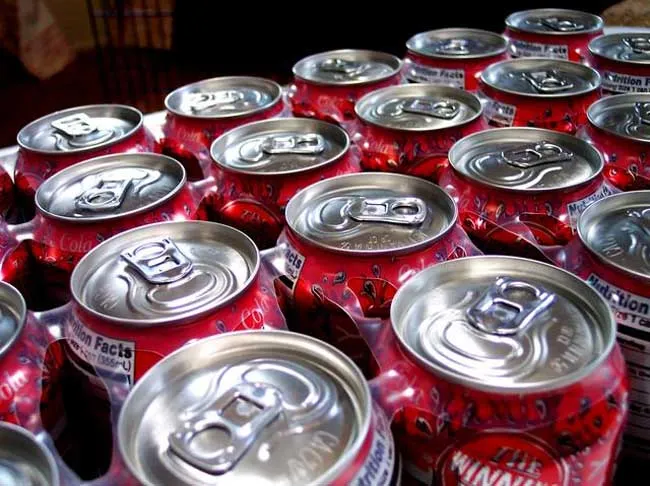
Liquid calories are the bigger culprit than food itself, when it comes to weight loss, a new study suggests. That means soft drinks or soda, as well as fruit drinks, fruit punch and high-calorie beverages sweetened with sugar. The researchers examined the relationship between beverage consumption among adults and weight change and found weight loss linked to a reduction in liquid calorie consumption. Liquid calorie intake had a stronger impact on weight than solid calorie intake among the 810 male and female subjects recruited from Baltimore, Baton Rouge, Durham, N.C., and Portland, Ore. The results are published in the April 1 issue of the American Journal of Clinical Nutrition. "Among beverages, sugar-sweetened beverages was the only beverage type significantly associated with weight change at both the 6- and 18-month follow up periods," said Dr. Liwei Chen, lead author of the study and an epidemiologist at Louisiana State University's School of Public Health.
"Our study supports policy recommendations and public health efforts to reduce intakes of liquid calories, particularly from sugar-sweetened beverages, in the general population," she said. The specific results: -A reduction in liquid calorie intake was associated with a weight loss of 0.55 pounds (0.25 kg) at 6 months and 0.52 pounds (0.24 kg) at 18 months. -Among sugar-sweetened beverages, a reduction of 1 serving daily was associated with a weight loss of 1.1 pounds (0.5 kg) at 6 months and 1.54 pounds (0.7 kg) at 18 months. -Of the seven types of drinks examined, sugar-sweetened beverages were the only type significantly associated with weight change. -At 37 percent, sugar-sweetened beverages were the leading source of liquid calories. The results come from a prospective study of 810 adults aged 25-79 years old participating in an 18-month randomized, controlled, behavioral intervention. Participant's weight and height were measured using a calibrated scale and a wall-mounted sliding ruler at 6 and 18 months. Along with Chen, the research team included Dr. Benjamin Caballero, senior author of the study and a professor with the Johns Hopkins Bloomberg School of Public Health's Department of International Health, as well as with colleagues from the Johns Hopkins School of Medicine; the National Heart, Lung, and Blood institute; Duke University and elsewhere. Dietary intake was measured by conducting unannounced 24-hour dietary recall interviews by telephone. Researchers divided beverages into several categories based on calorie content and nutritional composition: sugar-sweetened beverages (regular soft drinks, fruit drinks, fruit punch, or high-calorie beverages sweetened with sugar), diet drinks (diet soda and other "diet" drinks sweetened with artificial sweeteners), milk (whole milk, 2 percent reduced-fat milk, 1 percent low-fat milk, and skim milk), 100 percent juice (100 percent fruit and vegetable juice), coffee and tea with sugar, coffee and tea without sugar and alcoholic beverages. Consumption of liquid calories from beverages has increased in parallel with the obesity epidemic. Earlier studies by Bloomberg School researchers projected that 75 percent of U.S. adults could be overweight or obese by 2015 and have linked the consumption of sugar-sweetened beverages to the obesity epidemic, which affects two-thirds of adults and increases the risk for adverse health conditions such as type 2 diabetes. Chen and Caballero's team and other researchers recommend limited liquid calorie intake among adults and to reduce sugar-sweetened beverage consumption as a means to accomplish weight loss or avoid excess weight gain.
Get the world’s most fascinating discoveries delivered straight to your inbox.
