















A First: Brain Cell Seen While Developing

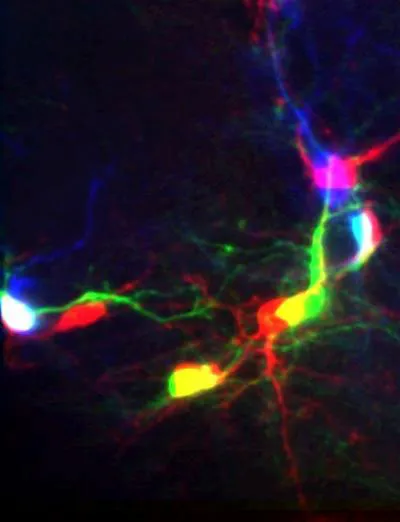
For the first time, a scientist has observed a neuron developing in real time in the brain of a mammal.
Neurons, or nerve cells, transmit information in the brain through chemical and electrical signals. The human brain is estimated to have about 100 billion neurons.
A new study, published in the online edition of Nature Neuroscience, used mouse models to study how neurons developed from non-specialized cellular spheres into the rich and complex cells found in the brain and spinal cord.
Using gene technology and a microscope to take time-lapse images over several days, the researchers watched as neural dendrites, the string-like extensions of the neuron that serve as points of contact and communication between neurons, developed in the olfactory bulb (an area that senses and discriminates among odors) of adult mice—something no other scientist has ever observed.
The method could help provide insight into neural disorders and give scientists a closer view of the continued development of adult brain cells.
“The structural and functional complexity of nerve cells remains one of the biggest mysteries of neuroscience,” said Adi Mizrahi of Hebrew University in Israel. “And we now have a model to study this complexity directly.”
- Top 10 Mysteries of the Mind
- The Journey of a New Brain Cell
- How Many Cells are in the Brain?
Get the world’s most fascinating discoveries delivered straight to your inbox.
