Moose Elude Predators with Help from Humans

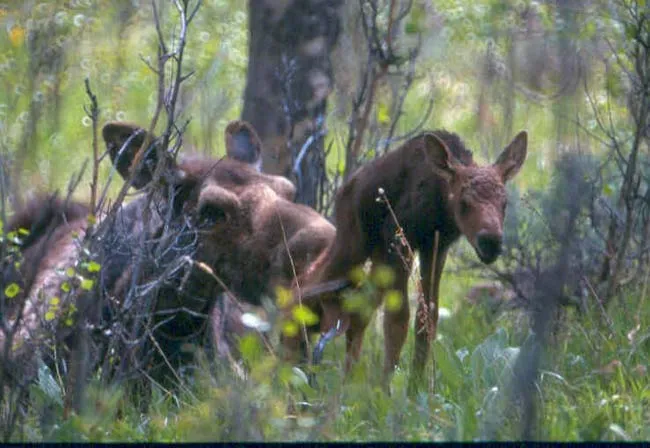
In a strange new twist of nature and adaptability, moose now apparently can take advantage of human development and use it as a shield against predators.
When it's time for pregnant moose to give birth in Yellowstone Park, they move closer these days to roads, and therefore people, to protect their newborns from bears, scientists say.
Wildlife Conservation Society researchers figured this out by tracking moose and brown bears in Yellowstone Park for 10 years, from 1995 to 2004. Brown bears can prey heavily on moose calves.
Over that decade, scientists found the number of bears increased rapidly, apparently due to conservation efforts. At the same time, pregnant moose apparently moved a whopping 400 feet (125 meters) closer, on average, to paved roads each year to give birth.
"The closest moose we had give birth was 50 yards from a road," Wildlife Conservation Society biologist Joel Berger told LiveScience. Normally moose stay at least 1,000 yards (1 kilometer) away from roads to give birth.
Brown bears typically shy away from human traffic, avoiding areas within about 1,600 feet (500 meters) of roads in Yellowstone and elsewhere.
"We as humans have unwittingly provided all kinds of de facto protection for these moose without trying to," Berger said. He detailed his team's findings online Oct. 9 in the journal Biology Letters.
Get the world’s most fascinating discoveries delivered straight to your inbox.
Similar examples of prey species using humans as cover from carnivores have occurred in Kenya, where vervet monkeys stay close to ranger stations to avoid leopards, and in Nepal, where axis deer have evaded tigers by lingering near a tourist center.
"These animals have learned to use us to their benefit," Berger said. "I'm not saying that people shouldn't visit parks, but we have to recognize there are subtle and important effects of the infrastructure we put in place that we are only starting to be aware of."
- Video: Walking With Giants: Grizzlies of Siberia
- Top 10 Most Incredible Animal Journeys
- Gallery: World's Biggest Beasts