













People Addicted to Opioids May Benefit from ER Drug Treatment

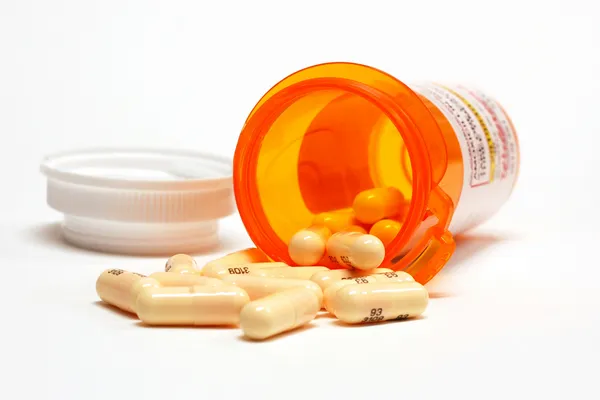
For people who are addicted to opioid painkillers, getting treated for addiction in the emergency room rather than waiting to see an addiction specialist may be beneficial, a new study suggests.
Researchers analyzed information from 329 people with opioid addiction who ended up in the emergency room for any reason, including problems related to their addiction, or other medical conditions. (Examples of opioids include hydrocodone, oxycodone and codeine.)
These patients were divided into three groups: One group was referred to local addiction treatment centers, the second group was counseled for 10 minutes about addiction treatment and then referred to a treatment center, and the third group was immediately given a medication called buprenorphine, which helps with opioid withdrawal symptoms, and then given the same 10-minute counseling session and referral for addiction treatment.
One month later, 78 percent of patients in the buprenorphine group were enrolled in a formal addiction treatment program, compared with just 37 percent of those who received referral information only, and 45 percent of those who had the counseling session before a referral, according to the study led by Dr. Gail D'Onofrio, of the Yale School of Medicine, in New Haven, Conn.
"The increasing prevalence of opioid use disorders and the increasing toll of overdose deaths due to opioids amplifies the urgency to decrease barriers — such as the delays that can occur with treatment referrals — to accessing treatment," the researchers wrote in the April 28 issue of the Journal of the American Medical Association.
The researchers also found that the patients in the buprenorphine group saw greater reductions in the number of days they used opioids illegally (a measure commonly used to assess how well addiction treatment is working). The patients immediately given buprenorphine decreased their use from 5.4 days to 0.9 days per week, on average. Those in the referral group decreased their use from 5.4 days to 2.3 days per week, and those in the counseling group decreased their use from 5.6 days to 2.4 days per week. [The Drug Talk: 7 New Tips for Today's Parents]
The researchers collected urine samples from participants to test for opioid use one month after the ER visit. They found that about the same percentage of patients in each group tested positive for opioids. However, because opioids can be detected in urine for about three days, collecting urine at a single point in time — as the study did — may not accurately reflect a participant's opioid use, the researchers said.
Get the world’s most fascinating discoveries delivered straight to your inbox.
Because the study was conducted at a single hospital, the findings should be confirmed at other centers before the practice of prescribing buprenorphine in the ER becomes widespread, the researchers said.
The researchers also noted that before an emergency department could implement such a program, it would first need to develop a system to make sure that patients who are addicted to opioids are correctly diagnosed.
Follow Rachael Rettner @RachaelRettner. Follow Live Science @livescience, Facebook & Google+. Original article on Live Science.

Rachael is a Live Science contributor, and was a former channel editor and senior writer for Live Science between 2010 and 2022. She has a master's degree in journalism from New York University's Science, Health and Environmental Reporting Program. She also holds a B.S. in molecular biology and an M.S. in biology from the University of California, San Diego. Her work has appeared in Scienceline, The Washington Post and Scientific American.