 Live Science Plus





You are now subscribed
Your newsletter sign-up was successful
Want to add more newsletters?

Delivered Daily
Daily Newsletter
Sign up for the latest discoveries, groundbreaking research and fascinating breakthroughs that impact you and the wider world direct to your inbox.

Once a week
Life's Little Mysteries
Feed your curiosity with an exclusive mystery every week, solved with science and delivered direct to your inbox before it's seen anywhere else.

Once a week
How It Works
Sign up to our free science & technology newsletter for your weekly fix of fascinating articles, quick quizzes, amazing images, and more

Delivered daily
Space.com Newsletter
Breaking space news, the latest updates on rocket launches, skywatching events and more!

Once a month
Watch This Space
Sign up to our monthly entertainment newsletter to keep up with all our coverage of the latest sci-fi and space movies, tv shows, games and books.

Once a week
Night Sky This Week
Discover this week's must-see night sky events, moon phases, and stunning astrophotos. Sign up for our skywatching newsletter and explore the universe with us!
Join the club
Get full access to premium articles, exclusive features and a growing list of member rewards.
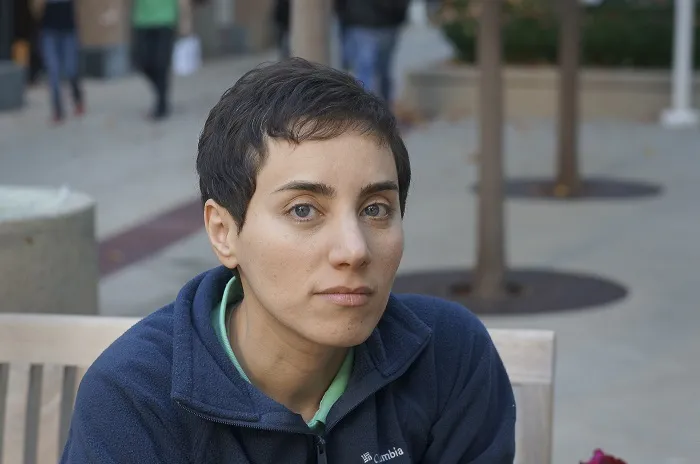
For the first time in history, the Fields Medal — the equivalent of the Nobel Prize for mathematics — will be awarded to a woman. The award will go to Maryam Mirzakhani, an Iranian mathematician and professor of mathematics at Stanford University.
Mirzakhani and three other mathematicians will be honored for their original contributions to the field, at the International Congress of Mathematicians (ICM) today (Aug. 13) in Seoul, South Korea. The Fields Medal is the most prestigious international award for mathematics, a field that is missing from Nobel Prize categories. The award is given every four years to accomplished mathematicians under age 40. The first Fields Medal was awarded in 1936, and none of the recipients have been female until now.
"This is a great honor. I will be happy if it encourages young female scientists and mathematicians," Mirzakhani said in a statement. "I am sure there will be many more women winning this kind of award in coming years." [The 11 Most Beautiful Mathematical Equations]
Mirzakhani is being awarded the Fields Medal for her outstanding contributions to the understanding the dynamics and geometry of "Riemann surfaces and their moduli spaces," according to the International Mathematical Union.
Riemann surfaces are geometric objects whose points each represent a different surface. They are mostly theoretical, but some examples include amoebaes and doughnuts, according to a Stanford statement.

"Perhaps Maryam's most important achievement is her work on dynamics," Curtis McMullen of Harvard University, who was Mirzakhani's doctoral adviser, told the New York Times. There are no exact mathematical solutions for many dynamical systems, which involve surfaces with many handles, like pretzels, McMullen added. "What Maryam discovered is that in another regime, the dynamical orbits are tightly constrained to follow algebraic laws." Mirzakhani was born in 1977 in Tehran, and grew up thinking she would become a writer one day. But she later became interested in mathematics in high school and chose it as her field of study at one of Iran's top schools, Sharif University of Technology. Mirzakhani received her doctoral degree in 2004 from Harvard University and became a professor at Stanford University in 2008.
The other recipients of 2014 Fields Medal are Artur Avila of Denis Diderot University in Paris, Martin Hairer of the University of Warwick, and Manjul Bhargava of Princeton University. To see how Mirzakhani and other awardees explain their work, check out their profiles in Quanta Magazine.
Email Bahar Gholipour. Follow Live Science @livescience, Facebook & Google+. Originally published on Live Science.

