 Live Science Plus





You are now subscribed
Your newsletter sign-up was successful
Want to add more newsletters?

Delivered Daily
Daily Newsletter
Sign up for the latest discoveries, groundbreaking research and fascinating breakthroughs that impact you and the wider world direct to your inbox.

Once a week
Life's Little Mysteries
Feed your curiosity with an exclusive mystery every week, solved with science and delivered direct to your inbox before it's seen anywhere else.

Once a week
How It Works
Sign up to our free science & technology newsletter for your weekly fix of fascinating articles, quick quizzes, amazing images, and more

Delivered daily
Space.com Newsletter
Breaking space news, the latest updates on rocket launches, skywatching events and more!

Once a month
Watch This Space
Sign up to our monthly entertainment newsletter to keep up with all our coverage of the latest sci-fi and space movies, tv shows, games and books.

Once a week
Night Sky This Week
Discover this week's must-see night sky events, moon phases, and stunning astrophotos. Sign up for our skywatching newsletter and explore the universe with us!
Join the club
Get full access to premium articles, exclusive features and a growing list of member rewards.
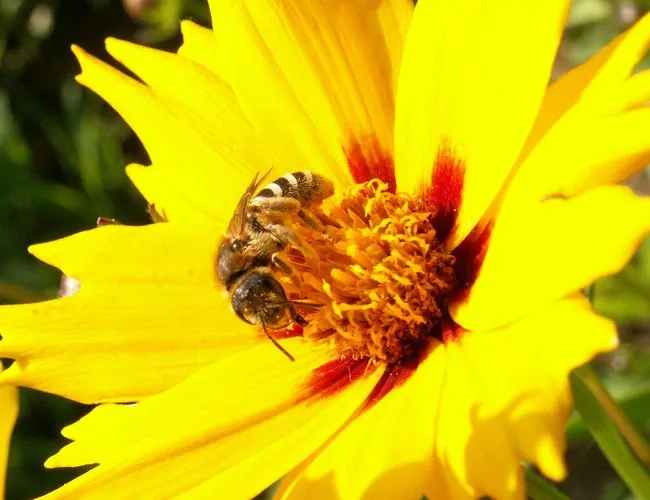
You can be stung in Rome, Moscow or Phoenix. But the honey bee is originally from Africa, scientists reported today.
By looking at variations in genetic markers from 341 bees, researchers found that the common honey bee, Apis mellifera, originated in Africa and migrated to Europe at least twice.
"The migrations resulted in two European populations that are geographically close, but genetically quite different," said lead study author Charles Whitfield from the University of Illinois at Urbana-Champaign. "In fact, the two European populations are more related to honey bees in Africa than to each other."
The researchers used simple variations in the bee DNA, called single nucleotide polymorphism (SNP), to figure out where the bees came from and their relationship to one another.
The researchers compared 1,136 markers, many more than was available for previous studies. The vast number of markers allowed the scientists to decipher the bees genetic information more precisely than ever before.
In a third expansion in the Americas, the European honey bee, introduced around 1622, was replaced by the African killer bee in 1956, the researchers write in the Oct. 27 issue of the journal Science.
"By studying variation in the honey bee genome, we can not only monitor the movement of these bees, we can also identify the genes that cause the variations—and that will allow us to better understand the differences," Whitfield said.
- Images: Invasive Species
- Dancing Bees Speak in Code
- Scientists Finally Figure Out How Bees Fly
- How to Make Busy Bees Busier
- All About Insects

