 Live Science Plus





You are now subscribed
Your newsletter sign-up was successful
Want to add more newsletters?

Delivered Daily
Daily Newsletter
Sign up for the latest discoveries, groundbreaking research and fascinating breakthroughs that impact you and the wider world direct to your inbox.

Once a week
Life's Little Mysteries
Feed your curiosity with an exclusive mystery every week, solved with science and delivered direct to your inbox before it's seen anywhere else.

Once a week
How It Works
Sign up to our free science & technology newsletter for your weekly fix of fascinating articles, quick quizzes, amazing images, and more

Delivered daily
Space.com Newsletter
Breaking space news, the latest updates on rocket launches, skywatching events and more!

Once a month
Watch This Space
Sign up to our monthly entertainment newsletter to keep up with all our coverage of the latest sci-fi and space movies, tv shows, games and books.

Once a week
Night Sky This Week
Discover this week's must-see night sky events, moon phases, and stunning astrophotos. Sign up for our skywatching newsletter and explore the universe with us!
Join the club
Get full access to premium articles, exclusive features and a growing list of member rewards.
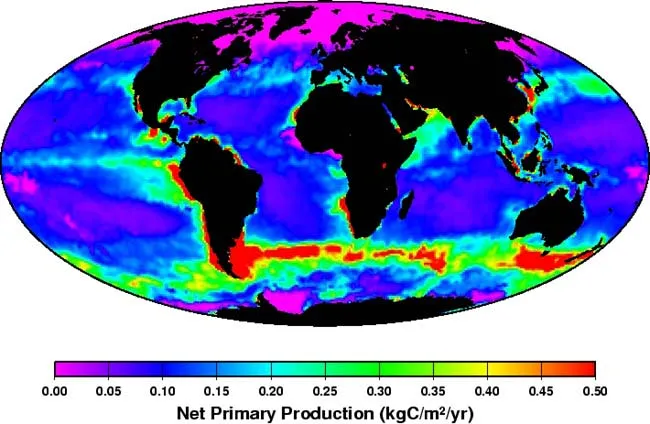
They are the very lowest rung of the marine food chain, but microscopic plants in the world's oceans generate five times more power than is consumed by all the humans in the world, according to a new study.
Scientists estimate that ocean phytoplankton generate about 63 terawatts [image] of chemical power every year. One terawatt equals a trillion watts. In 2001, humans collectively consumed about 13.5 terawatts.
The study also found that the movements of all of the ocean's marine life—from lowly phytoplankton to the largest whales—play a crucial role in bringing cold water from the ocean's depths to the surface. This ocean churning is what powers the global circulation of warm and cold water and is an important factor in the Earth's climate.
"We have predicted that the amount of mixing caused by ocean swimmers is comparable to the deep ocean mixing caused by the wind blowing on the ocean surface and the effects of the tides," said study leader William Dewar of Florida State University.
Humans might be inadvertently affecting this important ocean "biomixing" through their decimation of whales and big fish populations, the researchers say.
The findings will be detailed in an upcoming issue of the Journal of Marine Research.
