 Live Science Plus






Shark Beached After Choking on Moose
You are now subscribed
Your newsletter sign-up was successful
Want to add more newsletters?

Delivered Daily
Daily Newsletter
Sign up for the latest discoveries, groundbreaking research and fascinating breakthroughs that impact you and the wider world direct to your inbox.

Once a week
Life's Little Mysteries
Feed your curiosity with an exclusive mystery every week, solved with science and delivered direct to your inbox before it's seen anywhere else.

Once a week
How It Works
Sign up to our free science & technology newsletter for your weekly fix of fascinating articles, quick quizzes, amazing images, and more

Delivered daily
Space.com Newsletter
Breaking space news, the latest updates on rocket launches, skywatching events and more!

Once a month
Watch This Space
Sign up to our monthly entertainment newsletter to keep up with all our coverage of the latest sci-fi and space movies, tv shows, games and books.

Once a week
Night Sky This Week
Discover this week's must-see night sky events, moon phases, and stunning astrophotos. Sign up for our skywatching newsletter and explore the universe with us!
Join the club
Get full access to premium articles, exclusive features and a growing list of member rewards.
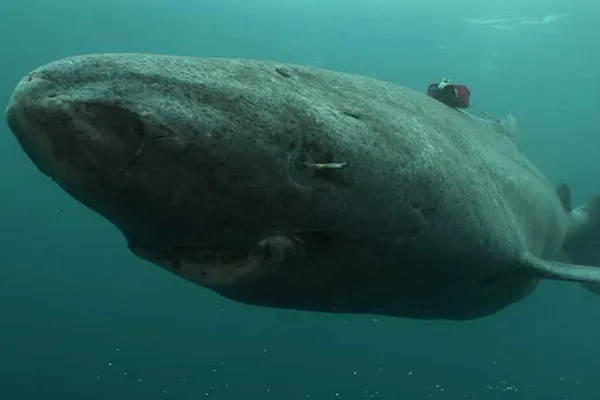
A live Greenland shark washed ashore on the island of Newfoundland this past weekend with a 2-foot-long (0.6 meters) chunk of moose meat stuck in its mouth, Canada's CBC News reported.
Two locals at Norris Arm North harbor helped free the ill-fated meal from the shark's jaws and pushed the creature to deeper water where it swam away. "A couple yanks and it just came right out," Derrick Chaulk told the CBC, adding that the moose hide still had fur on it.
Before you get any ideas about an epic moose vs. shark battle, Chaulk told the broadcaster that people often toss scraps of butchered moose into the harbor from a nearby bank. Greenland sharks — which have the distinction of being the slowest sharks relative to their body size — are scavengers and attracted to the smell of rotting flesh. While they usually feed on fish, they've been found feasting on the meat of reindeer, horses and even polar bears, according to the CBC. They're also known to sneak up on sleeping seals.
Follow Megan Gannon on Twitter and Google+. Follow us @livescience, Facebook & Google+. Original article on LiveScience.

